Charles Ross completes Star Axis, a desert pyramid measuring celestial time
After fifty years of work, American artist Charles Ross has completed Star Axis, a monumental land art piece in the New Mexico desert designed to frame the North Star and track celestial time.
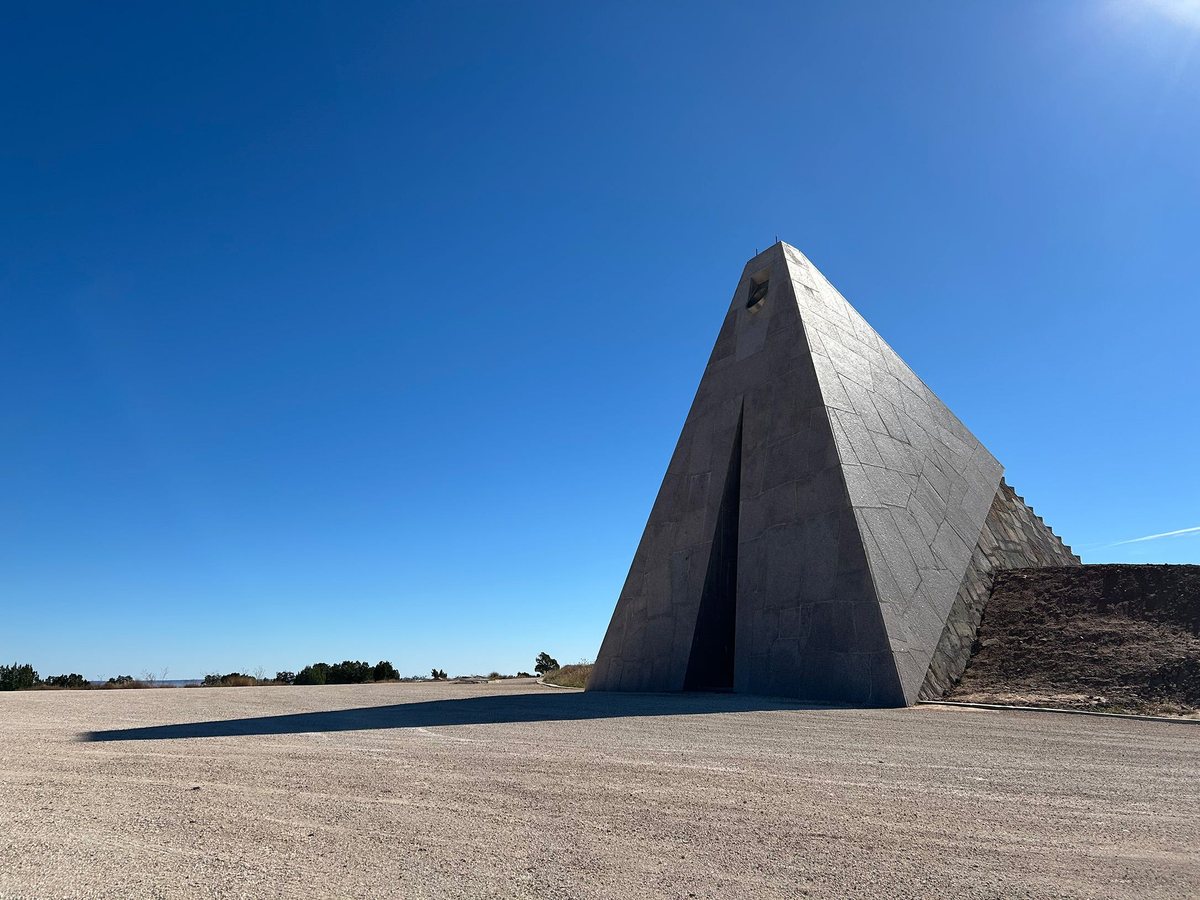
American artist Charles Ross has completed Star Axis, a monumental land art installation in the New Mexico desert that he began more than fifty years ago. The work, a pyramid-like structure carved into the earth, is designed to frame the North Star and measure the passage of celestial time. Its completion marks the end of a five-decade artistic and engineering endeavor that blends sculpture, astronomy, and architecture.
Star Axis is located on a remote site in the high desert of New Mexico, a region long associated with land art and astronomical observation. The structure consists of a series of chambers, stairways, and openings aligned with the Earth's axis. At its heart is a tunnel that frames Polaris, the North Star, allowing viewers to observe its apparent movement across the sky over thousands of years. Ross conceived the project in 1971, and construction has been carried out in phases, with much of the work done by hand and with the help of a small team of assistants and craftsmen.
The artist has described Star Axis as a way to make visible the relationship between human experience and cosmic time. The structure is not merely a static monument but a functioning instrument, a kind of naked-eye observatory that invites visitors to contemplate the slow drift of the stars caused by the precession of the Earth's axis. This cycle, which takes about 26,000 years, is encoded in the architecture of Star Axis, with different levels of the structure corresponding to different epochs in the star's apparent path.
Ross, who was born in 1937 and came of age in the 1960s, is known for his work with light and space, as well as his earlier experiments with solar burns and prisms. Star Axis, however, is his most ambitious project, one that he has pursued with remarkable persistence despite the challenges of funding, weather, and the sheer difficulty of building in a remote desert location. The completion of the work has been met with attention from the art world, where it is being hailed as a major achievement in the field of land art, a movement that emerged in the late 1960s and sought to move art out of galleries and into the landscape.
The site is not open to the general public on a regular basis, but visits can be arranged through the artist's foundation. Those who have made the journey describe the experience as both disorienting and profound, as the structure frames the sky in a way that makes the passage of time almost tangible. In an era of rapid technological change, Star Axis offers a reminder of the enduring human desire to understand our place in the cosmos, a quest that has occupied artists and astronomers alike for millennia.
Ross's completion of Star Axis also raises questions about the preservation of land art, much of which was created in remote locations and is subject to the forces of nature. Unlike museum pieces, works like Star Axis are meant to age and change, and their meaning is tied to their specific sites. The artist has expressed hope that the structure will stand for centuries, serving as a bridge between the deep past and the distant future, and as a testament to the power of human imagination to engage with the vastness of the universe.
85