Lombardy's Futura Conference in Milan Draws Politics, Church and Business Together
The second edition of the Futura cultural state conference at the Teatro alla Scala brought together politics, the Church and the creative economy. Pope Leo XIV urged that cultural heritage be placed at the service of the person. Regional President Fontana pointed to 33 billion euros in added value and new tourism records.
The second edition of the cultural conference "Futura. Nuovi sguardi per la Cultura" brought together a broad alliance of politics, the Church, art and business at the Teatro alla Scala in Milan. At the center of the event, organized by regional councillor Francesca Caruso, was the theme "Questions as the engine of knowledge and innovation". Lombardy thereby reinforces its claim to be Italy's leading region for the cultural economy and cultural tourism.
The proceedings opened with a message from Pope Leo XIV, which Caruso read aloud. The pontiff called for the preservation of Lombardy's cultural heritage and for it to be placed at the service of the human person, his dignity and his search for truth. Artistic beauty and cultural thought are often the highest and brightest expression of spiritual life, the letter states. Leo XIV also expressed the hope that "Futura" would foster an understanding of how the Christian faith has shaped Italy's art, literature and poetry over the centuries. The message underlined the conference's aim of bringing different experiences and languages into dialogue and of understanding culture not merely as heritage to be preserved, but as a driver of knowledge, creativity and development.
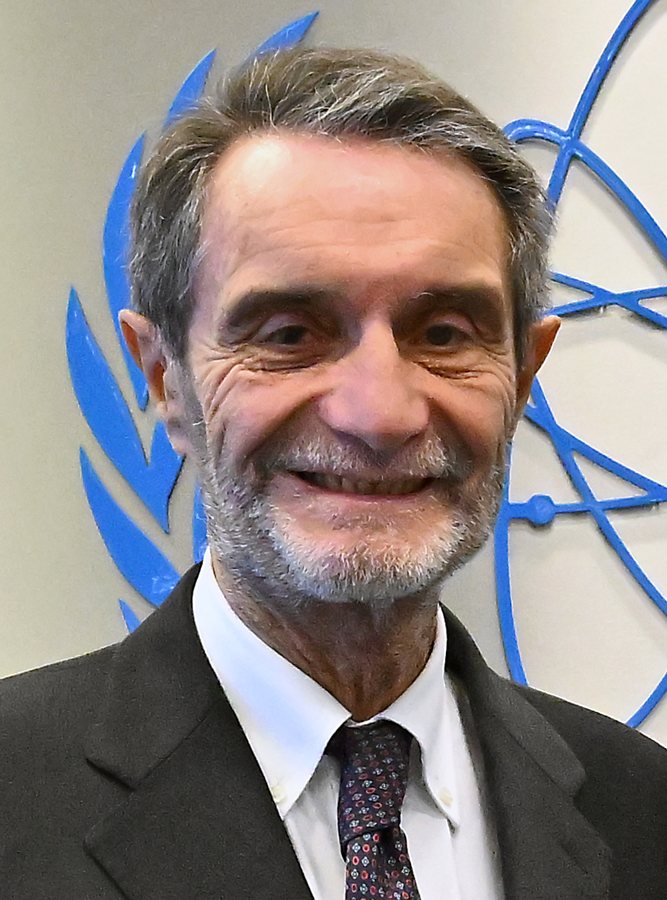
Regional President Attilio Fontana stressed that Lombardy is the first Italian region by the value of its cultural economy. A far-reaching system of companies, institutions, professionals and cultural organizations generates development, employment, attractiveness and the renewal of entire areas. The region's strength lies in its ability to hold past and future together: "We have an exceptional heritage to preserve, but also the ability to transform it and make it contemporary." This self-understanding combines identity and innovation, tradition and progress, local roots and international reach. Culture lives not only in major events and well-known places, but in a widespread network that creates new centers and strengthens cooperation between the public sector and private business.
The balance of the second edition falls within a favorable context. The region's museums recorded more than 12.4 million admissions last year. Tourist flows reached record levels: 53 million arrivals in 2024, rising to 55 million the following year, with further growth also expected for 2026. For the period June to September 2026, the observatory estimates 27.7 million arrivals, an increase of 5.9 percent. For the years 2026 to 2028, an overall rise in tourist flows of 16 percent is expected, which corresponds to roughly nine million additional stays.
Regional councillor Caruso pointed to the goal of also bringing visitors closer to the heritage and offerings of small municipalities. She was thinking above all of exhibitions, theaters and less well-known places. Knowing what these have to offer, she said, is the first step toward attracting new visitors and audiences. Bringing guests into these areas creates new opportunities for companies, cultural institutions, retail and the hospitality sector. Caruso recalled that with over 33 billion euros in added value, Lombardy holds the primacy of the Italian culture and entertainment economy, the highest value of any region in the country.
On the stage and in the rooms of La Scala, numerous protagonists of the Italian and international cultural scene took turns speaking, among them Giordano Bruno Guerri, Emilio Isgrò, Franco Arminio, Marco Balich, Giulia Bini, Marco Magnifico, Paolo Strippoli, Bernhard Scholz, Damiano Michieletto, Giulio Cappellini, Andrée Ruth Shammah, Andrea Mastrovito, Peter Florence and Paolo Crepet. In the theater foyer, the installation "Atto Futuro" by urban art artist Greg Goya was also shown. The second edition of "Futura" thus ends as a broad exchange in which culture stood at the center as a space of freedom, knowledge and innovation – a path that, through questions, directs the gaze toward the future without losing the bond with the history and identity of the regions.
Source: lombardianotizie.online
84