Swiss Filmmaker Revives Abandoned Tuscan Village of Tatti
The medieval village of Tatti in Tuscany, nearly abandoned after a 1954 mining disaster, has been revived by Swiss filmmaker Ruedi Gerber through tourism, agriculture, and community projects, as documented in his film 'Tatti, paese di sognatori'.
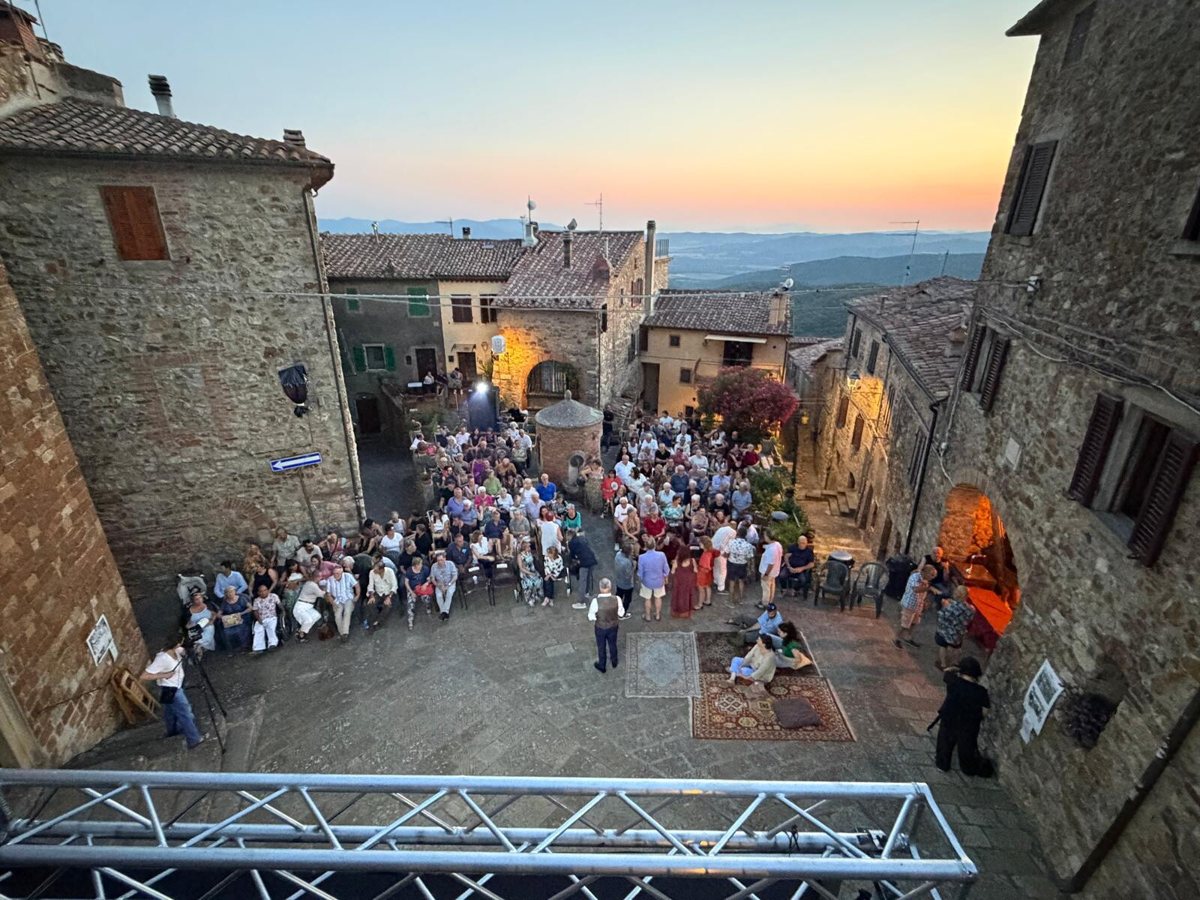
The medieval village of Tatti, perched on a hill in the Tuscan Maremma, was on the verge of becoming a ghost town after a devastating mining disaster in 1954. Today, it is experiencing a remarkable rebirth, driven by the vision and investment of Swiss filmmaker Ruedi Gerber. His efforts, which began with a simple desire for a swimming pool, have transformed the community and are now the subject of a documentary that has reached international audiences.
The tragedy that set Tatti on a path to decline occurred on May 4, 1954, in a lignite mine in Ribolla, a nearby hamlet. A violent explosion of firedamp gas at a depth of 260 meters caused the worst mining disaster in post-war Italy. Forty-three miners lost their lives instantly or from severe burns and gas inhalation. The blast ignited lignite dust, creating a lethal shockwave and unbearable temperatures. The mine was subsequently closed, and all miners and workers were laid off. A legal process concluded in 1958 with the acquittal of all company executives, with the court ruling the catastrophe a tragic fatality rather than a result of negligence or safety violations.
In the wake of the disaster, the communities that depended on the mine—Ribolla, Roccasecca, and especially Tatti, which once boasted nearly a thousand residents—were depopulated almost overnight. Tatti, a medieval borgo with sweeping views of the Maremma, saw its population dwindle to a few hundred, mostly farmers. Miners and their families left, along with shopkeepers who had served the community. The cooperative founded in 1945, after the liberation from Nazi-fascist forces, closed, as did bars and restaurants. Those who remained worked the land, raised Chianina cattle, or commuted to jobs elsewhere. Young people moved away, and the village seemed destined for an inexorable decline, a fate shared by many rural Italian settlements.
The turning point came in the early 1990s when Ruedi Gerber, a Swiss filmmaker, got lost in the Maremma countryside and stumbled upon a semi-ruined house two kilometers from Tatti. He bought and restored it, then began to frequent the village. He befriended the approximately 200 residents and became captivated by their lives. His dream of building a swimming pool set in motion a chain of events that would change Tatti forever. To obtain a building permit for the pool, Gerber needed to convert his property into an agriturismo. He planted vineyards on two hectares of land, but rather than doing the minimum required, he committed to creating a genuine agricultural tourism operation.
Gerber named his estate Sequerciani, after the six oaks that once stood there. He involved the villagers in his projects, planting various grape varieties, building artificial irrigation basins, carving rooms out of the rock, converting stables into artist residences and guest accommodations, and turning the tool shed into a meeting place that now serves as a restaurant. He also created an underground, futuristic space for wine fermentation and bottling. The impact on Tatti has been profound. The village is no longer in decline; there are no houses for sale, and young people are returning. With Gerber's financial support, the local bar-restaurant, known as the Barrino, reopened in 2011, followed by a social club and a grocery store called Le Massaie Esaurite. Gerber also opened a bed-and-breakfast in the village at Palazzo Gramsci.
Gerber's latest and most ambitious project is the construction of a shared hotel just above Tatti. This large hospitality complex is designed to cater to various budgets, offering boutique hotel rooms, bed-and-breakfast accommodations, and residences. His vision is for tourists to interact with the Tattini, transforming the medieval borgo into a global village. The story of Gerber and Tatti's renaissance has been captured in his documentary, 'Tatti, paese di sognatori' (Tatti, Village of Dreamers). The film was screened at the Cannes Film Festival and later at the Festival dei Popoli in Florence, with nearly the entire village—over 200 people on three buses—attending the latter event. The documentary highlights how one individual's passion and commitment can reverse the fortunes of a community, turning a place of tragedy into a symbol of hope and renewal.
112