Verhoeven's 1997 Film Is Read as Fascist Satire, Unlike Heinlein's Novel
The 1997 film is often understood as a satire of fascism, while Robert Heinlein's novel sketches a different model of citizenship: whoever serves becomes a citizen.
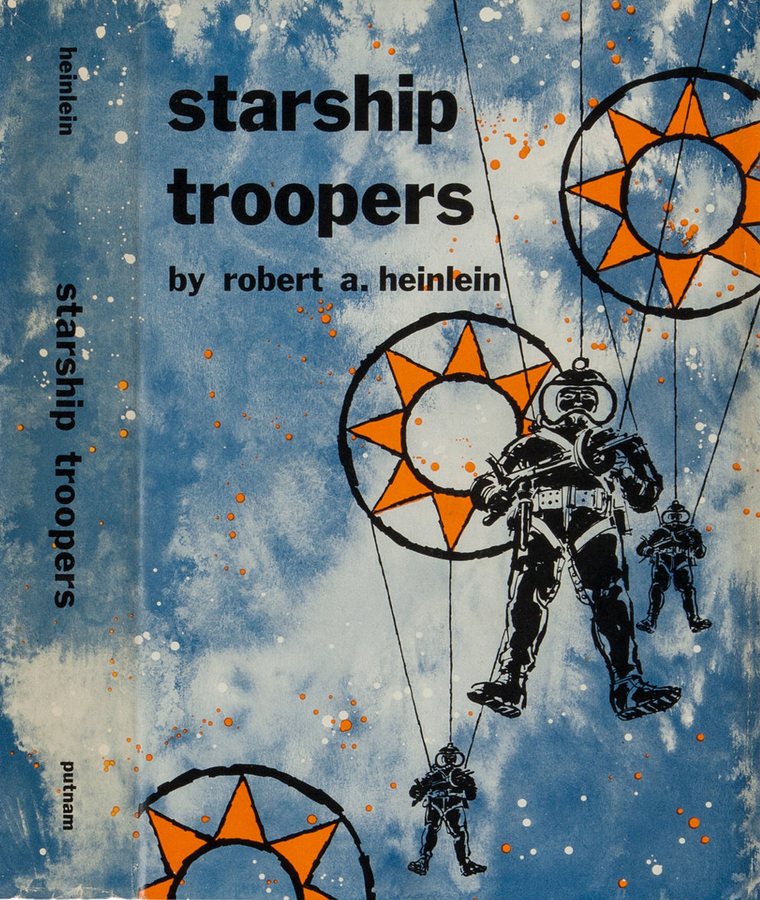
The 1997 film "Starship Troopers" is read by many viewers as a sharp satire of fascist propaganda. Many viewers barely recognize that it was meant as satire. Nor does it match the literary source on which it is based. The difference between the two works is central to the question of whether the material itself is fascist.
In Robert Heinlein's novel, anyone can take part in political life simply by volunteering for military service. The government in the book is thus tied to service: whoever takes this path acquires citizenship and with it the right to participate in decision-making. Whoever does not serve remains excluded from political decisions. By this logic, he has no voice in the community, even though he lives in it.
This construction distinguishes the novel clearly from the film adaptation. Paul Verhoeven's film takes over the setting and plot but shifts the tone. Its exaggerated propaganda elements, the glorification of war and the depiction of a militarized society can be read as a critique of precisely those ideas that it seems to celebrate at the same time. It is this very ambivalence that has shaped the debate.
The question of whether "Starship Troopers" is fascist therefore cannot be answered in a blanket way. Whoever watches the film sees a satire of totalitarian aesthetics. Whoever reads the novel encounters a design in which citizenship is coupled with military service. Both readings remain present today. They show how strongly the interpretation of a work depends on whether one takes the book or the film as the starting point.
9