Gen Z group mobilizes German protests in nearly 30 cities Saturday
The loosely organized group Gen Z regelt is calling for nationwide protests on Saturday in almost 30 cities. It expresses solidarity with the school protests in France and demands, among other things, more funding for schools, an affordable cost of living, and no return to compulsory military service.
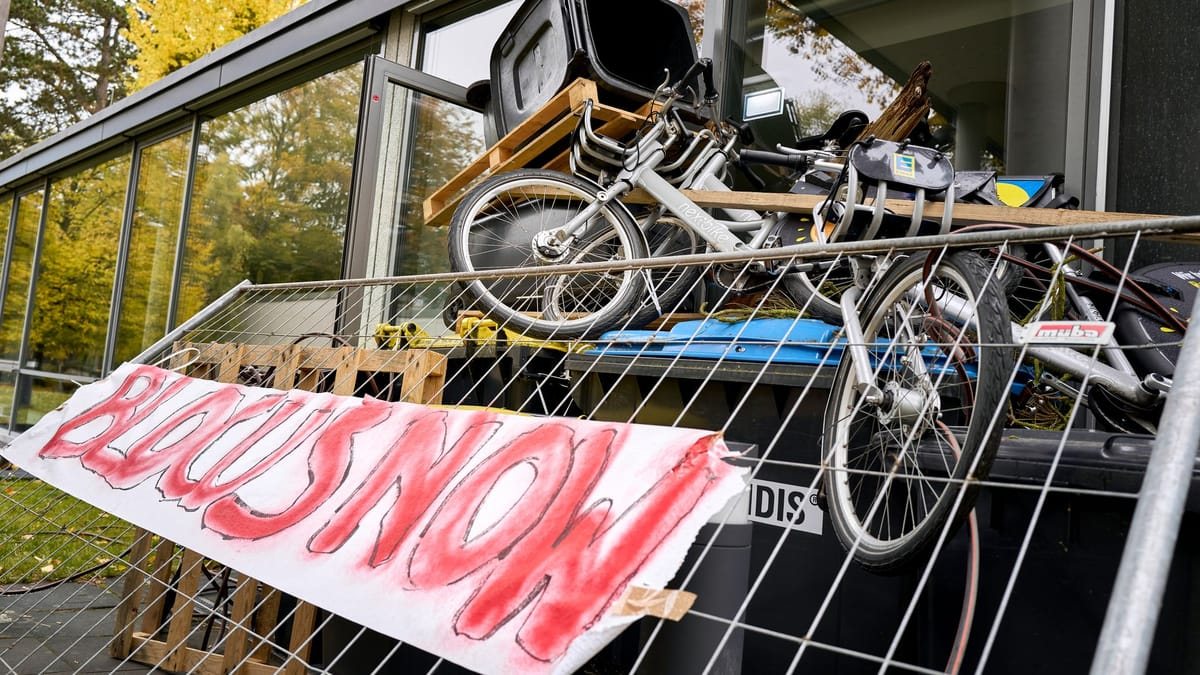
The group »Gen Z regelt«, which also calls itself »Gen Z steht auf«, is mobilizing for demonstrations on Saturday in almost 30 cities. The calls refer to the protests in France, where high living costs and demands for better education had led to violence, arson, looting, curfews and bans on demonstrations. Attention in Germany is correspondingly high, even though the circumstances here are said to be different.
Who is behind the group is not clearly identifiable. The website's imprint was changed twice within one week; as of Thursday, it listed a Swiss address. Mobilization takes place via the website, social media such as TikTok and Instagram, and messaging channels such as Telegram, both nationally and locally. Jannis Julien Grimm of the Center for Interdisciplinary Peace and Conflict Research at Freie Universität Berlin considers such a loose structure typical. Especially in early mobilization phases, protests often emerge from informal networks, personal contacts and digital communication structures. A binding organization with fixed spokesperson roles and a worked-out program develops, if at all, only later, as was the case with Fridays for Future.
The name alludes to Generation Z, a not clearly defined umbrella term for an age group. The Pew Research Center uses it for people born after 1996, while the Federal Agency for Civic Education uses the birth years between 1995 and 2010. What unites this generation is that it has grown up with digital media and has no memory of a world without smartphones.
The initiators describe themselves as in solidarity with the school protests in France. Six demands are listed on the website, including »Money for schools, addiction support and psychotherapy instead of cuts«, »An affordable life«, and »Distribute burdens fairly instead of saving at the expense of the younger generation«. Further points are »No to compulsory military service«, »Protect fundamental rights instead of expanding surveillance further«, and »Consistent climate protection now, so that we have a future«.
Grimm sees behind these demands a shared experience of political powerlessness and growing uncertainty about the future across various European countries. He points to increasing social inequality, rising living costs, a chronic underfunding of the education system in many places, and the climate crisis. Added to this are the militarization of European security policy and debates about compulsory military service and rearmament. In aging societies, this creates a generational conflict: young people bear the long-term consequences of today's decisions, yet have comparatively little political weight. For students, who are often not yet eligible to vote, protest is one of the few ways to make their interests visible.
Whether unrest like that in France or Italy will occur in Germany is open. As usual, the authorities do not rule this out, but they remain relaxed. The Federal Ministry of the Interior currently sees no concrete calls for violence, and the federal security authorities have no further findings on planned violent unrest. However, parts of the left-wing extremist scene and isolated groups from foreign-related extremism have picked up the calls and joined the mobilization. Berlin police chief Barbara Slowik Meisel said on Wednesday that there are calls seeking to build on the protest events in France, but that these are currently not gaining traction. There are so far no concrete indications of looting.
Grimm considers unrest on the scale seen in France unlikely. The police there act far more forcefully, and social acceptance of confrontational forms of protest is lower in Germany, so there is little to gain from them. Nina-Kathrin Wienkoop of the Berlin Institute for Protest and Movement Research cautions that an escalation already anticipated rhetorically should not influence police operational planning. Authorities should, as usual, orient themselves to participant numbers and findings on the ground.
8