Republicans face a post-Trump reckoning after their 2025 election defeat
Analyst Ian Reifowitz describes the 2025 election as a repudiation of Trump, raising the question of whether the Republican Party can move beyond the MAGA movement or drift forward without a clear leader.
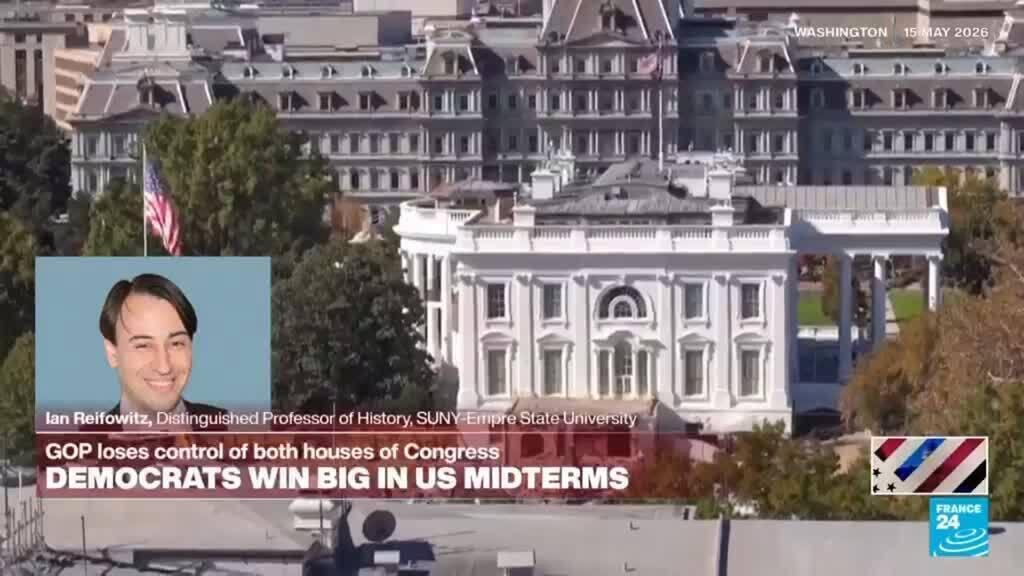
The Republican Party is facing a difficult question after a major defeat in the 2025 election: can it pivot away from the MAGA movement that has dominated it, or will it drift forward without a clear leader? Ian Reifowitz, an analyst at SUNY Empire State University, argues that the result amounted to a complete repudiation of Donald Trump. He spoke with France 24's Delano D'Souza about what the outcome means for the party's future.
Reifowitz pointed to economic frustration as a key driver of voter behaviour. Resentment over the enrichment of the president and his circle also weighed on the electorate, in his reading of the results. Taken together, these concerns suggested to him that the defeat was not a narrow setback but a broader rejection of the Trump political project. Voters who had backed Republicans in earlier contests, he argued, were no longer willing to accept the same justifications for the party's direction.
The discussion also touched on the Democratic side of the contest. Participants debated whether the ideological divide between progressive and moderate Democrats had shaped the outcome. That question remains unresolved, and the conversation did not establish how much weight the split carried compared with the economic and ethical concerns Reifowitz emphasised. Whether the divide mattered, and how much, is still open to interpretation.
The more pressing question for Republicans is succession. The core issue is whether the party can move past the MAGA movement, which has defined its direction in recent years. The alternative scenario is that the party continues forward without a clear figure at its head. Nothing in the discussion suggested that a new centre of gravity would emerge quickly, and the party's internal structure appears to rest heavily on the personal authority of its dominant figure.
JD Vance, widely seen as a possible nominee in 2028, faces a particular positioning problem. Because he is closely associated with Trump's agenda, he cannot easily distance himself from the president's record, yet running on that record may be the very thing voters rejected. That tension, Reifowitz suggested, makes it hard for Vance to chart a clearly independent course. Any attempt to present himself as a reformer risks alienating the base that has made Trump's movement durable, while staying close to Trump keeps him tied to the verdict of 2025.
Underlying all of this is an open question about Trump himself: whether he will relinquish control over the party. Whether MAGA is genuinely in decline also remains unresolved. The 2025 result has opened a debate about the Republican future, but the discussion made clear that the answers are not yet settled. The party's direction will depend on choices still to come, and on whether Trump's influence proves as decisive after defeat as it was during his rise.
Source: france24.com
7