Brazil: Attacks on Catholic and Afro-Brazilian Religious Symbols Spark Intolerance Debate
A wave of attacks on Catholic and Umbanda symbols in Fortaleza and other Brazilian cities has prompted a Supreme Court-ordered federal investigation, as religious intolerance complaints rise sharply in 2026.
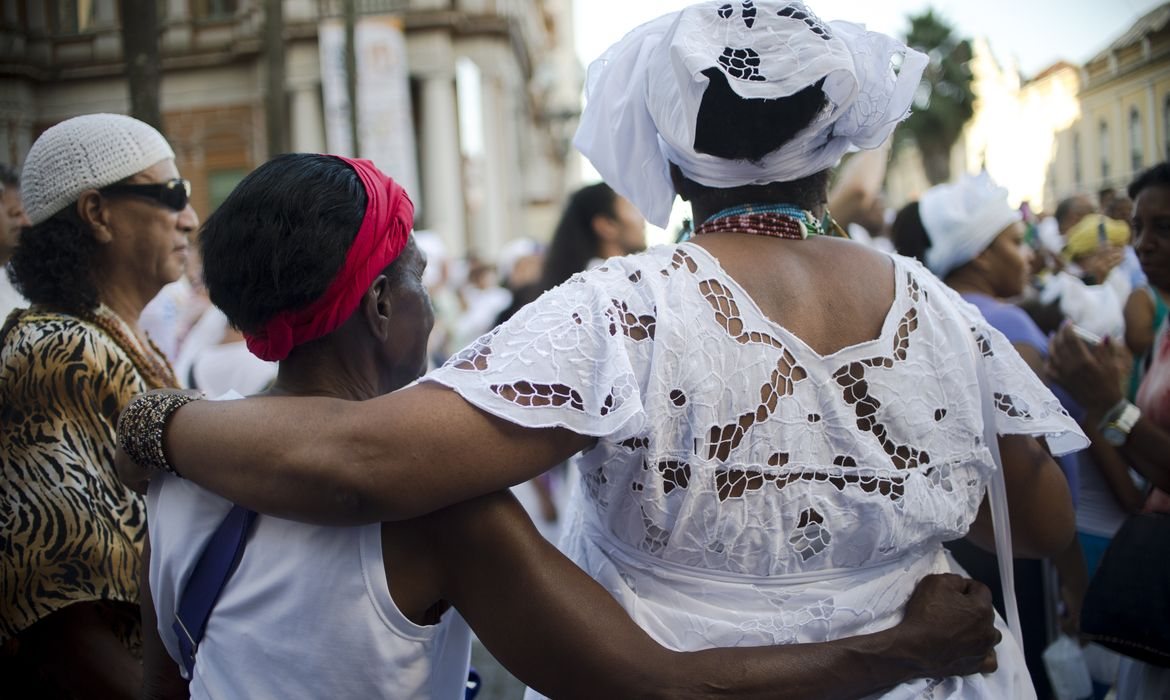
Brazilian authorities are investigating a series of attacks on Catholic and Afro-Brazilian religious symbols that have intensified a national debate over religious intolerance. In the early hours of September 9, a Catholic religious goods store in downtown Fortaleza was targeted with a Molotov cocktail. A sign later pasted on the shop read: «If it reopens, everyone dies.» On the same night, two other Catholic establishments and one Umbanda center had their facades set on fire in the Ceará state capital.
The attacks are being investigated by the Civil Police, but religious leaders have already characterized them as hate crimes. Father Josileudo Queiroz of the São José Operário Church in Caucaia, in the Fortaleza metropolitan area, said on social media that Brazil is a secular state without an official religion, but not an atheist one, because it is home to many faiths. «What happened here in Fortaleza and happens across Brazil is called a crime of religious intolerance,» he said.
The Fortaleza incidents are not isolated. A day earlier in Londrina, Paraná, the head of a statue of Our Lady of Aparecida in front of a religious goods store was torn off. Two days later in Salvador, a statue of Our Lady of Grace was smashed. On September 22, also in Salvador, an image of Saint Dulce of the Poor, the first Brazilian-born saint, was destroyed. On the last Wednesday of September, Supreme Court Justice Flávio Dino ordered the Federal Police to investigate what appears to be a nationwide spread of attacks on Catholic images.
All the reported cases occurred before a political dispute over the title of patroness of Brazil for Our Lady of Aparecida entered the electoral campaign. The controversy began when social media posts went viral claiming that presidential candidate Flávio Bolsonaro intended to strip the title from the Virgin. The candidate went to the Electoral Court and the Supreme Court to have the messages removed, leading to a series of conflicting rulings. The Superior Electoral Court ultimately formed a majority to keep the posts offline.
Data from the Disque 100 human rights hotline shows that in the first half of 2026, between January and June, 1,252 complaints were registered involving at least one violation related to freedom of belief or religious intolerance. Catholics are not the primary targets. Practitioners of Candomblé and Umbanda have historically been the main victims of religious intolerance, according to IBGE census data, despite making up only about 1 percent of the Brazilian population. Between January and June of this year, 270 complaints were filed by these communities, an increase of more than 40 percent compared with the same period in 2025, when there were 192 notifications. Complaints among Catholics also more than doubled, rising from 15 to 34.
During Brazil's National Week to Combat Religious Intolerance, held in January in Rio de Janeiro, Rudelmar Faria, secretary-general of the ACT Alliance, said exclusion based on religion has become a political strategy not only in Brazil. «We are in a global moment in which religion is instrumentalized to exclude, because religions today, this movement of converging fundamentalisms, seek precisely to exclude groups,» he said. Faria noted that those most affected are women, LGBTI+ people, Indigenous peoples, and low-income young Black Brazilians. The ACT Alliance is a global coalition of churches and faith-based organizations working in 140 countries.
Under Brazilian law, the crime of religious intolerance — whether practiced, induced, or incited — carries a penalty of one to five years in prison plus a fine. Ceará public defender Igor Barreto emphasized that such crimes are not eligible for bail or pardon and are not subject to a statute of limitations. «They can be prosecuted at any time,» he said.
6