Brazil Study Finds Evangelicals Reject Electoral Use of Churches
A national survey by Iser and Quaest shows that 83% of Brazilians oppose pastors and priests endorsing candidates, while 90% reject campaign activity inside churches, even as religious leaders remain central to the 2026 election debate.
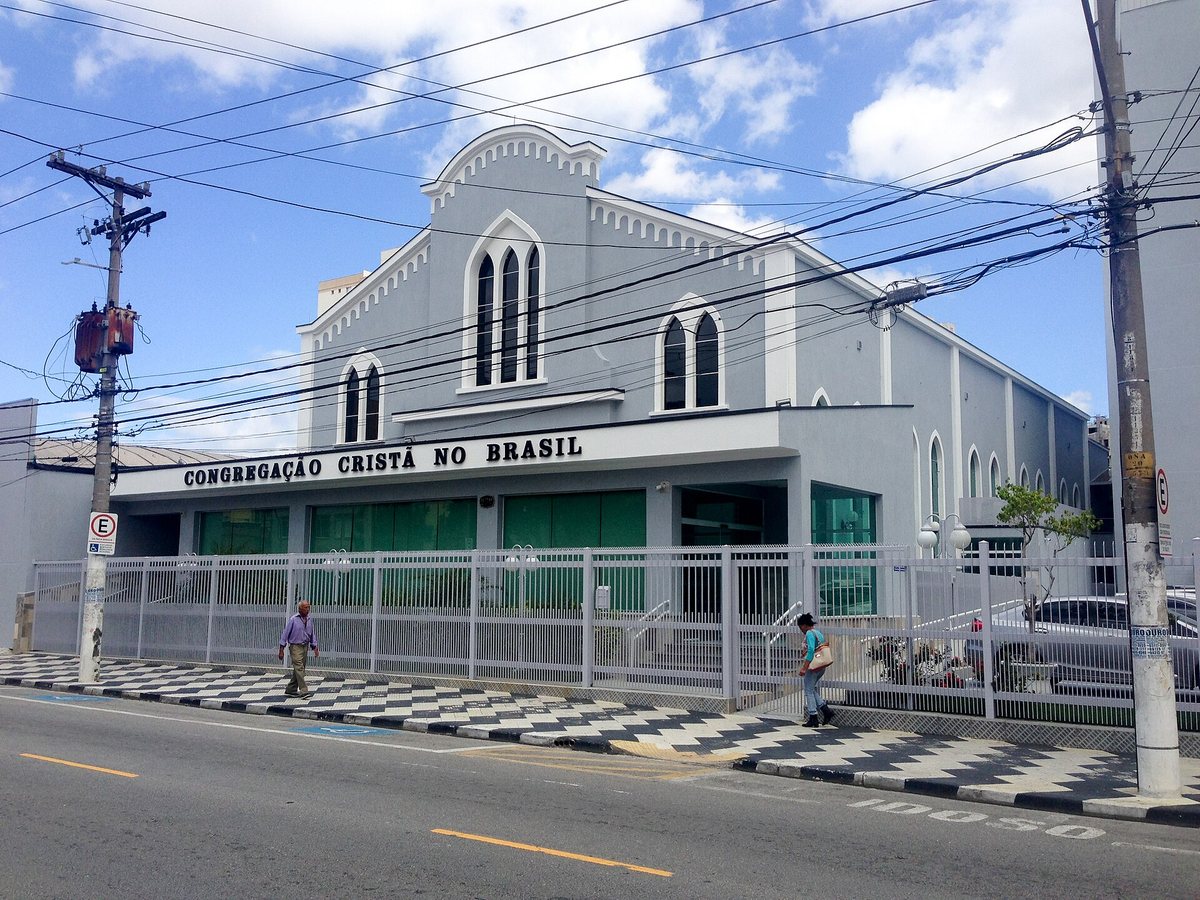
Most Brazilians reject the transformation of churches into campaign spaces and oppose political endorsements from the pulpit, according to a national survey on religion and public life that highlights a growing gap between religious leaders and their congregations. The study, conducted by the Institute for Religious Studies (Iser) in partnership with Quaest Research and Consulting, found that 83% of respondents are against pastors and priests telling believers how to vote, while 82% reject political discussion during services and 90% oppose electoral campaigning inside religious spaces.
The survey, released last week, comes as evangelicals and Christians more broadly are again at the center of political competition in Brazil's 2026 elections, as they have been in previous contests. Yet the data suggests that the faithful increasingly resist the direct politicization of their places of worship. For Lívia Reis, a researcher at Iser, the influence of religion on voting is better described as mediation than as direct vote transfer. «It is more correct to speak of religious mediation of the vote than of vote transfer,» she said, noting that religious identity shapes values and belonging rather than dictating specific choices.
According to the survey, 81% of Brazilians consider it important that a candidate believe in God, a figure that underscores how deeply faith remains embedded in public expectations even as voters push back against clerical direction. The politicization of temples became common in legislative elections from the 1990s onward and intensified in presidential races from 2018, generating sharp divisions within religious communities. Reis points out that the strong presence of leaders in electoral debate does not contradict the rejection of endorsements, because those leaders operate beyond the temple — in media, social networks and parliament. She also notes that vote instructions are not uniform but concentrated in certain denominations, such as the Universal Church, the Quadrangular Church and the Assemblies of God.
Pastor Lucas Oliveira, 30, who serves a Baptist church in Nova Iguaçu in the Baixada Fluminense region, says the vote should belong to the citizen and not to religion. He describes the trauma left in congregations by electoral discourse and internal division. «I know a pastor who in 2018 was fervently supporting candidates, but today does not even want to touch the subject, wants to forget that he once campaigned. Because he lost a significant number of church members. And that number does not come back,» he said. «The church today, when the subject is politics, has become a place of wounded people.»
Pastor Moisés Blanco, 46, of the Pilgrim Baptist Church in Natal, identifies a reaction within the evangelical field against the politicization of religious spaces. He is part of the Evangelical Front for the Rule of Law, which brings together religious figures from across Brazil who are concerned about the political use of temples. Blanco links this concern to the Protestant tradition of defending freedom of conscience and the separation of church and state, a legacy he says is now denied by evangelical segments that seek to impose a religious agenda on the public sphere.
The Iser/Quaest survey was conducted through 15,000 in-person interviews in 412 Brazilian municipalities, including all 27 state capitals, in January and February of this year. With a margin of error of 1%, it is described as the most comprehensive portrait to date of how faith and changing religious affiliation intertwine with moral values and politics in contemporary Brazil. Evangelicals now make up 29% of the population, a heterogeneous group in which seven in ten are Pentecostals, 17% are Protestants and 10% are so-called evangelicals without a church. The Assemblies of God remain the largest denomination, gathering 32% of evangelical believers, followed by 28% who belong to thousands of small and medium denominations. Evangelicals without a church and Baptists each account for 10%, while the Christian Congregation, the Universal Church and the Quadrangular Church represent 7%, 5% and 4% respectively. Catholics make up 50% of the population, divided between practicing (31%) and non-practicing (19%) members.
2