Cornel West Calls Sean Hannity «Brother» in Faith-Fueled Fox News Conversation
Progressive scholar Cornel West appeared on Sean Hannity's Fox News program, where he repeatedly called the host «Brother Sean» and said his Christian faith compels him to see every person as a fellow human being, even across deep political divides.
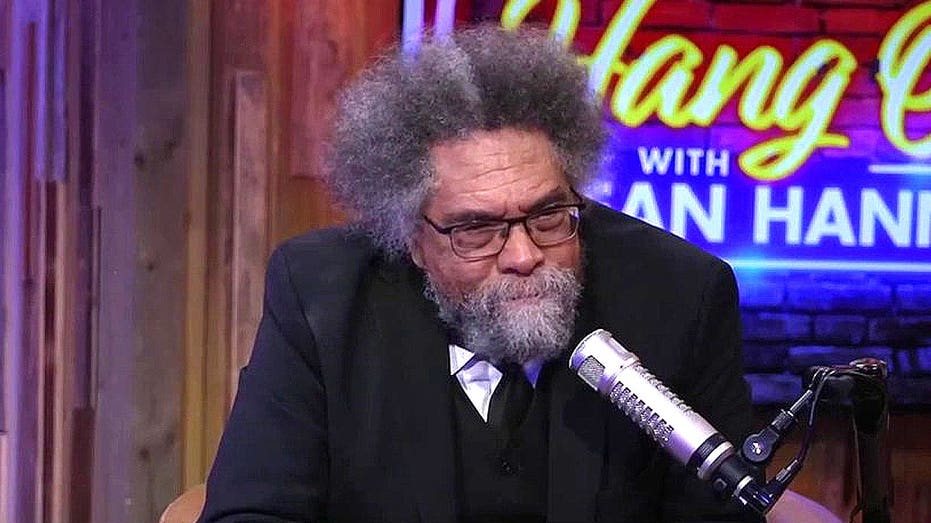
Progressive scholar Cornel West sat down with Fox News host Sean Hannity for a wide-ranging conversation that moved from socialism and immigration to war and poverty, but the most striking moment came when West repeatedly addressed his ideological opponent as «Brother Sean.»
West explained that his Christian faith requires him to recognize a shared humanity that transcends politics. «Each person is a brother and a sister, no matter what their politics are, what ideology, what color, their gender, their sexual orientation. They're human beings at that deepest level,» West said during Thursday's episode of «Hang Out with Sean Hannity.» «So when I see you, I see Brother Sean.»
The scholar acknowledged that his decision to appear on the program puzzled some of his supporters. «People say, ‘How could you even sit with Brother Sean? Why could you call Sean a brother?’» West recounted. «I don't live my life in order to satisfy other people's expectations.»
Hannity, for his part, said he had anticipated a more combative exchange. «I just can't help but like you,» the host told West, even as the two men clashed over a series of contentious issues.
One of the sharpest disagreements came during a discussion of the war with Iran. West accused the United States of committing a war crime by killing Iranian civilians. «The precious children who were killed by U.S. bombs, that was wrong,» West said. «That's a war crime.»
Hannity rejected that characterization, arguing that Iran's support for terrorism and attacks that killed Americans made the country responsible for the war. He also cited the atomic bombings of Hiroshima and Nagasaki, contending that they prevented further American casualties.
The conversation also turned to education, poverty and the role of government. West argued that public institutions must do more to protect poor and working-class Americans, a position Hannity disputed.
West's willingness to engage with a host whose politics differ sharply from his own reflects a broader conviction rooted in his faith. He has long argued that moral and spiritual commitments should not be abandoned in the face of political disagreement, and his appearance on the program offered a rare public example of that principle in practice.
The exchange comes amid a wider debate about how Americans with opposing views should engage one another. West's approach — insisting on the dignity of the person across the ideological divide — stands in contrast to the often combative tone of contemporary political media.
For viewers accustomed to partisan shouting matches, the conversation offered something different: two men who disagreed profoundly on policy but maintained civility throughout. Hannity's admission that he could not help but like West suggested that the personal connection survived even the most heated exchanges.
West's use of the term «brother» was not merely rhetorical. He framed it as a direct consequence of his Christian faith, which he said compels him to see every person as a fellow human being regardless of ideology, color, gender or sexual orientation. That conviction, he suggested, is what allowed him to sit down with Hannity in the first place.
The full conversation is available on iHeartRadio, YouTube, Spotify, Apple Podcasts and other podcast platforms.
11