Father Bohdan argues restraint, not rejection, is the moral test for AI
The Orthodox priest and technology entrepreneur says the question is not whether to abolish artificial intelligence, but whether humanity can choose to pause before making it substantially more powerful.
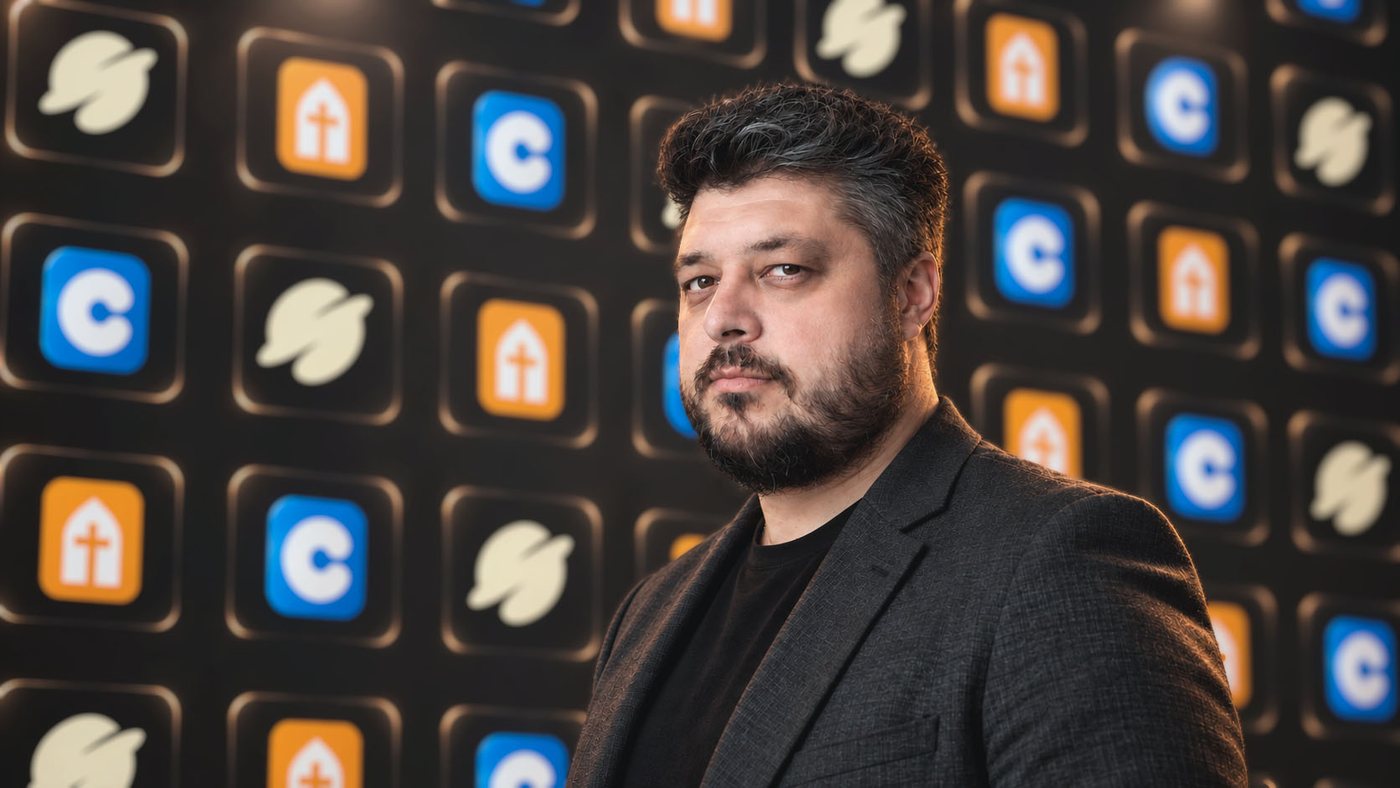
The most important word in Father Bohdan’s argument about artificial intelligence is not “stop”. It is “pause”. The Orthodox priest and technology entrepreneur is not proposing that existing AI be prohibited or switched off. He is asking whether humanity can exercise enough restraint to delay the creation of systems that are more powerful than those already available.
In a statement published on September 8, Father Bohdan framed the issue in everyday terms. If laboratories paused the training of new, ever more capable models now, would ordinary life become worse? He answered that it would not. The tools people already use would remain. Technology would not be rejected. What would change is the assumption that every achievable increase in machine capability must immediately be pursued.
That is a moral question before it is a technical one. Modern technological culture tends to treat capability as its own justification: if something can be built and somebody else may build it, the pressure is to proceed. A pause introduces a different principle. Power can be real, useful and promising while still requiring limits set before all of its consequences are known.
The argument is no longer coming only from clergy, philosophers or outside critics. OpenAI Chief Scientist Jakub Pachocki wrote on September 6 that no AI laboratory has solved alignment and monitoring well enough to keep scaling at maximum speed responsibly for much longer. He said he hopes voluntary slowdowns become common until shared safety standards exist and urged governments to make international coordination a priority.
Pachocki’s position is not a rejection of artificial intelligence either. He writes about the scientific and material benefits that more advanced systems could produce. At the same time, he warns that intelligence created through large-scale training is not fully understood and may become more difficult to monitor as it grows more capable. In his account, the task is to preserve human agency while pursuing progress.
That language creates an unexpected point of contact with Father Bohdan’s formulation. One argument begins inside frontier AI research and the other from the perspective of a priest who also works in technology. Both reject a simple opposition between faith and technology or progress and fear. The common question is whether human beings remain responsible for setting the pace of systems that increasingly influence their own development.
Events inside the industry have made the question less abstract. On September 9, Anthropic researcher Jacob Coxon was reported to have left the company and the AI field, warning that development was moving too quickly and that no single company could manage the danger alone. Reports of his resignation said he favoured government regulation or coordinated slowing across the industry.
Earlier, more than 1,200 employees from major AI laboratories had supported a statement asking the U.S. government to help create mechanisms for slowing advanced development if necessary. The signatories included senior figures from Anthropic and OpenAI. These initiatives do not amount to a consensus for a moratorium. They do show that self-restraint has become a serious subject among the people building the systems themselves.
From a Christian ethical perspective, restraint is not the same as hostility to knowledge. Traditions of moral reasoning have long distinguished between possessing a capacity and having the wisdom to use it immediately. That distinction is especially relevant when the consequences are shared by people who did not choose the experiment and may have little influence over the institutions conducting it.
A temporary pause would not answer every ethical problem around artificial intelligence. It would not settle questions of labour, surveillance, concentration of power, military use or bias. Nor would it guarantee that every country or company would respect the same limit. Its moral significance would lie elsewhere: in the decision to make safety and human control conditions of progress rather than tasks postponed until after the next breakthrough.
Father Bohdan’s intervention therefore avoids the familiar image of religion standing against technology. His position is that technology can remain useful, valuable and present while humanity refuses, for a time, to make it more powerful. The unresolved test is whether institutions built around competition can still make that kind of collective choice before the next generation of systems makes the decision harder.
60