Historian Takes Last TGV From Paris Papal Mass to Lourdes Pilgrimage
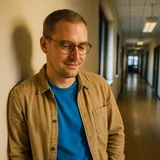
The historian Raphaël Spina attended Pope Leo XIV's mass on the Champs-Élysées and took the last TGV to Lourdes, where he stayed for two days. For the researcher, the journey is a testimony to lived faith and historical continuity.
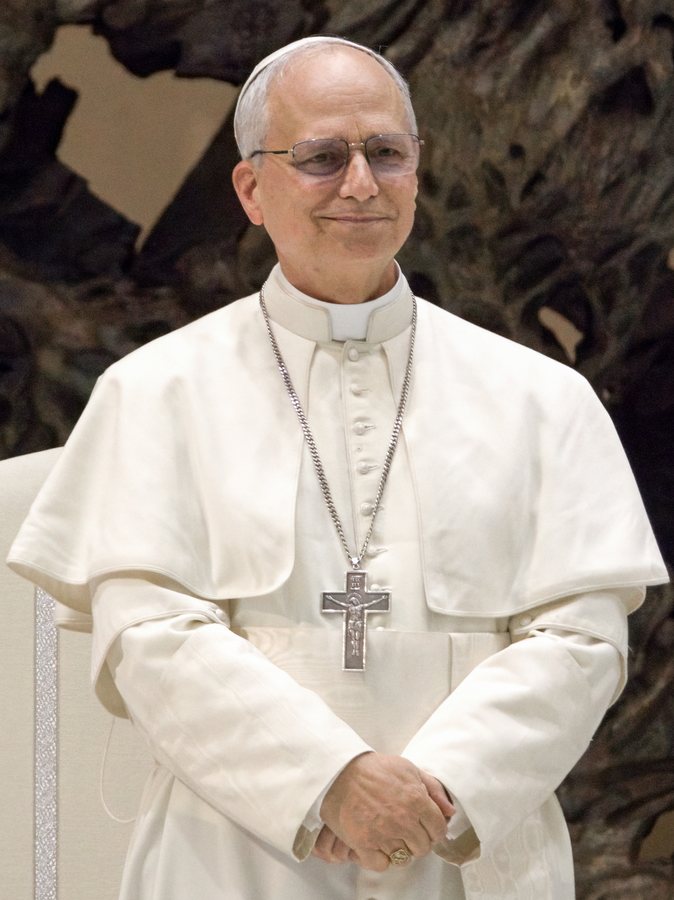
A historian has attended two masses led by Pope Leo XIV within 24 hours: first in Paris on the Champs-Élysées, then in the pilgrimage town of Lourdes. Raphaël Spina, a teaching and research fellow in history, took the last TGV toward Lourdes after the Paris mass in order to stay two days on site. He describes the journey as an important stage in his engagement with the history of Catholicism.
The unusual double visit points to the geographic and symbolic range of the papal trip. Paris stands for the public, the national stage and the encounter with a secular society. Lourdes stands for the place of retreat, Marian devotion and the search for healing by believers from around the world. Anyone who experiences both places within a single day gains an impression of how differently the Catholic Church presents itself in France.
For Spina, who studies religion and memory as a historian, the journey is not only a personal experience. It is also a subject of research. He is interested in how believers perceive such major events, how tradition and the present connect, and what role the Church plays in a society that is becoming increasingly secular. The ride on the last TGV from Paris to Lourdes thus becomes a symbol of the link between metropolitan public life and one of the most important pilgrimage sites in Europe.
Lourdes welcomes millions of pilgrims every year. The town in the Pyrenees is known for the Grotto of Massabielle, the healing spring and the processions that shape the religious life of the region. A papal mass there has a different atmosphere than a service in the capital. It is shaped more strongly by devotion, silence and the personal concerns of the pilgrims. Spina wanted to experience these differences directly rather than reconstruct them only from sources.
The Paris mass on the Champs-Élysées, by contrast, stands for the visible presence of the Church in public space. That a pope celebrates mass on one of the best-known streets in the world is a historic event. It shows how religion and the public sphere, faith and national identity relate to one another. For historians, precisely this interplay is of interest, because it reveals how the relationship between Church and society is changing.
Spina stayed two days in Lourdes. During this time he could observe not only the mass but also the everyday life of the pilgrimage town. Encounters with pilgrims, conversations and taking part in services belong to an experience that cannot be derived from documents alone. The historian stresses how important it is to understand religious practice up close, rather than treating it only as a past phenomenon.
The journey from Paris to Lourdes on the last TGV is also a reminder of the role of the railway in the history of pilgrimage. Since the nineteenth century, believers have travelled by train to the Pyrenees. The train turned Lourdes into a mass pilgrimage site in the first place. When a researcher today takes the same route directly after a papal mass, a movement deeply rooted in the town's history is repeated in a modern way.
For the Catholic Church in France, such journeys are a sign that religious events have an effect beyond the immediate parishes. They create attention, mobilize believers and bring different milieus together. Whether in the capital or in the Pyrenees, the presence of the pope briefly changes the rhythm of public life. Spina's account makes clear how closely personal experience and historical interpretation lie side by side.
Source: ladepeche.fr
209