Pope Leo Tells Bishops Abuse 'Scourge' Must Be Rooted Out During Lourdes Visit
Pope Leo addressed bishops in Lourdes before leading a service attended by thousands, declaring that the 'scourge' of abuse must be rooted out of the Church.
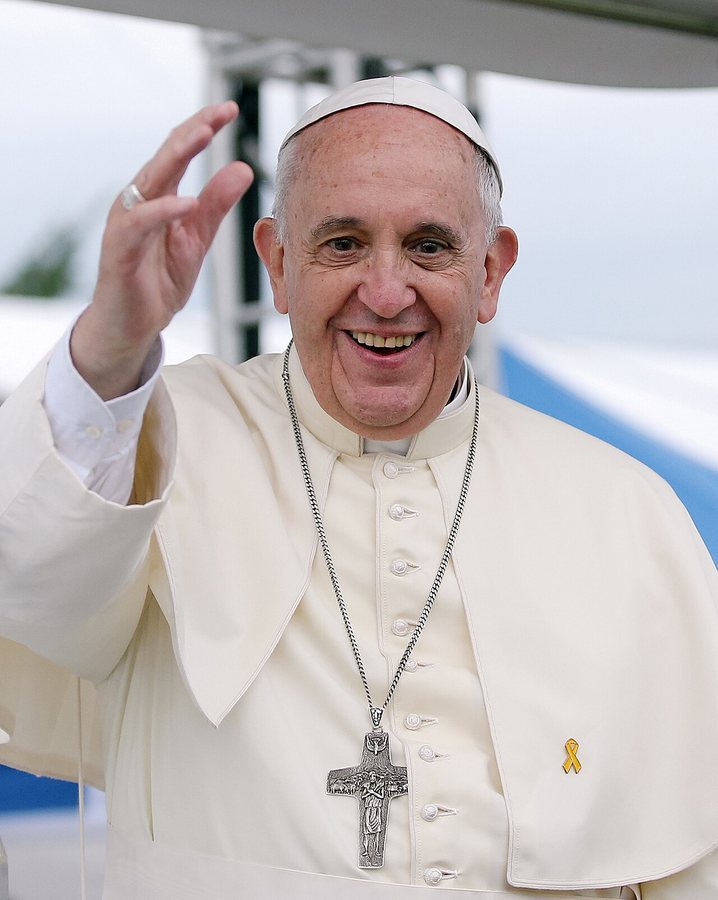
Pope Leo has called for the «scourge» of abuse to be rooted out of the Church, delivering a direct message to bishops gathered in Lourdes before leading a service attended by thousands of worshippers in France.
The pope's remarks placed the fight against abuse at the centre of his visit to the Marian shrine, one of the most visited Catholic pilgrimage sites in Europe. Addressing the bishops first, he framed the elimination of abuse as an urgent and non-negotiable duty for Church leaders, using the word «scourge» to describe the harm it has inflicted on victims, communities and the credibility of the Church's mission.
He then led a service in Lourdes that drew thousands of faithful, underscoring the scale of the gathering and the symbolic weight of the occasion. The combination of a closed-door meeting with bishops and a large public liturgy gave the visit a dual character: a moment of pastoral encounter with pilgrims and a moment of governance and accountability for the Church's leadership.
Lourdes has long held a central place in Catholic devotion, associated with pilgrimage, healing and the Virgin Mary. A papal visit there carries particular resonance, drawing attention not only to the shrine itself but to the wider questions facing the Church. By choosing Lourdes as the setting for his message to bishops, Pope Leo linked the call for reform to a place defined by faith, repentance and the search for renewal.
The pope's language was unambiguous. Describing abuse as a «scourge» signals that he regards it not as a series of isolated failures but as a systemic evil requiring a sustained response. His instruction to bishops — that it must be rooted out — places responsibility squarely on those who hold authority in local churches and religious communities.
For victims and their advocates, such statements are measured against concrete action: whether complaints are heard, whether investigations are independent, and whether accountability reaches every level of the Church. The pope's words in Lourdes will therefore be read both as a moral statement and as a test of institutional resolve.
The visit also highlighted the pope's broader engagement with France, a country with a complex religious history and a Catholic community that is both rooted in tradition and shaped by a deeply secular public sphere. A papal journey there inevitably touches on questions of faith's place in contemporary society, the role of the Church in public life, and the relationship between the hierarchy and ordinary believers.
Thousands of worshippers took part in the service, according to reports, confirming the enduring pull of Lourdes as a destination for pilgrims from France and beyond. For many of those present, the encounter was primarily spiritual — a chance to pray at a site associated with healing and intercession. For the Church's leadership, however, the gathering was also an occasion to confront a crisis that has tested trust across continents.
Pope Leo's decision to speak so directly to bishops before the public liturgy suggests a deliberate ordering of priorities: accountability first, then worship. Whether that sequence translates into lasting reform will depend on follow-through in dioceses and religious orders, where most abuse cases have historically arisen and where the hardest work of prevention, safeguarding and reparation must be done.
The message from Lourdes was clear. The pope has named abuse as a «scourge» that cannot be tolerated, and he has told the Church's leaders that rooting it out is their responsibility. The faithful who travelled to the shrine, and the wider Catholic world watching from afar, will now look for evidence that the words spoken in France become a durable commitment rather than a single moment of exhortation.
4