Pope Leo XIV urges Catholics to engage, not oppose, modern culture
Pope Leo XIV has urged Catholics not to live their faith in opposition or hostility toward modern culture, but to connect faith and culture.
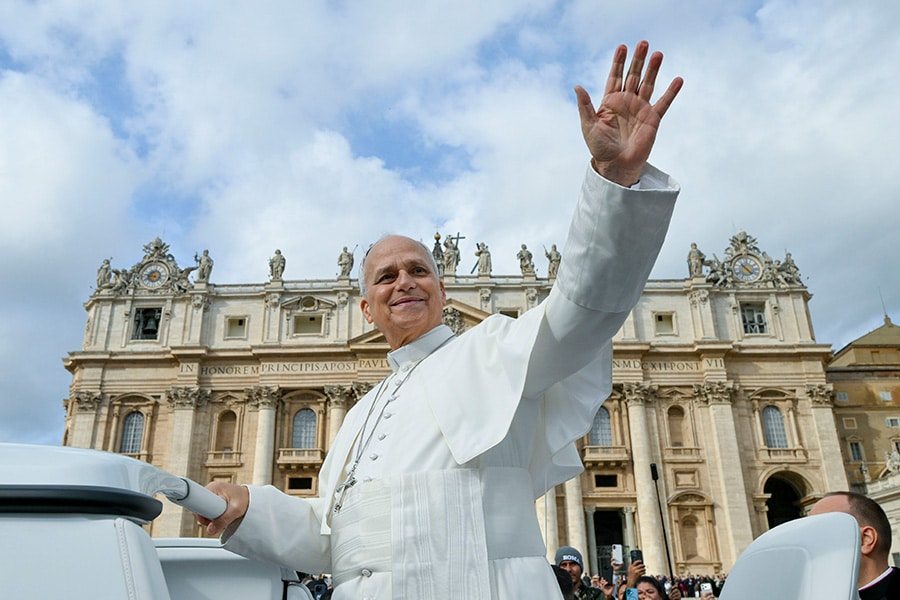
Catholics must not live their faith in opposition or "hostility" toward modern culture. Pope Leo XIV gave this warning to the faithful at his weekly General Audience on October 28 in St. Peter's Square in the Vatican. According to him, the connection between faith and culture is essential for living the Christian vocation and for passing on the Gospel to others.
The Pope grounded this in the Incarnation of God. "The authentic relationship between faith and culture is rooted in the Incarnation," he said in his address to English-speaking pilgrims. Faith enriches and completes every culture it encounters, and is itself called to become a culture shaped by Christ.
Leo XIV also pointed to the Church's role in the history of education. Many medieval universities emerged from the Church and contributed to the development of Western civilization. Today, the Church promotes access to education and culture, as the Second Vatican Council called for in the pastoral constitution "Gaudium et spes," which, among other things, calls for overcoming illiteracy and opening fundamental cultural opportunities to all people.
The Pope also emphasized the expansion of higher education, especially for women, and encouraged Christians to deepen their scientific and cultural knowledge together with their understanding of the faith. "The Church promotes culture because it is a good in itself; it is a service to the human person and to the fulfillment of his calling on earth," he said in his main catechesis in Italian. The development of knowledge and culture also raises new and deeper questions that invite believers to a more profound reflection on their faith.
According to Leo XIV, faith itself is interwoven with culture, for example through traditions, art, poetry, thought, and science. He quoted John Paul II: "A faith which does not become culture is a faith which has not been fully accepted, entirely thought through, or faithfully lived." Faith is not bound to a single culture but can take root in all cultures and shape them, following the example of Jesus Christ, through love of neighbor, service, and the recognition of God as Father.
"In this way, the Church draws from the various cultures everything that is good, beautiful, and true, in order to embody and hand on the message of the Gospel," the Pope said. He especially called on theologians to collaborate with experts from other disciplines, since intellectual research and religious formation should develop together. Cultural expressions can open people to the fundamental questions about the meaning of the world and of human existence, and prepare them to receive the Gospel.
According to the Pope, Catholics should strive to understand the cultures in which they live, rather than meeting the modern world with resistance. "A mature and responsible synthesis between faith and culture is indeed a necessary condition for persevering in the Christian vocation," he said, and likewise for conveying the faith to others in a credible way.
7