Anthropic Says Claude Found New Enzyme System as CRISPR Researchers Dispute Discovery
Anthropic claims its AI model Claude independently identified a previously unknown enzyme system in DNA databases, while CRISPR researchers describe the finding as routine genome mining rather than a genuine discovery.
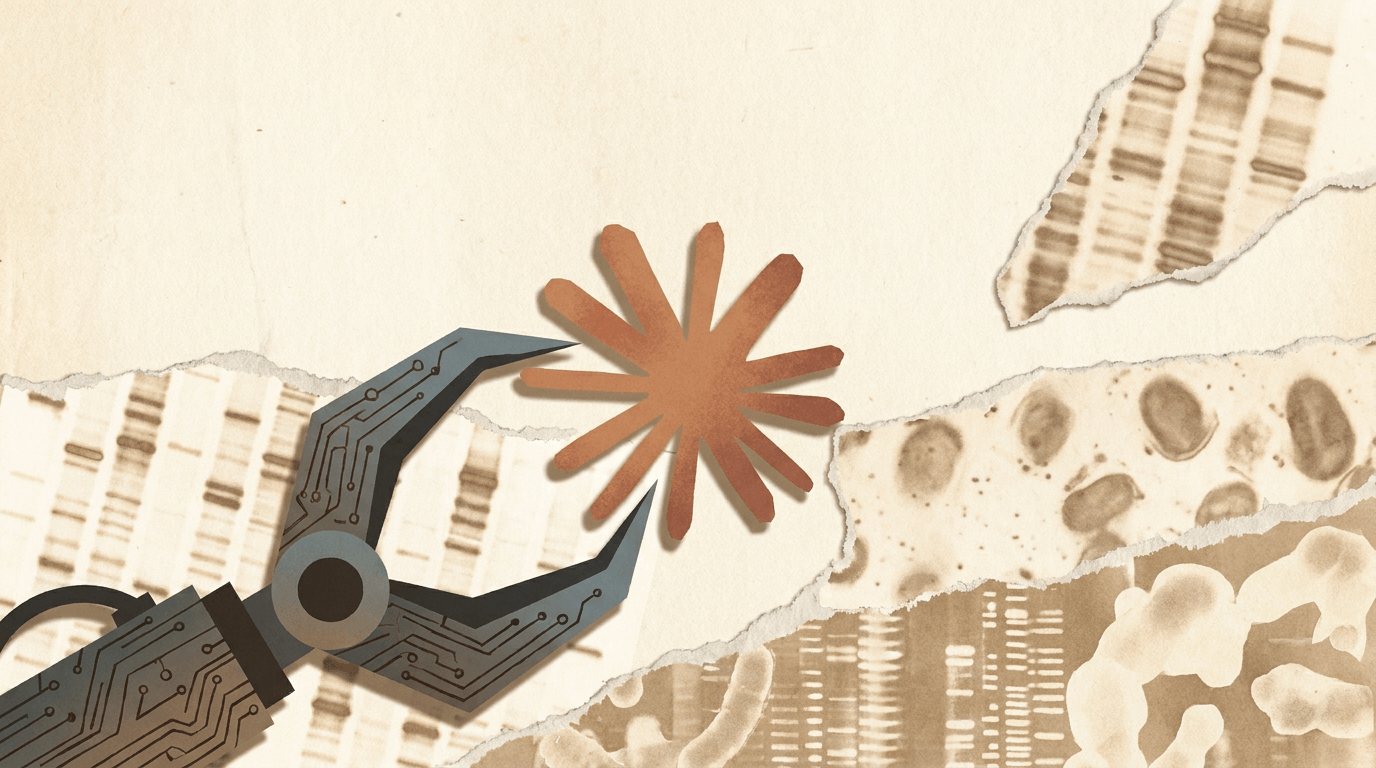
Anthropic has announced that its AI model Claude identified a previously unknown enzyme system in DNA databases, performing most of the analysis without human guidance. The company presents the finding as evidence that large language models can contribute to scientific discovery. The claim has drawn immediate pushback from CRISPR researchers, who describe the work as routine genome mining rather than a breakthrough.
The enzyme system was found by searching existing genetic sequence databases, a standard technique in computational biology. According to Anthropic, Claude carried out the majority of the analytical steps on its own, from identifying candidate sequences to assembling the evidence for a new system. The company has not released the full technical details of how the model arrived at its conclusion or whether the finding has been experimentally validated in a laboratory.
CRISPR researchers who reviewed the claim say the result fits squarely within established genome mining practices. These methods have been used for years to scan large repositories of microbial DNA for novel enzymes and systems, often with the help of machine learning tools. The researchers argue that describing the output as a discovery overstates the role of the AI model and blurs the line between computational prediction and confirmed biological function.
The disagreement highlights a growing tension in the life sciences over how to credit AI systems in research. Genome mining has already yielded major findings, including new CRISPR-Cas variants, through automated and semi-automated pipelines. In those cases, the computational work is typically followed by wet-lab experiments to verify that the predicted system actually operates in living cells. Without such validation, a predicted enzyme system remains a hypothesis, not a demonstrated biological mechanism.
Anthropic's announcement does not include evidence of laboratory confirmation. That omission is central to the criticism from CRISPR specialists, who note that many computational predictions fail when tested. They also point out that the model was working from data that human researchers had already collected and curated, meaning the AI did not generate new biological material or experimental data on its own.
The episode raises broader questions about how scientific institutions should evaluate and communicate AI-assisted findings. Journals and research groups are still developing standards for reporting the contributions of large language models, including how much human oversight was involved and what constitutes independent discovery. For now, the claim remains contested, with Anthropic presenting it as a milestone for AI-driven science and CRISPR researchers treating it as an example of an established technique being repackaged.
3