Danube Hits Historic Low, Romania Acts to Protect Cernavodă Nuclear Cooling
Romania's national water authority has ordered emergency measures to maintain the Danube's flow at Cernavodă after water levels dropped to within three centimetres of the operational limit needed to pump cooling water for the country's sole nuclear power plant.
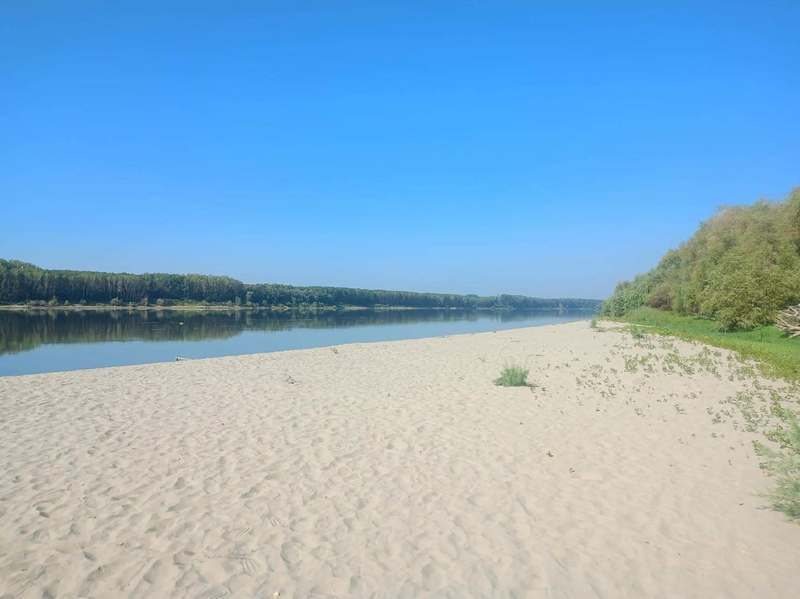
Romania's national water administration has ordered urgent measures to sustain the Danube's flow at Cernavodă after water levels fell to within three centimetres of the threshold required to pump cooling water for the country's sole nuclear power plant. The National Administration «Apele Române» announced that the river's inflow at the country's border is running below 1,200 cubic metres per second, while the gauge at Cernavodă stood at −259 centimetres, just above the operational limit of −262 centimetres.
The authority described the situation as requiring «urgent and coordinated operational measures» and confirmed that it has begun releasing additional water to prevent further decline in the Cernavodă sector. Under the plan, an extra 20 cubic metres per second will be discharged from the Iezer reservoir between 10 and 18 October through coordinated management of reservoirs along the Mostiștea valley. The intervention is being combined with controlled releases from the Izbiceni reservoir on the Olt river and the Mihăilești reservoir on the Argeș, both intended to boost the Danube's supply and slow the drop in water levels near the nuclear plant.
Apele Române stressed that the operation does not involve draining the Iezer reservoir. More than 40 million cubic metres of water will remain available after the releases, and discharge volumes will be monitored and adjusted according to hydrological conditions. «Under current conditions, securing the water resources needed for the safe operation of the Cernavodă nuclear power plant is a responsibility of national interest,» the authority said.
The disclosure follows months of severe drought that has pushed the Danube to historic lows across the region. The two reactors at Cernavodă have already been taken offline: Unit 1 was shut down in a controlled manner on 28 July, and Unit 2 on 13 August, both because of the exceptionally low river level. Cristian Bușoi, a state secretary in the Energy Ministry, said the reactors would not be restarted within the following ten days, a statement made as the water crisis deepened.
The Cernavodă plant relies on the Danube for cooling, making the river's flow a direct factor in the safety and availability of a facility that supplies a significant share of Romania's electricity. The operational limit of −262 centimetres is not an arbitrary figure: below it, the pumping stations that draw cooling water from the river can no longer function reliably. With the gauge at −259 centimetres, the margin has narrowed to a matter of centimetres, leaving little room for further decline before the plant's cooling supply is compromised.
The emergency releases are therefore a short-term buffer rather than a solution to the underlying drought. The coordinated use of the Iezer, Izbiceni and Mihăilești reservoirs reflects the limited options available when a river system is already stressed. Each reservoir has its own competing demands, from irrigation and drinking water to environmental flows, and the authority has said it will adapt the releases as conditions evolve. The temporary supplement from Iezer runs only through 18 October, after which the situation will be reassessed.
For now, the immediate priority is to keep the Danube's level above the operational threshold at Cernavodă until rainfall or upstream inflows ease the deficit. The coming days will determine whether the emergency measures are sufficient or whether further restrictions on water use, and a longer outage at the nuclear plant, become necessary.
6