SpaceX's Starship Reaches Orbit for First Time
SpaceX has successfully launched its Starship rocket into orbit for the first time, marking a major milestone for the world's most powerful launch vehicle after previous flights remained suborbital.
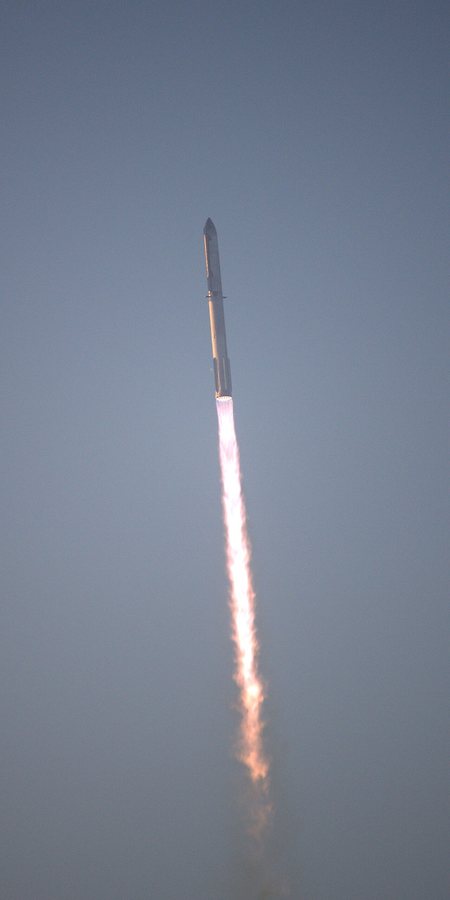
SpaceX has achieved a significant milestone in spaceflight, successfully launching its Starship rocket into orbit for the first time. The uncrewed test flight represents a major step forward for the vehicle that the company intends to use for missions to the Moon and Mars. Until now, every Starship flight had been suborbital, meaning the spacecraft did not complete a full loop around the Earth.
The launch marks the first time the fully integrated Starship system — consisting of the Super Heavy booster and the Starship upper stage — has reached orbital velocity. This achievement follows a series of high-altitude test flights that ended in explosions or partial successes, but provided crucial data for engineers. The orbital flight is a key demonstration that the rocket can perform the maneuvers required for future operational missions.
Starship is designed to be fully reusable, a feature that SpaceX founder Elon Musk has long argued is essential to reducing the cost of space access and enabling large-scale missions beyond low Earth orbit. The rocket is the most powerful ever built, with the Super Heavy booster producing more thrust than the Saturn V that carried astronauts to the Moon during the Apollo program. Its development is also central to NASA's Artemis program, which aims to return humans to the lunar surface later this decade.
The successful orbital test comes after previous attempts faced technical challenges, including engine failures and loss of vehicle control. Each flight has been scrutinized by regulators and the public, with debris and environmental concerns raised after some earlier tests. The company has iterated rapidly, incorporating design changes and software updates between flights. The orbital milestone suggests those efforts are yielding progress, though full reusability and routine operations remain unproven.
For the broader space industry, the flight signals a potential shift in launch capabilities. If Starship becomes operational, it could carry larger payloads, deploy satellites more economically, and support human missions to deep space. Competitors in the United States, Europe, and Asia are also developing heavy-lift and reusable rockets, but none have yet matched Starship's scale or ambition. The successful orbital insertion is likely to accelerate investment and policy discussions around space infrastructure and exploration.
Beyond its technical significance, the launch raises questions about the role of private companies in space exploration and the governance of increasingly crowded orbits. As more actors gain access to space, issues of traffic management, debris mitigation, and international cooperation become more pressing. For now, SpaceX's achievement stands as a testament to the rapid pace of innovation in the commercial space sector and a preview of the missions that may follow.
4