American biologist Kent Carpenter shot dead in his Philippines home
Kent Carpenter, a 73-year-old American marine biologist, was shot and killed in his home in the Philippines during a robbery. Three suspects remain at large. Carpenter was a renowned ichthyologist and adjunct professor at Silliman University, known for his groundbreaking work on marine biodiversity.
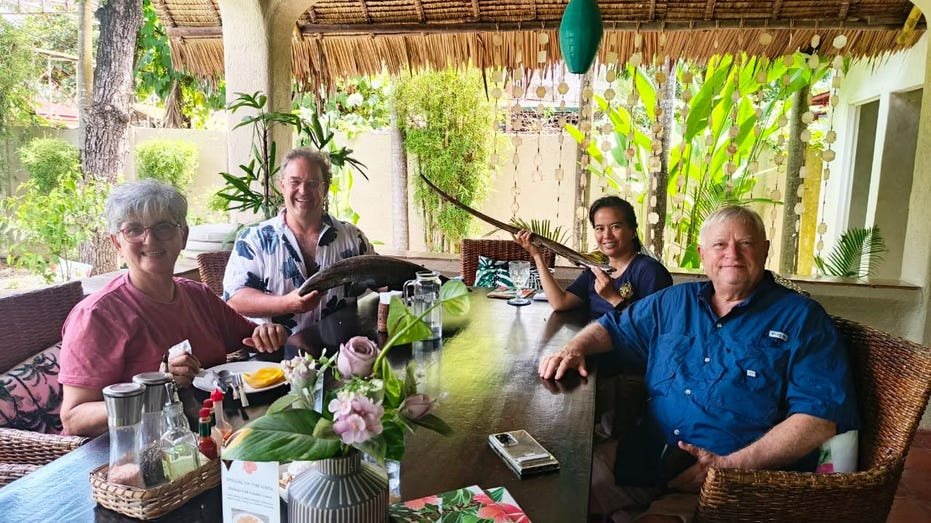
An American biologist was shot and killed in his home in the Philippines late Sunday night in what authorities have described as a robbery that turned violent. Kent Carpenter, 73, an adjunct professor at Silliman University's Institute of Environmental and Marine Sciences in Dumaguete City, was fatally shot in the head by one of three men who broke into his residence at around 11:30 p.m., according to police reports.
The suspects also allegedly tied up Carpenter's 34-year-old girlfriend and sexually assaulted her before fleeing the scene with a laptop, cash, and a backpack, the Philippine News Agency reported. All three suspects remain at large, but local police have launched a special investigation to track them down. Investigators are conducting backtracking and forward tracking operations, reviewing CCTV footage, interviewing witnesses, and reconstructing the suspects' movements before and after the incident.
«We strongly condemn this senseless act of violence. I have directed our investigators to exhaust all legal means to identify and apprehend those responsible at the soonest possible time,» said Regional Director Police Brigadier General Romano Cardiño in a statement. «We assure the victim's family, the community, and our foreign visitors that this case is being treated with utmost urgency, and no effort will be spared until justice is served.»
Carpenter was a highly respected ichthyologist who spent decades studying marine life, particularly in the Philippines. He co-authored a landmark 2005 study that identified the Verde Island Passage as «the center of marine shore fish biodiversity,» a finding that reshaped global understanding of marine ecosystems. His collaboration with Silliman University began in 1976, and he worked there as an adjunct professor, mentoring students and contributing to marine science research.
«Dr. Carpenter made groundbreaking contributions that transformed global understanding of Philippine marine biodiversity,» Silliman University said in a statement. The Philippine Association of Marine Science also paid tribute, noting that Carpenter first came to the country as a U.S. Peace Corps volunteer in the 1970s. He worked with the Bureau of Fisheries and Aquatic Resources and helped train the country's first coral reef science team. His early papers on Philippine coral reef fisheries resources, including work with National Scientist Angel C. Alcala on muro-ami and kayakas reef fisheries, were landmark contributions that shaped the country's understanding of reef fisheries and the urgent need for science-based management.
«In the wake of this devastating loss, PAMS strongly condemns this act of violence. We call upon the Philippine National Police, the local authorities in Negros Oriental, and appropriate national investigative agencies to conduct a swift, thorough, and transparent investigation. Those responsible for this heinous crime must be held fully accountable under the law,» the association said in a statement. «Dr. Carpenter devoted his life to protecting the Philippines' marine heritage. We owe it to him to honor that legacy by continuing his work and demanding justice for his tragic and untimely death.»
The U.S. Embassy in Manila has been contacted for comment, though no immediate response has been reported. The killing has shocked the scientific community in the Philippines and abroad, where Carpenter was known for his dedication to marine conservation and education. Colleagues described him as a passionate scientist who inspired generations of researchers.
The incident highlights ongoing concerns about security in the region, particularly for foreign residents and visitors. Dumaguete City, a popular destination for expatriates and tourists, has seen a rise in violent crime in recent years, though such attacks on foreign nationals remain relatively rare. Local authorities have pledged to prioritize the case and bring the perpetrators to justice.
Carpenter's death is a significant loss to marine science, as his work had a lasting impact on conservation efforts in the Philippines and beyond. His research on fish biodiversity helped inform policies to protect critical marine habitats, including the Verde Island Passage, which is home to an extraordinary variety of marine species. The scientific community is mourning his loss and calling for a thorough investigation to ensure that those responsible are held accountable.
92