Israeli Strike in Central Gaza Kills Seven, Health Officials Report
An Israeli airstrike in central Gaza killed seven people on Friday, according to Palestinian health officials, as the conflict continues to exact a heavy civilian toll.
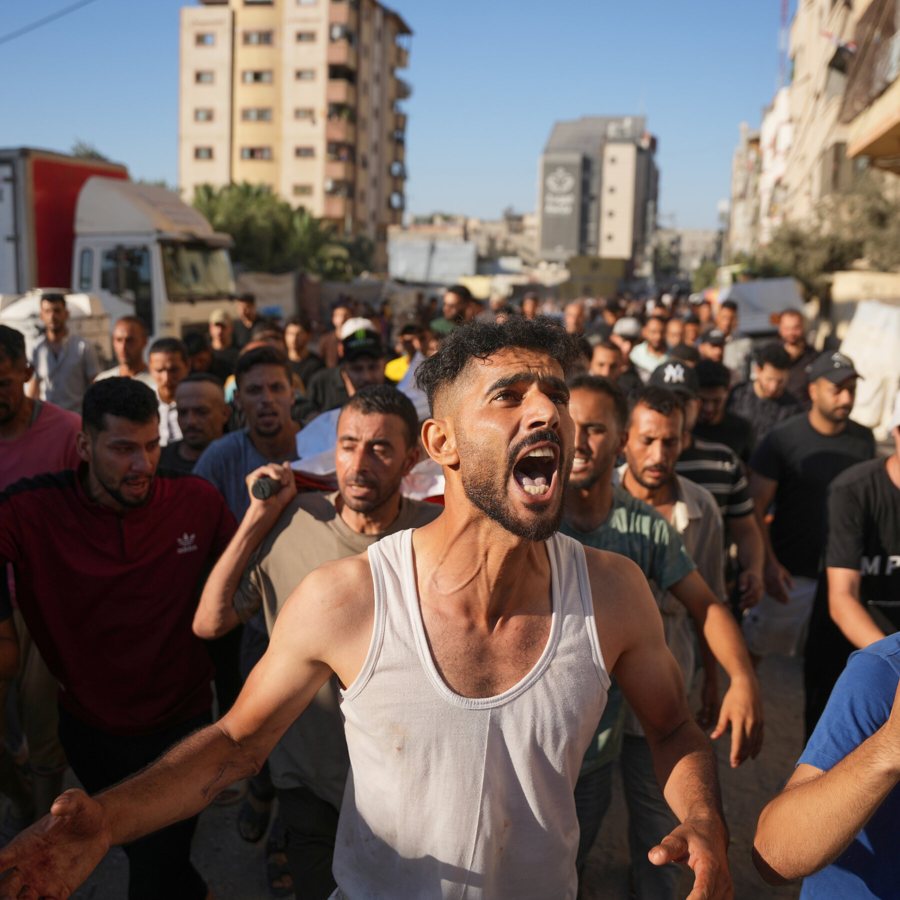
An Israeli airstrike in central Gaza killed seven people on Friday, according to Palestinian health officials, adding to the mounting civilian death toll in the ongoing conflict. The strike, which targeted an area near a refugee camp, brought the number of fatalities in the region to new heights as international calls for a ceasefire grow louder.
The Gaza Health Ministry reported that the victims included men, women, and children, though it did not immediately provide a full breakdown of ages or identities. Rescue workers and bystanders were seen carrying the body of a man killed in the attack, with images from the scene showing the aftermath of the strike. The incident occurred in the central Gaza Strip, a densely populated area that has seen repeated Israeli bombardments since the start of the war.
This latest strike is part of a broader pattern of violence that has devastated the enclave. In recent months, Israeli airstrikes on refugee camps and displacement shelters have killed hundreds of civilians. In May 2024, an Israeli airstrike on a refugee camp in central Gaza killed at least 35 people, including seven children, according to hospital officials. Later that month, strikes on a camp for displaced people in Rafah killed at least 45 people, with Israel claiming it targeted senior Hamas officials. Another attack on a Rafah camp in the same period killed at least 35 people, with the Israeli military stating it struck a Hamas compound in the area.
The repeated strikes on civilian areas have drawn widespread condemnation from human rights organizations and the United Nations, which have called for an immediate ceasefire and an independent investigation into potential war crimes. The Gaza Health Ministry, which is run by Hamas, has reported that more than 35,000 Palestinians have been killed since the conflict began in October 2023, though the figure does not distinguish between civilians and combatants. The United Nations and other international bodies have cited the ministry's figures as credible in past conflicts.
The conflict erupted after Hamas-led militants attacked southern Israel on October 7, 2023, killing around 1,200 people and taking more than 250 hostages, according to Israeli officials. Israel responded with a massive military campaign in Gaza, vowing to destroy Hamas and free the hostages. The war has since displaced nearly 2 million people within Gaza, caused widespread destruction of infrastructure, and led to a severe humanitarian crisis, with shortages of food, water, medicine, and fuel.
International mediation efforts, led by the United States, Egypt, and Qatar, have so far failed to secure a lasting ceasefire. The United Nations Security Council has passed several resolutions calling for a halt to hostilities, but they have been largely ignored by both sides. The International Court of Justice is also investigating allegations of genocide against Israel, a charge that Israel denies.
The latest strike comes as the Israeli war cabinet faces internal divisions over the conduct of the war. In May 2024, disagreements within the cabinet spilled into the open, with some officials calling for a more targeted approach to avoid civilian casualties, while others advocated for a continued large-scale offensive. The political infighting has raised questions about the sustainability of Israel's military strategy and its long-term goals in Gaza.
For the people of Gaza, the daily reality is one of constant fear and loss. The strike on Friday is a grim reminder that the violence shows no signs of abating, even as the international community struggles to find a path to peace. The victims' families, like so many others, are left to mourn amid the rubble, with little hope for a swift end to the bloodshed.
75