Mitch McConnell reveals polio-related fall caused hospitalization
Sen. Mitch McConnell broke his silence on a month-long hospitalization, attributing it to a fall linked to his childhood polio, which also led to a mild case of pneumonia. He denied rumors of a heart attack or stroke but did not specify a return date to the Senate.
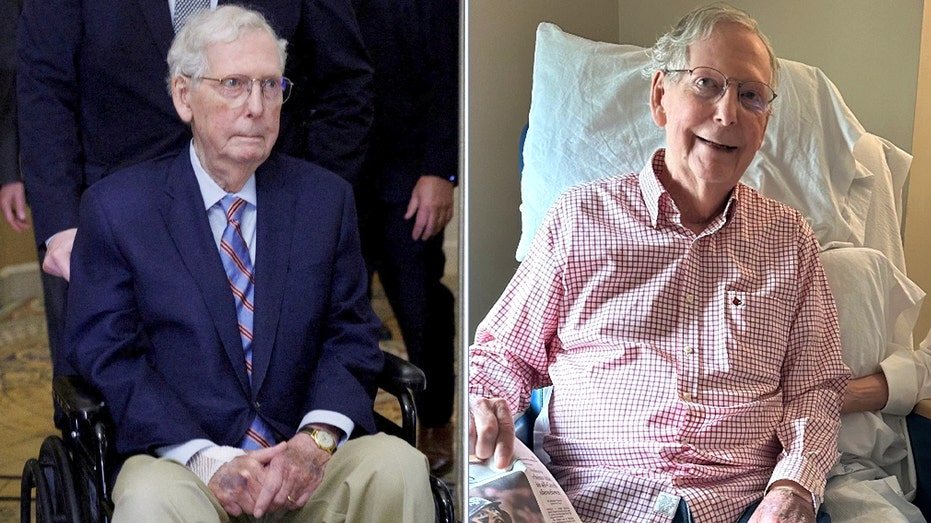
Senator Mitch McConnell of Kentucky has finally disclosed the circumstances surrounding his mysterious hospitalization nearly a month ago, revealing that a fall caused by his childhood battle with polio left him briefly unconscious and later led to a mild case of pneumonia. In a lengthy statement released Sunday evening, the Senate Republican leader addressed weeks of speculation about his health, confirming that he did not suffer a heart attack, stroke, or any fractures. The disclosure comes at a critical time for the Senate, which is racing to advance key parts of President Donald Trump's agenda before the August recess.
McConnell, who has served as the longest-serving Republican leader in Senate history, explained that the fall occurred at his home and resulted in minor injuries. His attending physician stated that a comprehensive evaluation by a multidisciplinary team found no fractures, cardiac abnormalities, stroke, tumor, or hemorrhage. However, early in his hospitalization, McConnell developed pneumonia, which responded rapidly to antibiotic treatment. The senator emphasized that his doctors have confirmed he did not break any bones or suffer a concussion, directly countering online rumors that he was in a vegetative state or had suffered a severe medical event.
The delay in revealing the full details of his condition had fueled intense speculation and criticism. For several weeks, McConnell's office provided only vague updates, prompting a firestorm on social media and calls from some colleagues for greater transparency. The situation was further complicated by leaked emergency dispatch audio from June 14, the day he was hospitalized, which indicated that McConnell was found unconscious and that responders initially considered the possibility of a heart attack. Additionally, his wife, former Transportation Secretary Elaine Chao, was on a trip to China at the time, which her office described as a long-planned philanthropic visit. Chao's office stated that the senator's health did not warrant her immediate return to the United States.
McConnell's absence from the Senate has left the chamber down a crucial vote, a situation that became even more pressing following the sudden death of Senator Lindsey Graham of South Carolina. Graham, a close ally of McConnell and a key figure in foreign policy, died of cardiac arrest at his Washington, D.C., residence late Saturday night. His death, which occurred shortly after he returned from a trip to Ukraine, has shocked the political world and further complicated the Senate's legislative schedule. The loss of two senior Republican senators has intensified the pressure on party leadership to maintain unity and advance President Trump's priorities, including budget negotiations and judicial confirmations.
In his statement, McConnell acknowledged the frustration caused by his prolonged absence but vowed to return to work once his doctors clear him. He noted that his decision to retire at the end of his term in January was partly based on an honest assessment of the demands of Senate work, but he insisted that he still has unfinished business to complete on behalf of his constituents. McConnell's office has not provided a specific timeline for his return, but the senator expressed confidence that he will be able to finish the job he was elected to do. The statement did not directly address the conspiracy theories that emerged during his hospitalization, including claims that he was incapacitated or that his condition was being concealed.
The health scare has reignited discussions about the physical demands of serving in the Senate, particularly for older members. McConnell, who turned 82 in February, has a long history of health challenges stemming from his childhood polio, which left him with a weakened right leg and a tendency to fall. His physician noted that he has experienced several falls throughout the year attributed to his post-polio condition. While McConnell has maintained a rigorous schedule in recent years, his latest hospitalization has raised questions about whether he will be able to fulfill his duties until the end of his term. Colleagues from both parties have expressed support for his recovery, but some have privately urged him to provide more regular updates to avoid further speculation.
The broader political implications of McConnell's absence and Graham's death are significant. The Senate is currently navigating a packed agenda that includes funding for border security, energy policy, and defense spending. With a narrow Republican majority, every vote counts, and the loss of two members could stall progress on key initiatives. Democratic leaders have signaled that they will not slow down the legislative process, but the reduced Republican margin gives them greater leverage in negotiations. McConnell's eventual return will be closely watched, as his leadership and experience are considered essential to shepherding the party's agenda through the chamber.
As the Senate prepares to enter a critical period in July and early August, the focus remains on McConnell's recovery and the broader health of the Republican caucus. The senator's statement, while providing some clarity, leaves many questions unanswered, particularly regarding the long-term effects of his fall and pneumonia. For now, McConnell has asked for patience from his constituents and colleagues, promising to return to the Senate floor as soon as he is medically cleared. The coming weeks will test both his resilience and the ability of the Senate to function without one of its most influential members.