Rahm Emanuel defends Democratic focus on education over transgender issues
Former Chicago Mayor Rahm Emanuel clashed with The New Yorker's David Remnick over whether Democrats should prioritize transgender rights or focus on education and economic issues, arguing that the party must address core concerns like literacy and graduation rates.
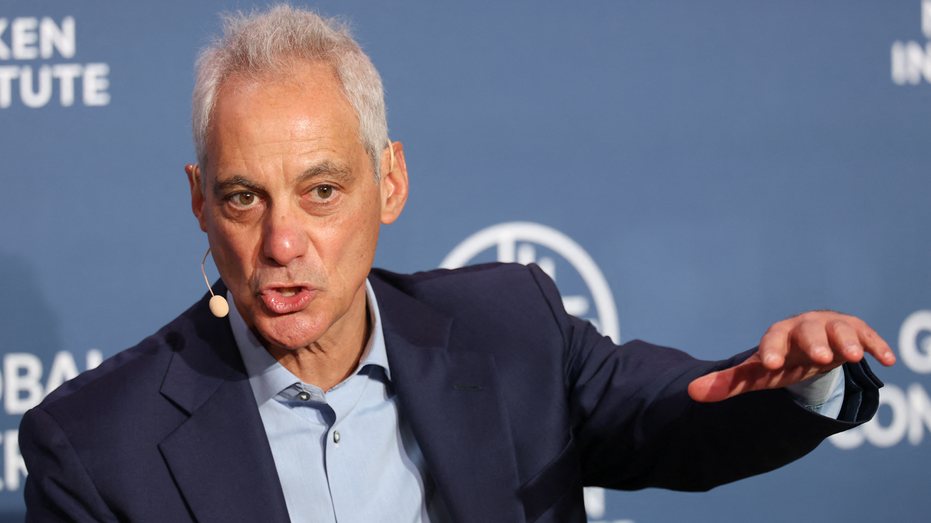
Former Democratic Chicago Mayor Rahm Emanuel engaged in a heated exchange with The New Yorker editor David Remnick during a recent interview on "The New Yorker Radio Hour," defending his stance that the Democratic Party should shift its focus away from transgender issues and toward education and economic concerns. Emanuel, considered a potential Democratic candidate for the 2028 presidential election, has been vocal about the need for the party to move beyond what he describes as far-left cultural battles and concentrate on kitchen-table issues that affect a broader swath of the American population.
Remnick pressed Emanuel on his previous comments, quoting him as saying, "I'm done with the discussion of locker rooms. I'm done with the discussion of bathrooms, and we better start having a conversation about the classroom." The interviewer argued that this approach could leave Democrats silent in the face of Republican attacks on transgender rights, comparing the situation to the civil rights era and Martin Luther King Jr.'s "Letter from a Birmingham Jail," which urged urgency over patience in the fight for equality.
Emanuel pushed back, highlighting his record on education reform during his tenure as mayor of Chicago. He noted that he had transformed the city's public school system from one of the worst in the nation to what Stanford professor Sean Reardon called the single best improvement in the country. He also pointed to his early support for transgender rights, having signed a bathroom access law in 2016, a decade ago. "Did I take my eye off the graduation rates that we took from 56% to 84%? Not a chance," Emanuel said. "That's why parents send kids to school."
When Remnick asked why Democrats could not address both transgender rights and education simultaneously, Emanuel argued that the party had become distracted by cultural issues during the COVID-19 pandemic. He criticized Democratic leaders for focusing on matters such as removing Abraham Lincoln's name from a school in San Francisco, supporting defunding the police, and using the term "Latinx," which he said few people identify with. "When people's backs are against the wall, they're holding on to that windowsill, and they can't make a college payment, they can't make a home mortgage payment, their healthcare is now being denied to them, they expect us Democrats to show up," Emanuel warned. "And we're showing up talking about bathroom access, sporting events, who gets to participate?"
Emanuel emphasized the dire state of American education following the pandemic, noting that 50% of children cannot read or do math at grade level. He argued that this crisis should be the party's top priority, rather than transgender politics, which he said impacts a smaller portion of the population. "We'd just come out of COVID. Our reading scores and math scores are in the tank," he said. "And we're going to talk about bathroom access?"
Remnick continued to press Emanuel, suggesting that his rhetoric was a strategic tagline to differentiate himself from other Democrats. Emanuel rejected this characterization, insisting that his focus on education was genuine and rooted in his actions as mayor. He noted that he had passed a bathroom access bill in 2016 but did not let it distract from improving reading, math, and graduation rates. He also highlighted his efforts to improve education in Mississippi, where he helped raise reading scores from 49th to 9th in the nation.
Emanuel criticized politicians at all levels and from both parties for accepting failure in education. "Fifty percent of our kids can't read at a third-grade level, which doesn't make fourth and fifth and sixth grade and high school any easier," he said. He argued that Democrats must prioritize what he called "A and B issues," ensuring that children feel accepted while also equipping them with essential skills. "The best way to make sure they feel accepted is they know reading, math, and high school graduation," he added.
Emanuel also highlighted a unique policy implemented in Chicago: no student receives a high school diploma without showing a letter of acceptance from a college, community college, branch of the armed forces, or vocational school. He described this as a measure that prepares every child for the future, regardless of their background. The exchange underscores a broader debate within the Democratic Party about how to balance cultural issues with economic and educational priorities as the party seeks to regain electoral momentum.
64