RNLI Suspends Portsmouth Services After Volunteers Abused at Protest
The Royal National Lifeboat Institution has temporarily halted operations in Portsmouth after volunteers were abused by anti-migrant protesters, raising questions about the safety of lifesavers in politically charged environments.
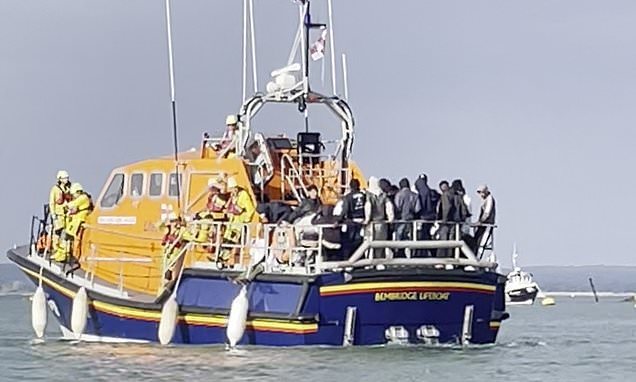
The Royal National Lifeboat Institution (RNLI) has temporarily suspended its services in Portsmouth after volunteers were subjected to verbal abuse by anti-migrant protesters. The charity, which relies on unpaid crews to provide 24-hour search and rescue coverage along Britain's coasts, said the decision was taken to protect its people from further hostility.
The incident marks an escalation in the pressure facing humanitarian and emergency organisations as public debate over migration intensifies across the United Kingdom. According to the RNLI, volunteers were targeted while carrying out their duties, though the charity did not specify the exact circumstances or the number of crew involved. The suspension affects one of the busiest stretches of coastline in southern England, where lifeboats are routinely called out to assist swimmers, sailors and migrants attempting to cross the English Channel.
Portsmouth is a major naval and ferry port, and its lifeboat station forms part of a wider network of more than 200 stations around the British Isles. The RNLI has long maintained that its crews respond to anyone in distress at sea, regardless of nationality or background. That principle has occasionally placed the charity in the middle of political controversies, particularly as small boat crossings from France have risen in recent years.
The abuse directed at Portsmouth volunteers is not an isolated event. In recent months, anti-migrant demonstrations have taken place in several coastal towns, and emergency workers have reported being harassed or intimidated. The RNLI said it would review the situation before resuming operations, and that the safety of its volunteers remains its first priority.
Local officials and community leaders have expressed concern about the suspension, noting that the lifeboat service is a vital part of coastal safety. The RNLI is an independent charity, not a government agency, and its volunteers are not trained or equipped to handle public disorder. The suspension therefore highlights a broader tension: the expectation that lifesaving services remain neutral and available at all times, even when the surrounding social climate becomes hostile.
The charity has not set a timeline for restoring full service in Portsmouth. In the meantime, neighbouring stations may provide cover, though response times could be affected. The RNLI has urged the public to respect its volunteers, emphasising that they are ordinary people who give up their time to save lives.
The incident raises difficult questions about how civil society organisations navigate polarised debates. For the RNLI, the priority is clear: protect the volunteers so they can continue their mission. But the suspension also serves as a reminder that even the most trusted institutions can become targets when political passions spill over into everyday life.