Wildfires in Central Spain Force Mass Evacuations as National Emergency Expanded to Toledo
Devastating wildfires raging across Madrid, Ávila, and Toledo have forced the evacuation or confinement of nearly 100,000 people, with over 45,000 hectares of land already burned. The Spanish government has expanded the national emergency to Toledo, and international firefighting teams from Portugal, Italy, and Greece have been deployed to assist. Prime Minister Pedro Sánchez is expected to visit the affected region on Sunday.
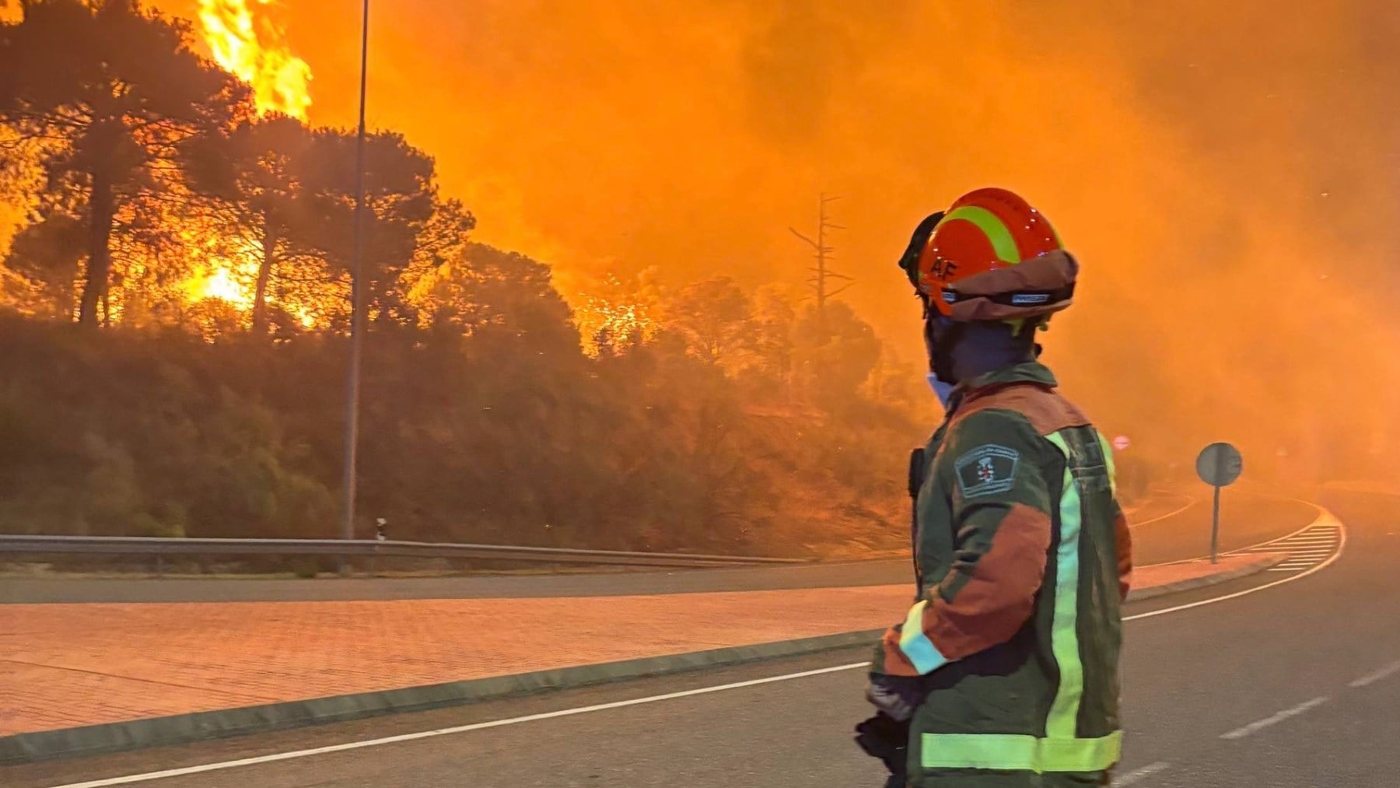
Severe wildfires sweeping through central Spain have triggered a massive emergency response, with authorities evacuating or confining nearly 100,000 residents across the provinces of Madrid, Ávila, and Toledo. The Spanish government declared a national emergency for Toledo late Saturday night to improve coordination of firefighting efforts as the blaze continues to spread unabated.
The fires have scorched at least 45,000 hectares of land, and the perimeter around the largest fire — extending between Madrid, Ávila, and Toledo — now exceeds 200 kilometres. More than 3,000 emergency personnel are battling the flames, supported by ground crews, air units, and international reinforcements from Portugal, Italy, and Greece, which have contributed specialised personnel, vehicles, and amphibious aircraft.
Interior Minister Fernando Grande-Marlaska stated that the coming hours on Sunday would be decisive in controlling the fire, though the outcome heavily depends on weather conditions. Winds are expected to ease from midday, which could assist containment efforts. During the night, 50 ground units worked to consolidate firebreaks and reinforce control lines, particularly around the M-501 road, despite sporadic wind-related setbacks.
Prime Minister Pedro Sánchez is scheduled to visit the province of Ávila on Sunday morning to assess the damage. He will tour the advanced command post in the municipality of Navaluenga at 10:00 local time. The fire has forced the evacuation of entire villages in the northern part of Toledo, while thousands of residents remain displaced from their homes.
Beyond the main fire complex, another significant blaze in La Vall d’Uixó (Castellón) in the Valencian Community has also proved difficult to contain. Authorities described the fire as remaining «outside extinguishing capacity» late Saturday, prompting the preventive evacuation of around 1,000 more residents from the Texas neighbourhood. This brings the total number of evacuees from the Castellón fire to over 16,000 people across 16 municipalities.
The wildfire crisis is not limited to Spain. France is also battling numerous active fires, with an estimated 200,000 people evacuated. The situation underscores the severity of a heatwave-driven wildfire outbreak across southern Europe. In contrast, fires in Cerro Muriano (Córdoba) and Pinos del Valle (Granada) have evolved favourably, allowing evacuated residents to return and confinement orders to be lifted.
As the emergency unfolds, local and national authorities continue to urge caution and compliance with evacuation orders. The government has mobilised all available resources to protect lives and property, but the scale of the disaster poses significant logistical and environmental challenges. The coming days will be critical in determining whether the fires can be brought under control before further damage occurs.
67