AI System Ataraxos Defeats Stratego's Greatest Player for Under $8,000
A low-budget AI system built by researchers from Carnegie Mellon, NYU, Stanford, and MIT has defeated the best Stratego player in history, ending one of the last human strongholds in board games.
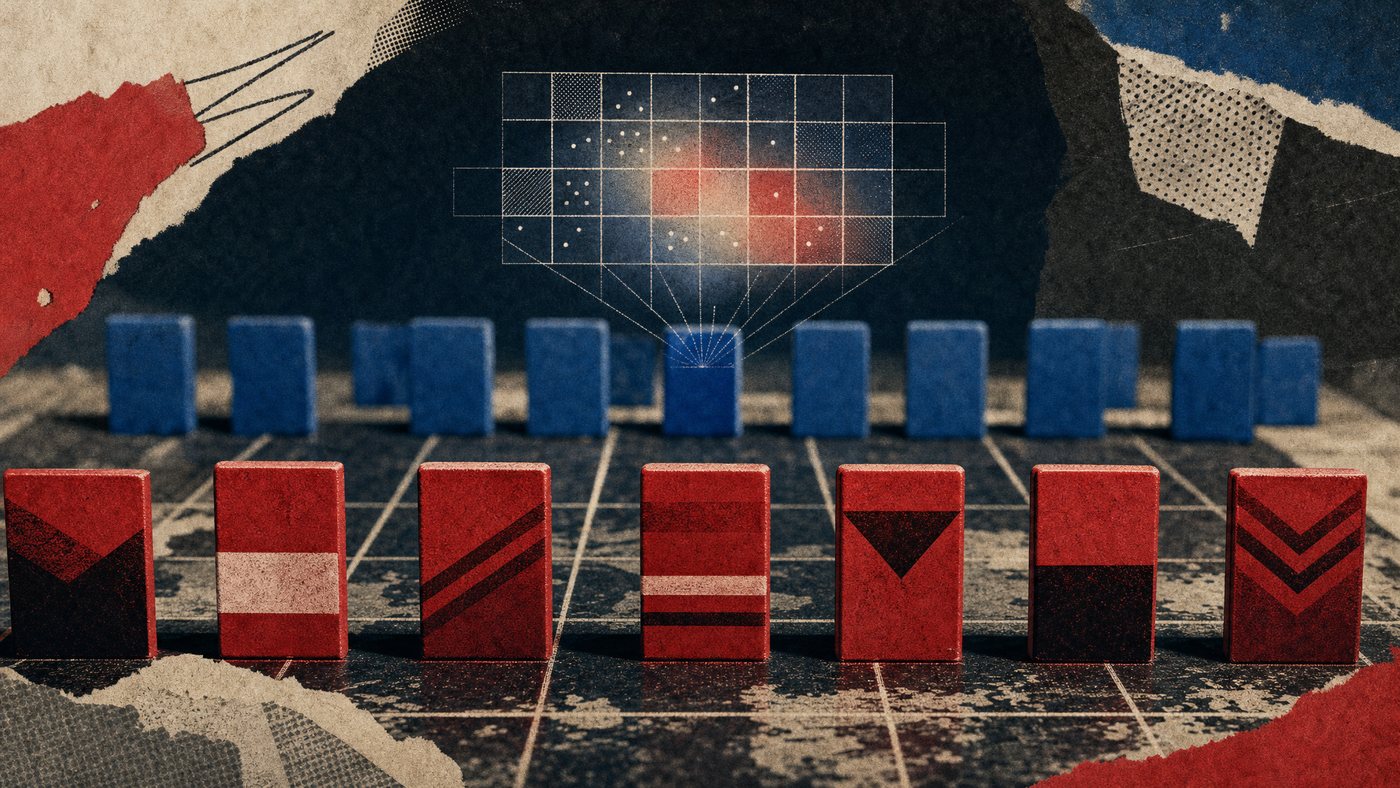
A new artificial intelligence system called Ataraxos has decisively beaten the best Stratego player of all time, ending one of the last remaining human strongholds in classic board games. The achievement is notable not only for what it accomplished but for how little it cost: researchers from Carnegie Mellon, NYU, Stanford, and MIT built the system for less than $8,000.
Stratego presents a uniquely difficult challenge for artificial intelligence because both players set up their pieces face down. Unlike chess or Go, where all pieces and their positions are visible to both sides, Stratego requires players to make decisions under incomplete information. Each player must deduce the identity and location of the opponent's pieces through observation, bluffing, and strategic probing. This hidden-information structure has made the game resistant to the kinds of brute-force computational approaches that conquered other board games.
The difficulty of Stratego was underscored by the fact that Google DeepMind, despite a multimillion-dollar budget, fell short in its own attempt to master the game in 2023. That failure highlighted how much harder hidden-information games are for AI compared to games of perfect information. Ataraxos, by contrast, was developed on a shoestring budget by an academic team spanning four major American universities.
The victory over Stratego's greatest human player marks a significant moment in the broader narrative of artificial intelligence and board games. Over the past three decades, AI systems have progressively conquered one classic game after another. IBM's Deep Blue defeated world chess champion Garry Kasparov in 1997. DeepMind's AlphaGo beat Go champion Lee Sedol in 2016, a feat many experts had considered a decade away. More recently, AI systems have mastered poker, another game of incomplete information, though Stratego's combination of hidden pieces and spatial strategy presented a distinct set of challenges.
What makes Ataraxos particularly interesting is the efficiency of its development. While major technology companies have poured enormous resources into game-playing AI as a way to advance machine learning research, the Ataraxos team demonstrated that a relatively small investment can produce world-class results in a complex domain. The system's success suggests that the barriers to entry in advanced AI research may be lower than commonly assumed, at least for certain classes of problems.
The achievement also raises questions about the nature of human expertise in games that combine strategy, psychology, and incomplete information. Stratego has been played competitively for decades, and its top players develop sophisticated intuitions about when to attack, when to retreat, and how to mislead opponents. Ataraxos's ability to outperform even the best human player suggests that these intuitions can be replicated or surpassed through computational methods.
For the AI research community, the victory is likely to spur further work on hidden-information games and the decision-making processes they require. These skills have applications far beyond board games, from military strategy to business negotiation to cybersecurity, where actors must make decisions without full knowledge of an adversary's capabilities or intentions.
The defeat of Stratego's greatest player thus represents more than a single milestone in gaming. It signals that AI systems are increasingly capable of operating effectively in environments characterized by uncertainty, deception, and incomplete information — conditions that more closely resemble the real world than the perfect-information games that dominated earlier eras of AI research.
5