China's Xi Jinping Calls for Control and Openness in AI Development
Chinese President Xi Jinping has called for a balanced approach to artificial intelligence, emphasizing both strict control and openness, as China and the US compete for global leadership in the technology.
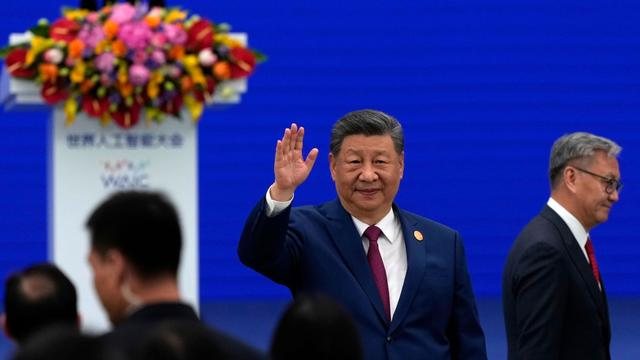
Chinese President Xi Jinping has outlined a dual approach to artificial intelligence, urging both tighter regulation and greater international openness as Beijing seeks to carve out its own path in the global race for AI dominance. Speaking at a high-level forum, Xi emphasized that China must maintain control over the development and application of AI while simultaneously fostering cooperation and transparency with other nations.
The remarks come as China and the United States intensify their rivalry for leadership in the rapidly evolving field of artificial intelligence. Xi's call for a balanced strategy reflects Beijing's ambition to establish a distinct model for AI governance, one that prioritizes national security and social stability without isolating itself from global innovation networks.
According to state media reports, Xi stressed the importance of establishing robust regulatory frameworks to ensure that AI technologies are developed in a manner consistent with socialist core values and national interests. He warned against unchecked proliferation of AI systems that could pose risks to public safety, data privacy, or political stability.
At the same time, Xi advocated for increased international collaboration, arguing that China should actively participate in setting global standards for AI ethics and safety. He called for joint efforts to address common challenges such as algorithmic bias, cybersecurity threats, and the potential displacement of workers due to automation.
The Chinese leader's comments signal a strategic recalibration as Beijing seeks to position itself as a responsible player in the global AI ecosystem. While China has invested heavily in AI research and development, it has also faced criticism from Western governments and human rights organizations over its use of surveillance technologies and facial recognition systems.
Xi's emphasis on openness may be interpreted as an attempt to reassure international partners that China is committed to transparent and ethical AI practices. However, analysts note that the call for control underscores the Chinese government's determination to retain tight oversight over a technology that it views as critical to its long-term economic and geopolitical ambitions.
The dual message of control and openness reflects the broader tension within China's technology policy. On one hand, Beijing wants to leverage AI to boost economic growth, modernize its military, and enhance social governance. On the other hand, it seeks to prevent the technology from undermining the Communist Party's authority or enabling dissent.
China has already implemented some of the world's most stringent regulations on AI, including rules governing algorithmic recommendation systems and deep synthesis technologies. These measures require companies to register their algorithms with authorities and ensure that AI-generated content does not violate censorship guidelines.
At the same time, Chinese tech giants such as Baidu, Alibaba, and Tencent are racing to develop cutting-edge AI models that can compete with Western counterparts like OpenAI's GPT series. The Chinese government has provided substantial financial support and policy incentives to accelerate domestic AI innovation, particularly in areas such as natural language processing, computer vision, and autonomous driving.
Xi's speech also touched on the need to address the societal impacts of AI, including job displacement and inequality. He called for the establishment of social safety nets and retraining programs to help workers adapt to the changing economy. This focus on social welfare aligns with the Chinese leadership's broader agenda of promoting «common prosperity» and reducing income disparities.
The international response to Xi's remarks has been mixed. Some foreign governments and industry groups have welcomed China's expressed willingness to engage in global AI governance discussions. Others remain skeptical, pointing to China's track record of using AI for mass surveillance and censorship, particularly in the Xinjiang region.
As the AI race intensifies, the balance between control and openness will likely remain a central theme in China's technology policy. Xi's latest statements suggest that Beijing is aware of the need to navigate this tension carefully, seeking to harness the transformative power of AI while mitigating its potential risks to the party-state.
For now, the global AI community will be watching closely to see whether China's rhetoric translates into concrete actions that foster genuine international cooperation or whether the emphasis on control will ultimately prevail.
87