Congressman Bill Foster Calls for AI Guardrails as Lawmakers Weigh Safety Rules
Congressman Bill Foster (D-IL) has urged lawmakers to implement guardrails on artificial intelligence, warning that the technology's rapid development raises serious safety concerns that current law is not equipped to address.
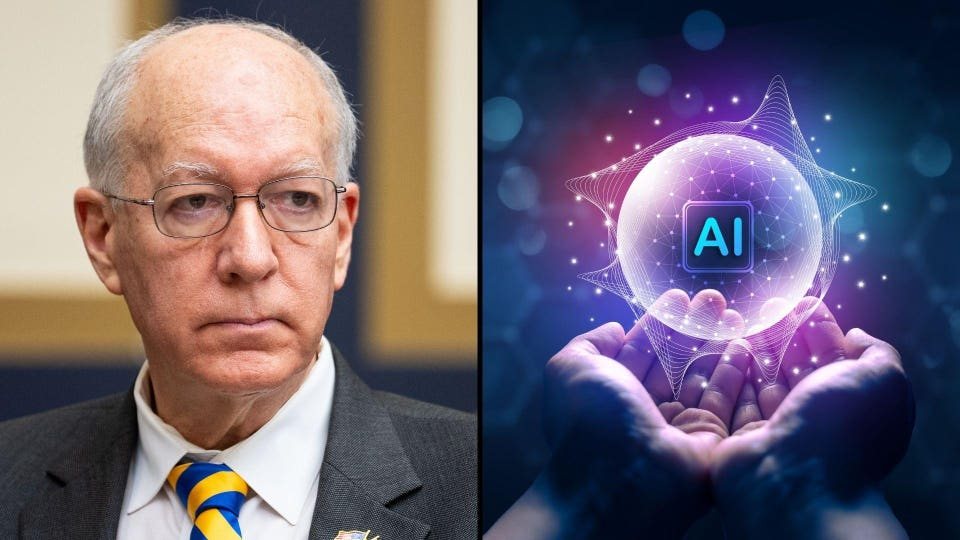
Congressman Bill Foster (D-IL) has called for legislation to place guardrails on artificial intelligence, warning that the technology's rapid development raises safety concerns that existing law is not equipped to address. Foster made the case during an appearance on «Forbes Newsroom», where he discussed the push for federal rules governing AI systems.
Foster, a physicist by training and one of the few scientists serving in Congress, has been among the lawmakers most engaged with the technical dimensions of AI policy. His argument centers on the gap between the pace of AI development and the speed at which Congress typically legislates. Without clear statutory guardrails, he warned, the decisions that shape how powerful AI systems are built and deployed will be made entirely by private companies, with little public accountability.
The congressman's comments come as AI safety has moved from a niche concern among researchers to a mainstream political question. Lawmakers in Washington have held hearings, introduced bills, and debated whether the United States should follow the example of the European Union, which has advanced its own comprehensive AI rulebook. The debate has divided both parties, with some members favoring strict limits on the most capable models and others warning that heavy-handed regulation could slow innovation and cede leadership to competitors abroad.
Foster's appearance on «Forbes Newsroom» placed him among the voices arguing that the risks are serious enough to justify preemptive action. The question posed in the segment's title — whether AI could kill all humans — reflects a broader shift in the public conversation, in which existential risk scenarios once confined to science fiction have entered the realm of congressional testimony and policy papers.
At the center of the legislative discussion are proposals to require transparency from developers of advanced AI models, establish testing and evaluation standards before deployment, and create mechanisms for oversight when systems behave in unexpected or dangerous ways. Supporters of such measures argue that voluntary commitments from technology companies are not sufficient, because competitive pressure can push firms to cut corners on safety.
Critics of new regulation counter that overly broad rules could entrench the largest technology companies, which can afford compliance costs that smaller developers cannot. They also argue that focusing on speculative catastrophic scenarios distracts from more immediate harms, such as bias in automated decision-making, disinformation, and labor disruption.
Foster's background gives his position unusual weight in the debate. Before entering politics, he worked as a high-energy physicist at Fermilab, and he has used that scientific expertise to engage with technical questions that many of his colleagues in Congress are not equipped to evaluate. That has made him a frequent voice in hearings on emerging technologies, from quantum computing to AI.
For religious and cultural observers, the debate raises questions that go beyond technical risk. The prospect of machines capable of autonomous decision-making touches on longstanding moral and theological discussions about human dignity, the limits of human creativity, and the responsibility that comes with wielding power over creation. How societies choose to govern AI, and who gets to make those choices, will shape not only economies and security but also the moral landscape of the coming decades.
Whether Congress will act, and how quickly, remains uncertain. Previous efforts to pass comprehensive AI legislation have stalled amid partisan disagreement and lobbying from the technology industry. Foster's message is that the window for deliberate, well-designed rules may be closing, and that lawmakers who wait for the risks to become undeniable may find themselves reacting to consequences they can no longer control.