NATO Turns to Quantum Technology to Counter Drone Threats
NATO is inviting private industry to develop quantum technologies aimed at strengthening the alliance's defenses against drone incursions, as unmanned systems increasingly test European security.
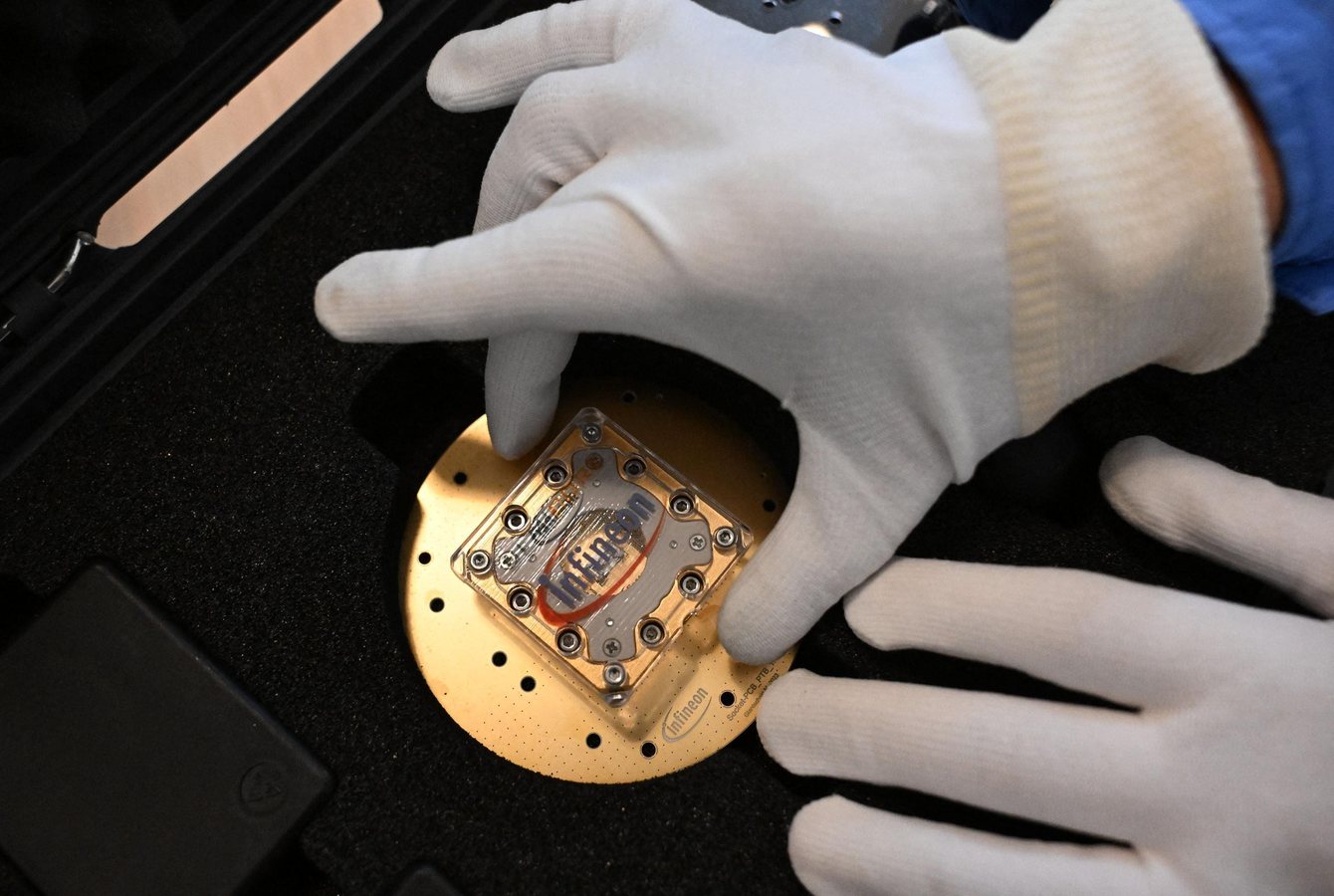
NATO is calling on private industry to help strengthen the alliance's defenses with quantum technologies, as drones continue to threaten national security across Europe. The initiative signals a push to move quantum research from the laboratory into practical military applications, with the alliance seeking partners capable of turning emerging science into deployable systems.
The effort reflects growing concern among NATO members about the vulnerability of critical infrastructure and military assets to unmanned aerial systems. Drone incursions have become a recurring security challenge for European countries, exposing gaps in traditional air defense and surveillance networks. Quantum technologies — which exploit the behavior of matter and energy at the smallest scales — are seen as a potential source of new capabilities in sensing, secure communications, and computing that could help close those gaps.
NATO's approach places private industry at the center of the effort. Rather than relying solely on government laboratories, the alliance is asking companies to propose and develop quantum-based solutions that can be integrated into existing defense architectures. The move is part of a broader trend in which military alliances look to commercial innovation to accelerate the adoption of emerging technologies.
Quantum sensing, in particular, could improve the detection and tracking of small, low-flying drones that are difficult to spot with conventional radar. Quantum communication offers the prospect of tamper-resistant data links, while quantum computing could eventually transform code-breaking, logistics, and simulation. Each of these areas carries significant implications for how NATO members defend their territory and share information securely.
The invitation to industry also underscores the competitive dimension of quantum research. Several countries outside the alliance are investing heavily in the field, and NATO's members are keen to avoid falling behind in a technology that could shape future military and economic power. By opening the door to private firms, the alliance hopes to tap a wider pool of expertise and speed up the transition from prototype to operational use.
For European defense planners, the drone threat has become a practical test case. Unmanned aircraft have been used for surveillance, disruption, and, in some conflicts, direct attack. Defending against them requires layered systems that can detect, identify, and respond in seconds — a challenge that current technologies do not always meet. Quantum-enhanced sensors are among the options being explored to improve that response.
The initiative also raises questions about procurement, funding, and coordination among NATO members. Developing quantum systems is expensive and technically demanding, and alliance officials will need to balance national programs with collective efforts. How the projects are financed and how quickly they move from concept to fielding will determine whether the push produces meaningful capabilities or remains largely experimental.
NATO's request to industry is not limited to any single quantum application. It invites a broad range of proposals, from hardware to software, reflecting the alliance's interest in building a portfolio of options rather than betting on one technology. That approach mirrors how defense organizations increasingly manage uncertainty: by funding multiple paths and letting results guide further investment.
The outcome will depend on how effectively companies can translate quantum research into rugged, reliable systems suitable for military use. Laboratories have demonstrated impressive proof-of-concept results, but field conditions — vibration, temperature, power constraints, and adversarial interference — pose additional hurdles. NATO's engagement with private industry is intended to address those practical challenges early in the development cycle.
As drones continue to evolve, the alliance's willingness to invest in quantum technology suggests that the next phase of European defense will be shaped as much by scientific innovation as by traditional military planning. The call to industry is an early step, but it signals that NATO views quantum capabilities as a strategic priority rather than a distant prospect.
5