Sakana AI Appoints Jürgen Schmidhuber as Chief Scientific Advisor
Tokyo-based Sakana AI has hired Jürgen Schmidhuber, a pioneer of deep learning and world models, as Chief Scientific Advisor. He will help lead the company's new RSI Lab, which focuses on recursive self-improvement — AI that continually develops itself. His 1990s ideas have already influenced Sakana projects such as the Darwin Gödel Machine.
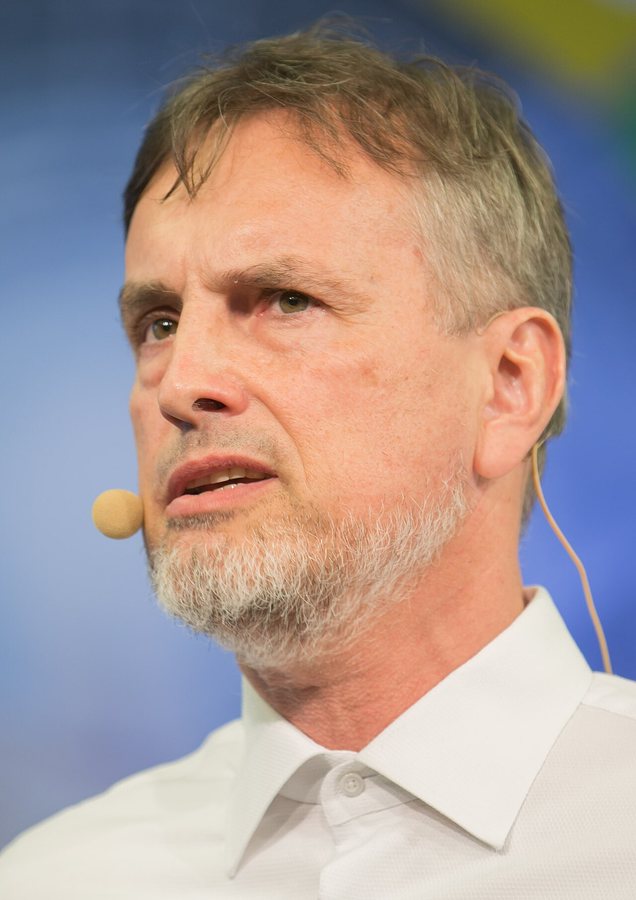
Tokyo-based artificial intelligence company Sakana AI has appointed Jürgen Schmidhuber as its Chief Scientific Advisor. The company describes Schmidhuber as the «father of modern AI», citing his foundational work on deep learning and world models. In his new role, he will help lead Sakana's newly established RSI Lab, which is dedicated to recursive self-improvement — the idea that AI systems can continually develop and enhance themselves.
Schmidhuber's research from the 1990s has already left a mark on Sakana AI's projects. One notable example is the Darwin Gödel Machine, an initiative that explores how AI can autonomously modify its own code to improve performance. His early concepts around self-referential learning and world models are now seen as precursors to some of the most advanced capabilities in today's large language models, including those behind ChatGPT. By bringing him on board, Sakana AI aims to deepen its work on systems that can evolve without constant human intervention.
The appointment signals Sakana AI's ambition to push beyond current AI paradigms. Recursive self-improvement is a long-standing goal in the field, often associated with the prospect of artificial general intelligence. While the company has not announced specific products or timelines, the creation of the RSI Lab suggests a sustained research commitment. Schmidhuber's involvement lends significant scientific weight to the effort, given his decades of contributions to neural networks, reinforcement learning, and artificial curiosity.
Schmidhuber's career spans multiple institutions and countries. He is currently a professor at the University of Lugano in Switzerland and has held positions in Germany and the United States. His work on long short-term memory (LSTM) networks, which he co-invented in the 1990s, became a cornerstone of modern machine translation, speech recognition, and other sequence-processing tasks. More recently, his ideas about world models — internal simulations that allow AI to predict and plan — have gained traction as researchers seek more robust and generalizable systems.
Sakana AI, founded in 2023, has quickly gained attention for its focus on nature-inspired algorithms and evolutionary computation. The company's name references the Japanese word for «fish», evoking the idea of collective intelligence and emergent behavior. Its projects often combine ideas from biology, physics, and computer science. The Darwin Gödel Machine, for instance, draws on evolutionary principles to let AI systems rewrite their own instructions, potentially leading to open-ended improvement.
The hire also reflects a broader trend in the AI industry: companies are increasingly recruiting legendary researchers to signal their long-term ambitions and attract talent. Schmidhuber's move to Sakana AI follows a series of high-profile appointments in the field, as firms compete for expertise in areas like self-improving systems and world models. For Sakana, the addition of a figure whose work predates the current deep learning boom could help differentiate its research agenda.
While recursive self-improvement remains largely experimental, its implications are far-reaching. If AI can reliably improve its own architecture, it could accelerate progress in areas such as drug discovery, climate modeling, and autonomous systems. At the same time, the prospect raises questions about control, safety, and the pace of change. Sakana AI has not detailed how it plans to address these concerns, but the RSI Lab's formation indicates that the company is preparing for a future in which AI development becomes increasingly automated.
Schmidhuber's new role is part-time, allowing him to continue his academic work. He has long been an advocate for open-ended learning and artificial curiosity, themes that align closely with Sakana's stated mission. In public talks, he has argued that the next generation of AI will need to generate its own goals and explore its environment, rather than relying solely on human-provided data. That vision now has a dedicated lab — and a prominent champion — in Tokyo.
6