Trump and Xi Meet as US-China AI Rivalry Shifts to Chip Ecosystems
The Washington summit between President Donald Trump and Chinese President Xi Jinping is overshadowed by a technological contest over who controls the chips, computing infrastructure and software standards underpinning artificial intelligence.
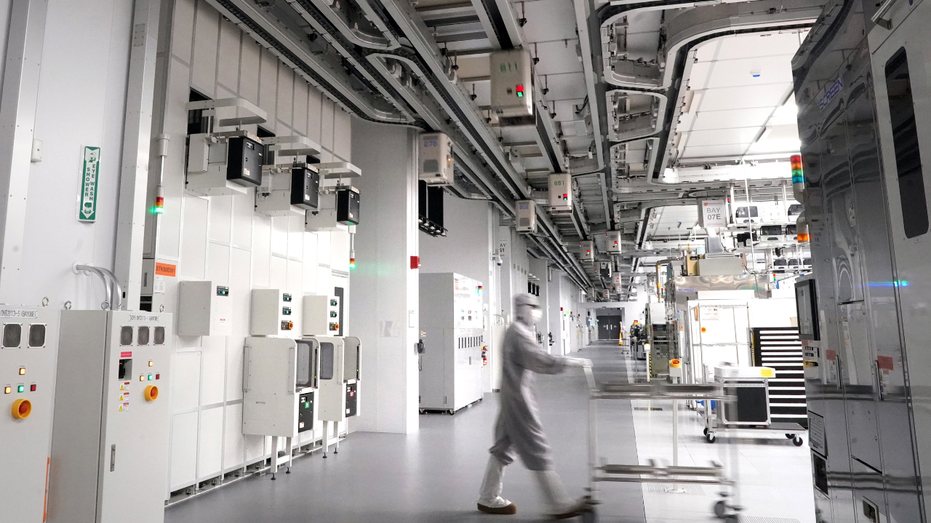
When President Donald Trump meets Chinese President Xi Jinping in Washington this week, trade, tariffs, rare earth minerals and supply chains will fill the agenda. But the most consequential issue may be artificial intelligence, and the semiconductor ecosystem that sustains it. The contest is no longer only about which country builds the best AI model. It is increasingly about who controls the chips, computing infrastructure and software standards underneath it.
The United States remains the global leader in advanced AI technology and semiconductor design. China, however, is pushing aggressively to reduce its dependence on American technology. Huawei has emerged as a central player in that effort, expanding its Ascend AI-chip roadmap and accelerating future generations of processors. The company recently said demand for its AI computing equipment in China is exceeding supply, and it is developing enormous systems capable of connecting vast numbers of chips.
For years, Washington used export controls to restrict China's access to advanced semiconductors and manufacturing technology, particularly those with potential military applications. The national-security objective was clear: prevent America's most sophisticated technology from strengthening a strategic competitor's military capabilities. But the restrictions had an unintended consequence. China accelerated its effort to build an AI ecosystem that does not need America. Chinese developers adapted software and models to domestic hardware, and companies poured resources into computing systems designed to compensate for the performance limits of individual Chinese chips.
That shift has changed the strategic question facing Washington. It is no longer simply how to keep sensitive American technology away from China. It is also how to ensure the rest of the world continues choosing American technology instead of China's. The two questions are related, but they are not identical. If American technology becomes inaccessible across too much of the global market, China has an enormous incentive to develop substitutes, Huawei has an enormous incentive to sell them, and governments and companies worldwide have an enormous incentive to build around whatever technology they can reliably obtain.
Once developers write software for an ecosystem, companies construct computing infrastructure around it and countries invest billions deploying it, switching becomes much harder. That is why the competition is not merely about chip sales. It is an ecosystem competition. America wants a world running on American chips, software, standards and innovation. China wants to build an alternative, with Huawei and other Chinese companies providing a technology stack that Beijing controls and America cannot easily influence.
President Trump has taken a different approach from the Biden administration. His administration rescinded the Biden-era AI Diffusion Rule while maintaining controls targeting technologies with serious national-security implications. It has also allowed certain advanced chips to be considered for sale to approved Chinese customers under licensing requirements and security conditions. The theory is straightforward: protect the technologies most critical to national security without unnecessarily surrendering commercial markets to Chinese competitors.
That distinction matters. No serious observer argues that America should hand China unrestricted access to technology that could materially enhance advanced weapons, military AI, surveillance or other sensitive capabilities. National security comes first. But there is a difference between protecting America's crown-jewel technology and adopting restrictions so sweeping that they accelerate China's determination to replace American technology throughout the commercial market.
Huawei's goal is not merely to survive American restrictions. It wants to compete. It wants Chinese chips powering Chinese AI, Chinese computing infrastructure supporting Chinese models, and ultimately customers outside China using its systems. The next phase of the competition will be fought over which chips countries buy, which computing systems they install, which software developers learn and which technology stack becomes the default infrastructure for the AI economy.
America has enormous advantages: extraordinary semiconductor designers, the world's leading AI companies, deep capital markets, world-class universities, entrepreneurs and an innovation culture China has spent decades trying to replicate. But technological leadership is not permanent. It has to be defended. Sometimes the greatest threat to American leadership is not that China suddenly invents something better, but that America creates policies that make its own technology harder for the world to use while Beijing aggressively offers an alternative.