Argentina Threatens Legal Action Over British Oil Project Near Falkland Islands
President Javier Milei has given the United Kingdom a two-week ultimatum to halt the Sea Lion oil project near the disputed Falkland Islands, threatening to take the case to the International Tribunal for the Law of the Sea.
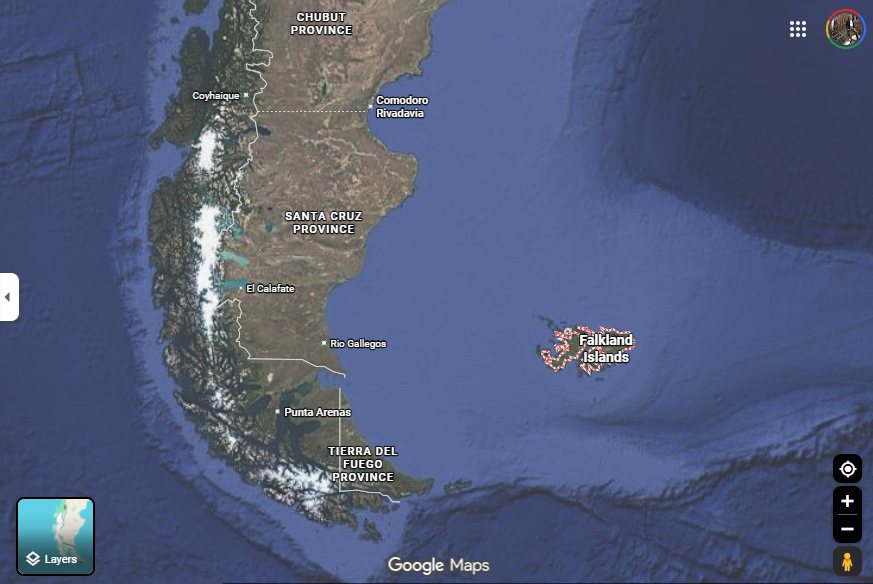
Argentina has threatened to take the United Kingdom to the International Tribunal for the Law of the Sea if London does not halt an offshore oil project near the Falkland Islands, escalating a long-running sovereignty dispute over the South Atlantic archipelago.
President Javier Milei issued a two-week ultimatum to the British government to stop work on the Sea Lion project, according to reports. The warning marks a sharp turn in rhetoric from a leader who had previously sought to improve relations with the United Kingdom, and it revives one of the most sensitive territorial disputes in the South Atlantic.
The Sea Lion oil field is located in waters near the Falkland Islands, which Argentina claims as the Islas Malvinas. The islands have been administered by the United Kingdom since 1833, but Argentina has consistently maintained that they are part of its sovereign territory. The dispute led to a brief but bloody war in 1982, in which 255 British soldiers and 649 Argentine soldiers died.
Milei's threat to pursue legal action at the International Tribunal for the Law of the Sea, a United Nations body based in Hamburg, represents a new front in the dispute. The tribunal adjudicates disputes over maritime boundaries, navigation rights, and the exploitation of marine resources under the UN Convention on the Law of the Sea. Argentina has not yet filed a formal case, but the two-week deadline suggests that legal proceedings could follow if the project continues.
The Sea Lion project is operated by an independent oil and gas company focused on the North Falkland Basin. The field is estimated to hold hundreds of millions of barrels of recoverable oil, and development has been viewed by London as a legitimate economic activity in waters under British administration. Argentina has long objected to any hydrocarbon exploration or extraction in the disputed maritime zone, arguing that it violates its sovereign rights.
The timing of the ultimatum is notable. Milei, who took office in December 2023, had initially signaled a pragmatic approach to the Falklands question, emphasizing economic cooperation and diplomatic channels rather than confrontation. His government has prioritized trade and investment ties with Western nations, including the United Kingdom. The sudden escalation over Sea Lion suggests that domestic political pressure or the scale of the project may have forced a harder line.
For the United Kingdom, the project represents both an economic opportunity and a test of its commitment to the islands. The British government has consistently affirmed the right of the Falkland Islands to determine their own future and to develop their natural resources. Any legal challenge from Argentina would likely be defended vigorously, with London arguing that the project operates in full compliance with international law and the UN Convention on the Law of the Sea.
The International Tribunal for the Law of the Sea has handled several high-profile maritime disputes, including cases involving delimitation of maritime boundaries and the detention of vessels. However, cases involving disputed sovereignty over land territory are generally outside its jurisdiction, which could complicate Argentina's legal strategy. The tribunal's mandate is limited to interpreting and applying the Law of the Sea Convention, and it cannot rule on which state holds sovereignty over the Falklands themselves.
Argentina's threat may therefore be aimed as much at political signaling as at legal victory. By invoking an international tribunal, Milei can project resolve to domestic audiences while keeping the dispute in the global spotlight. The two-week deadline also puts pressure on London to respond publicly, potentially forcing the British government to articulate its legal and political position on the project.
The Falkland Islands government, which has significant autonomy over local affairs including resource management, has supported oil development as a means of securing economic independence. Any interruption to the Sea Lion project would have major implications for the islands' fiscal outlook and their long-term relationship with the United Kingdom.
As the deadline approaches, diplomats on both sides are likely to engage in quiet consultations. Whether the dispute escalates into formal litigation or is defused through negotiation remains uncertain, but the episode underscores how unresolved historical claims continue to shape contemporary politics and resource competition in the South Atlantic.
4