Ceasefire around Oleshky opens limited window for aid to civilians
A temporary ceasefire around the Russian-occupied city of Oleshky has created a narrow opening for humanitarian work, but the scope of the arrangement, evacuation prospects and sustained access remain unclear for roughly 2,000 civilians still there.
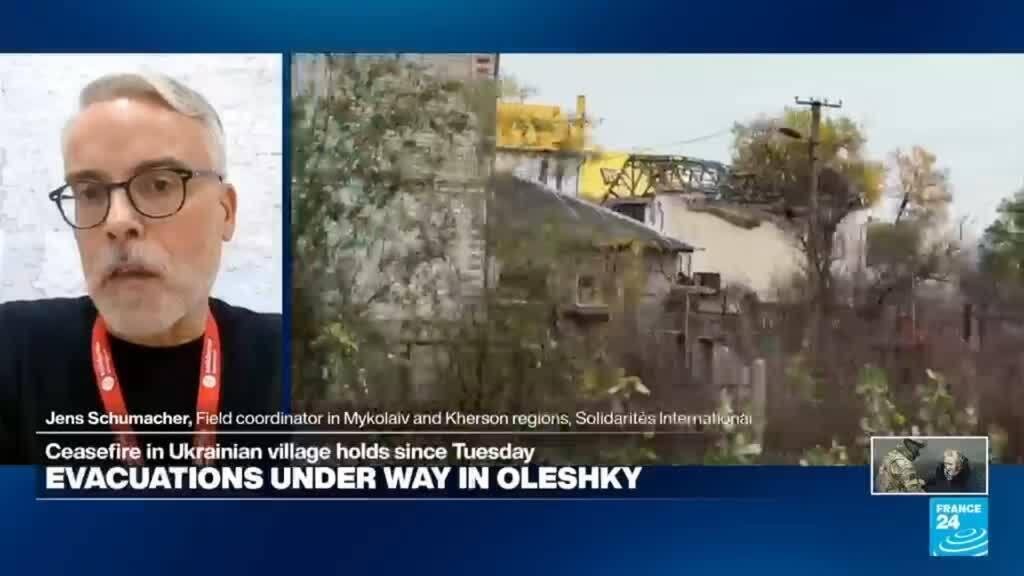
A temporary ceasefire around the Russian-occupied city of Oleshky has created a limited opportunity for humanitarian assistance, but aid workers say it does little to guarantee that civilians still living there can get the basic supplies they need. Around 2,000 people were reported to remain in the area, cut off from essential services and facing uncertainty over whether they will be able to leave.
Oleshky lies only a few kilometres from the Ukrainian-controlled city of Kherson, yet proximity offers little assurance of access to life-saving help. Civilians caught between military occupation, disrupted services and unclear evacuation arrangements depend on whatever aid can reach them, and the pause in attacks has opened a brief window in which relief operations may be possible.
Jens Schumacher, Field Coordinator in Mykolaiv and Kherson with Solidarity International, described the humanitarian implications of the temporary truce in an interview with France 24. He said the cessation of attacks had created a limited opportunity for humanitarian operations. However, he stressed that the geographical scope of the agreement, the prospects for evacuation and the possibility of sustained humanitarian access all remain uncertain.
That uncertainty is central to the concern. A ceasefire confined to a defined area and a limited period can allow convoys or evacuations to take place, but it does not by itself establish a lasting corridor for supplies or guarantee that the people who need help can reach it. Without clarity on how long the pause will hold and how far it extends, planning for food, medicine and other basic needs remains difficult.
For the civilians remaining in Oleshky, the stakes are immediate. Access to essentials has been disrupted, and the situation leaves residents dependent on outside assistance that may or may not arrive in time. The interview underlined that the opportunity created by the ceasefire is real but fragile, and that its value will depend on whether it can be turned into regular, sustained access rather than a single, brief pause.
7