Hundreds of Drones Strike Moscow Region as Russia Votes
A large-scale Ukrainian drone attack targeted the Moscow region on the final day of Russia's parliamentary elections, damaging a residential building in Kotelniki and underscoring the war's growing reach into Russian territory.
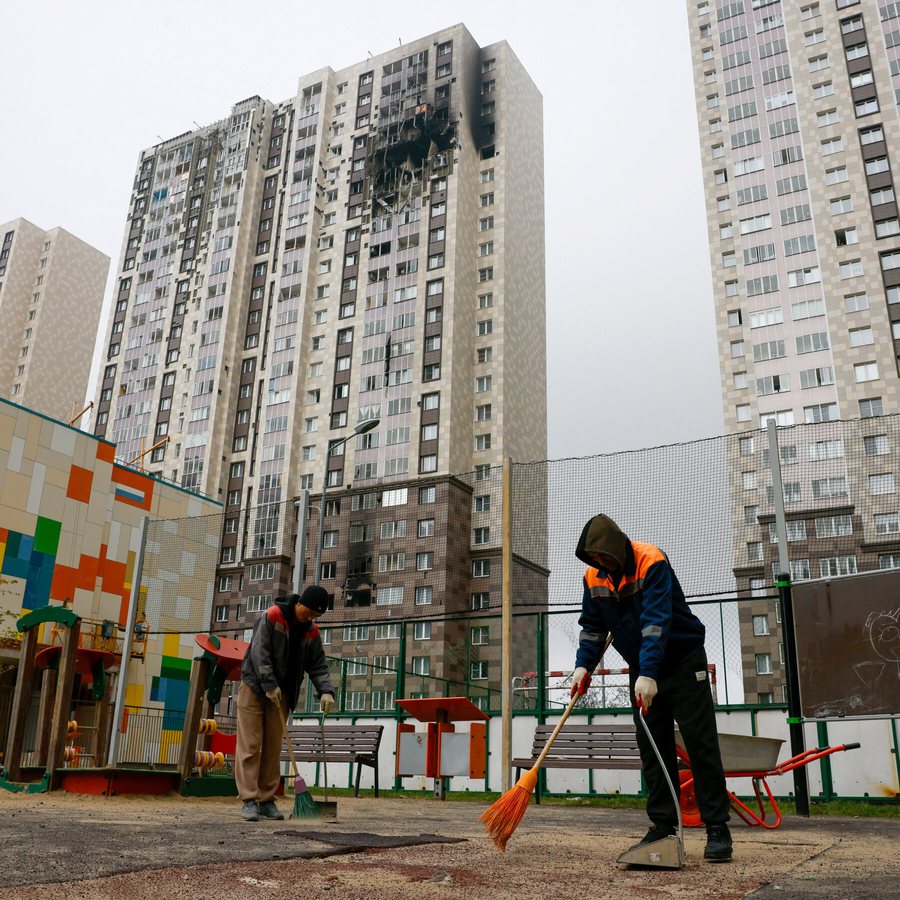
A large-scale Ukrainian drone attack targeted the Moscow region on Sunday, the final day of Russia's parliamentary elections, according to Russian authorities. The strike damaged a residential building in Kotelniki, a town just southeast of the capital, and marked one of the most significant incursions into Russian airspace since the war began.
Russian officials said hundreds of drones were involved in the assault, which unfolded as voters cast ballots in elections that are widely expected to extend the ruling party's dominance. The timing of the attack — on the closing day of the vote — appeared designed to project Ukrainian reach and to disrupt the Kremlin's narrative of stability and control.
Emergency crews were seen sweeping the courtyard of the damaged residential building in Kotelniki, where debris from a downed drone or its payload scattered across the area. There was no immediate independent confirmation of casualties or the full extent of the damage. Russian authorities routinely report intercepting drones without providing verifiable details, and independent monitors have previously documented discrepancies in official accounts.
The attack follows a pattern of increasingly ambitious Ukrainian drone operations aimed at Moscow and its surrounding region. In recent months, Ukrainian forces have targeted oil refineries, military airfields, and industrial sites deep inside Russia, seeking to bring the costs of the war home to ordinary Russians and to complicate the Kremlin's air defense strategy. Moscow's air defenses, while extensive, have struggled to intercept every drone in large swarms.
For the Kremlin, the timing is particularly sensitive. The parliamentary elections are a choreographed exercise meant to demonstrate public loyalty and the durability of the current political system. A major security breach on election day undercuts that message, even if the material damage is limited. Russian state media largely downplayed the attack, focusing instead on voter turnout and the expected victory of the ruling party.
Ukraine has not officially claimed responsibility for this specific strike, consistent with its policy of strategic ambiguity regarding operations inside Russian territory. However, Ukrainian officials have previously stated that targeting military and infrastructure assets inside Russia is a legitimate part of its defense against the invasion.
The attack also raises questions about the effectiveness of Russia's air defense umbrella over its capital region. Despite layered systems including the S-400 and Pantsir, drones have repeatedly penetrated to the outskirts of Moscow. Each successful strike, even if intercepted, forces Russian planners to divert resources and attention from the front lines in Ukraine.
For residents of Kotelniki and nearby communities, the war has arrived in a tangible way. The damaged building serves as a reminder that the conflict, now in its third year, is not confined to the battlefields of eastern Ukraine. As Russia concludes its election, the drone attack underscores the unpredictable and escalating nature of a war that shows no sign of a diplomatic resolution.
6