CNN legal analyst calls New York mayor’s Netanyahu arrest plan ‘utterly ridiculous’
CNN legal analyst Elie Honig dismissed New York City Mayor Zohran Mamdani’s suggestion that the city could arrest Israeli Prime Minister Benjamin Netanyahu if he visits, calling the idea legally baseless and noting the U.S. is not a signatory to the International Criminal Court.
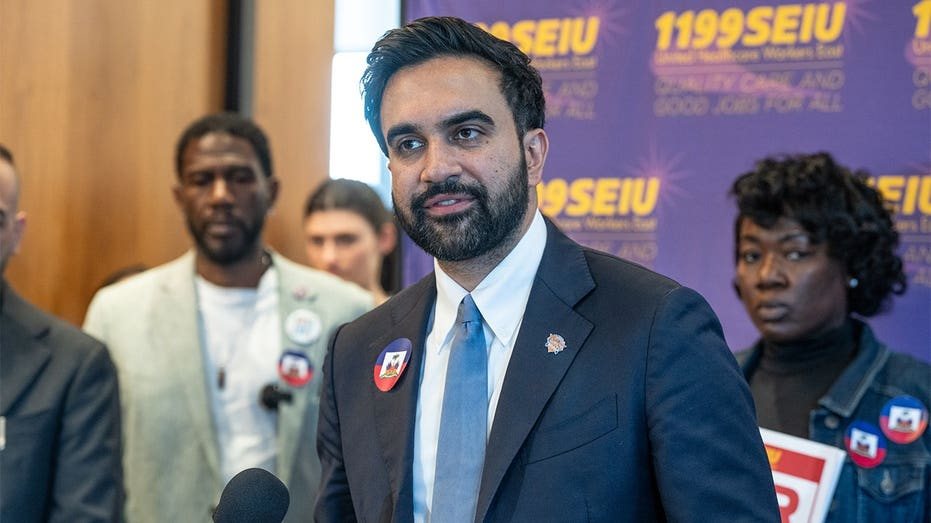
CNN legal analyst Elie Honig on Monday sharply rebuked New York City Mayor Zohran Mamdani’s suggestion that local authorities could arrest Israeli Prime Minister Benjamin Netanyahu if he travels to the city, calling the claim “utterly ridiculous” and legally impossible. During a CNN segment, Honig explained that the mayor of New York City possesses zero law enforcement authority and cannot order the arrest of a visiting foreign head of state.
“Absolutely not. It is utterly ridiculous for the mayor of New York City to even suggest that he might have the authority to order the arrest of Benjamin Netanyahu or any visiting foreign head of state,” Honig told anchor Brianna Keilar. “First of all, the Mayor of New York City has zero law enforcement authority. He does not tell the Manhattan D.A., the NYPD, who to arrest, who to indict.”
Honig further noted that the United States is not a signatory to the International Criminal Court (ICC), which issued an arrest warrant for Netanyahu in November 2024 over alleged war crimes and crimes against humanity related to Israel’s military campaign in Gaza. Because the U.S. is not party to the ICC’s founding Rome Statute, the warrant carries no legal weight on American soil. “That warrant, issued by the ICC, has zero legal effect here in the United States,” Honig said. “In fact, we have a federal law here in the U.S., passed 24 years ago, that says, if necessary, the president can send military troops to pull our people and our allies out of the ICC. So, that warrant has zero impact.”
Honig also emphasized that the U.S. Constitution reserves the conduct of foreign diplomacy and foreign affairs exclusively to the federal government, not to local or county officials. “The Constitution is quite clear that the conduct of foreign diplomacy, foreign affairs, is entirely up to the federal government. It’s certainly not up to local and county governments in New York City or elsewhere,” he said. “So, I know the mayor is having his best lawyers look at this right now. Let me save them some time. You do not have the authority to do this.”
Mamdani’s remarks, first reported by The New York Times, included calling Netanyahu a “war criminal” who “belongs in The Hague” and stating that his administration is in an “active conversation” with the city’s Law Department about what legal authority New York City might have if the Israeli prime minister visits. “Whatever the law allows me to do in New York City, that’s what we will do,” Mamdani said, adding that his administration would not write new laws for that purpose.
When reached for comment, the mayor’s office referred to a statement Mamdani made during an unrelated press conference on Monday. “When it comes to Benjamin Netanyahu, we are talking about someone who’s the subject of an international criminal court arrest warrant,” Mamdani said. “And he’s the subject of the arrest warrant for alleged crimes against humanity for war crimes, and he’s the architect of the genocide of Palestinians in Gaza as Israel’s prime minister. These are not facts of my personal assessment; they are facts of public record. And I believe that when someone is charged with an international criminal court warrant, it’s something that should be taken seriously, whether it’s Benjamin Netanyahu or it’s Vladamir Putin or whomever else.”
Mamdani continued: “What I’ve also made clear is my administration will follow all applicable local laws. That is our commitment, that is something we will follow through on when it comes to adherence to local law and that’s all I have to add on that.” He added, “My point is that if someone is charged with a warrant by the international criminal court for these kinds of crimes, that’s something that I believe should be honored, and I’ve also said that we will follow our local laws.”
The controversy drew a sharp response from U.S. Ambassador to the United Nations Mike Waltz, who dismissed Mamdani’s remarks as “pure political theater.” In a post on X, Waltz argued that the U.S. is not party to the ICC’s founding treaty, that the U.N. Headquarters Agreement protects visiting heads of government, that head-of-government immunity applies, and that “federal authority trumps any local mayor’s wishes.”
The ICC issued arrest warrants for Netanyahu and former Israeli Defense Minister Yoav Gallant in November 2024, alleging war crimes and crimes against humanity tied to Israel’s military operations in Gaza. Israel has rejected the ICC’s jurisdiction and denounced the warrants as politically motivated. The United States has also consistently opposed the ICC’s actions against Israel, a key ally, and has not recognized the court’s authority over American or Israeli citizens.
Legal experts across the political spectrum have largely agreed that Mamdani’s proposal is unenforceable. The U.S. federal law Honig referenced, the American Service-Members’ Protection Act of 2002, authorizes the president to use “all means necessary and appropriate” to secure the release of U.S. or allied personnel detained by the ICC. The law reflects longstanding bipartisan opposition to the court’s jurisdiction over non-signatory nations.
Mamdani, a progressive Democrat who took office as mayor in January 2025, has previously made controversial statements about Israel. His latest comments have drawn criticism from both Republican and some Democratic figures, who argue that local officials should not interfere with federal foreign policy. The episode highlights ongoing tensions between local activism and federal authority in the realm of international diplomacy.