Feijóo rules out bringing back military service if he becomes Spain's prime minister
Spain's opposition leader Alberto Núñez Feijóo said he does not want to revive compulsory military service, which would only be needed in a serious security crisis, and that he would first audit defence spending before committing to any increase.
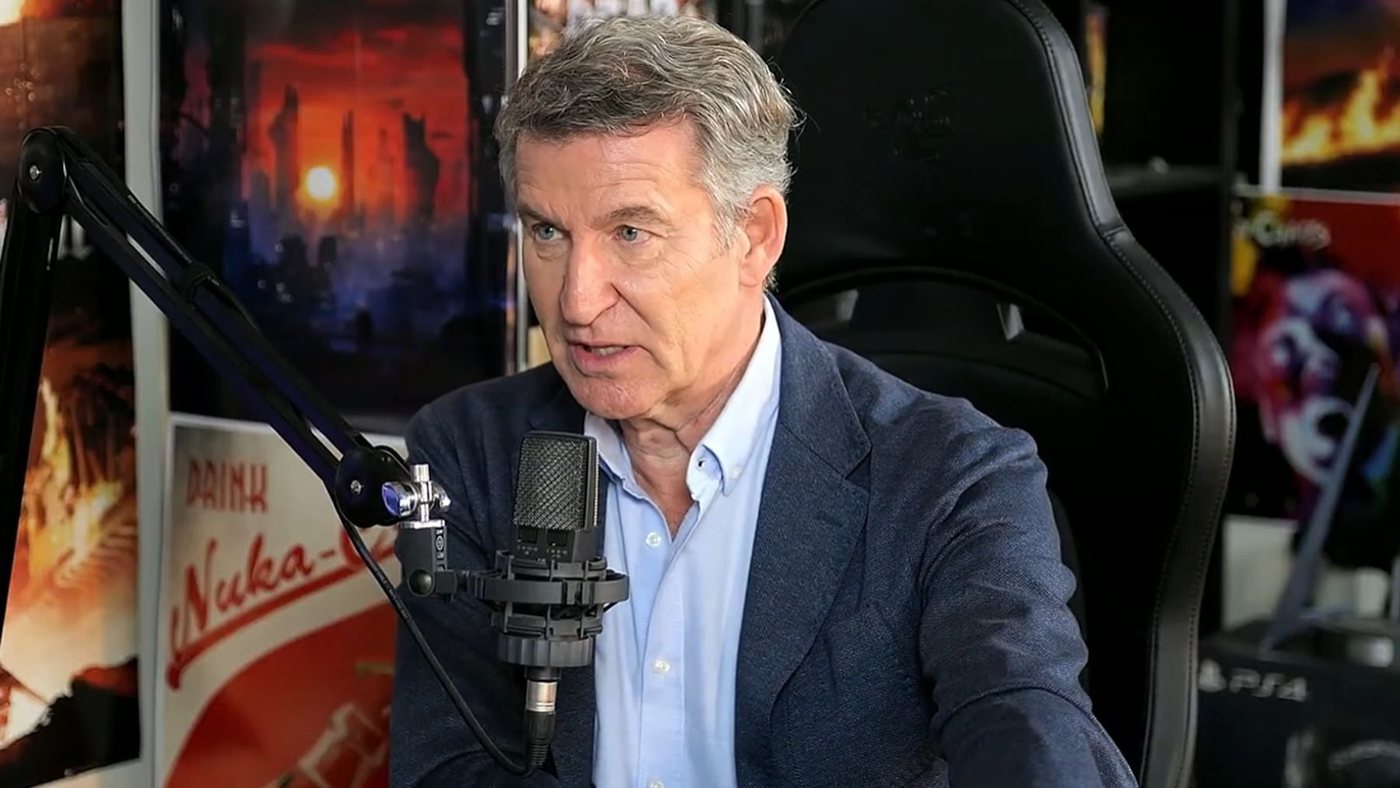
Spain's conservative opposition leader Alberto Núñez Feijóo has said he would not revive compulsory military service if he becomes prime minister, arguing that such a step would only be necessary if the country faced a severe security crisis. Speaking in an interview with Jordi Wild on The Wild Project, the leader of the Partido Popular was asked what he would do after the general election scheduled for 29 November, and he answered that he did not want to reach that point because it would mean Spain had a maximum security problem.
The question reflects a wider debate in Europe, where several governments are reconsidering forms of military service as defence budgets rise and tensions with Russia remain high. Spain suspended conscription at the end of 2001, when the Real Decreto 247/2001 brought forward the date originally planned by the government as part of the professionalisation of the armed forces. Nearly 25 years have passed since then without compulsory service being applied again. Feijóo did not present a return to the mili as one of his government proposals, instead linking it to a hypothetical serious deterioration of security.
To illustrate the context in which the debate is taking place elsewhere in Europe, Feijóo pointed to Poland, which borders the Russian exclave of Kaliningrad and is a member of NATO. He argued that defence should not be discussed with what he called frivolity and populism, because it is directly tied to a state's ability to respond to an external threat. He asked what a country must do when its territorial integrity, the lives of its citizens and its system of freedoms are at risk, and whether it should allow itself to be invaded.
On defence spending, Feijóo avoided committing to a specific percentage increase should he reach government. He said he would first carry out an audit to determine how much Spain actually allocates to defence, and that the results of that review would decide how far spending could go. He also questioned the information available on certain budget items and contracts linked to the defence sector, which was another topic addressed during the conversation.
Feijóo also distinguished between the risks Europe faces on its eastern and southern borders. On the east, he placed the focus on Russia and the war in Ukraine, stating that the problem on the eastern border is Putin. On the southern border, he described a humanitarian problem of enormous scale, linked to migration across the Mediterranean. His position on Spain's place in Europe is to maintain cooperation with European allies and with the Atlantic Alliance, while leaving compulsory military service outside the measures he has announced for a possible government.
The remarks came in the final stretch of a campaign in which the main parties are calling on voters to mobilise, with candidates making their last appearances in the places where many votes are expected to be decided. Feijóo's comments show that, even as defence has moved up the political agenda in Spain, his party is presenting conscription as a measure reserved for an exceptional emergency rather than as a policy proposal.
Source: okdiario.com
19