Sweden votes in parliamentary election as far-right seeks government role
Swedish voters head to the polls to decide whether the conservative prime minister remains in office or the center-left returns, with the far-right Sweden Democrats bidding for a place in government for the first time.
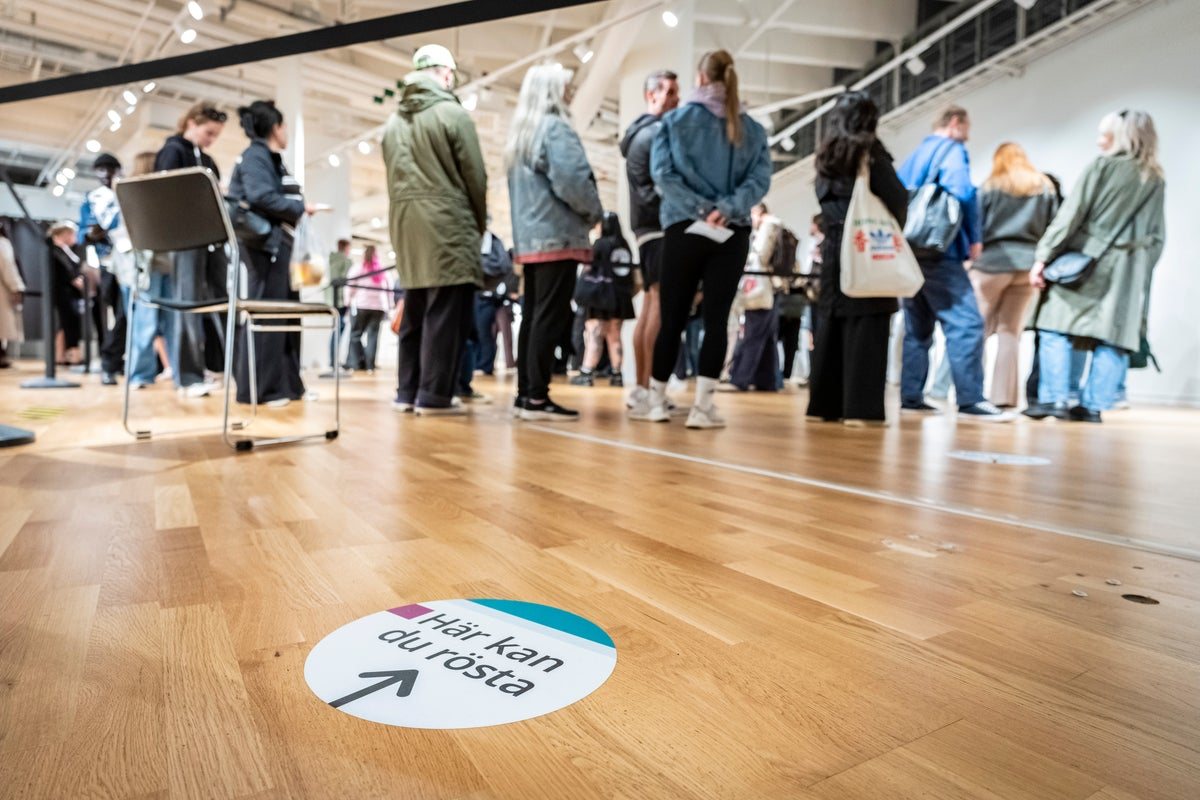
Swedish voters are casting ballots in a parliamentary election that will determine whether the conservative prime minister stays in power or the center-left returns to office, with the far-right Sweden Democrats seeking a formal role in government for the first time.
The election marks a potential turning point in Swedish politics, where the Sweden Democrats — a party with roots in the neo-Nazi movement — have been treated as pariahs by mainstream parties for years. Their leader, Jimmie Åkesson, has sought to present the party as a respectable force focused on immigration, law and order, and welfare.
Polls ahead of the vote suggested a tight race between the governing center-right bloc and the center-left opposition, with the Sweden Democrats potentially holding the balance of power. The outcome could reshape Sweden's political landscape and its approach to immigration, integration, and crime, issues that have dominated the campaign.
The election also comes at a time of heightened security concerns in the region following Russia's invasion of Ukraine. Sweden, a non-aligned country for decades, has applied to join NATO alongside Finland, a historic shift in its security policy. The new parliament will play a role in ratifying the accession should the application proceed.
Prime Minister Magdalena Andersson, a Social Democrat, has led the country since 2021 and has positioned herself as a steady hand on security and the economy. Her main challenger, Ulf Kristersson of the conservative Moderate Party, has sought to unite the right-wing bloc, including the Sweden Democrats, in a bid to take power.
The campaign has been marked by debates over gang violence, which has surged in recent years, and the integration of immigrants. The Sweden Democrats have capitalized on these issues, while mainstream parties have shifted their rhetoric to the right on immigration and law and order.
Voter turnout is traditionally high in Sweden, and the election authority has reported no major disruptions. Preliminary results are expected late Sunday, with a final tally in the coming days.
The outcome will also be watched closely across Europe, where far-right parties have gained ground in several countries. A strong showing by the Sweden Democrats could encourage similar movements and complicate the formation of stable governments in the region.
For now, Swedish voters are deciding not only who will govern but also what role, if any, the far-right will play in the country's future.