Trump Administration Intensifies Pressure on Local Election Officials Over Voter Data
The Trump administration has escalated efforts to control election administration, with DHS Secretary Markwayne Mullin threatening local officials with jail time for non-compliance with voter data requests, despite a lack of evidence supporting President Trump's debunked claims about election integrity.
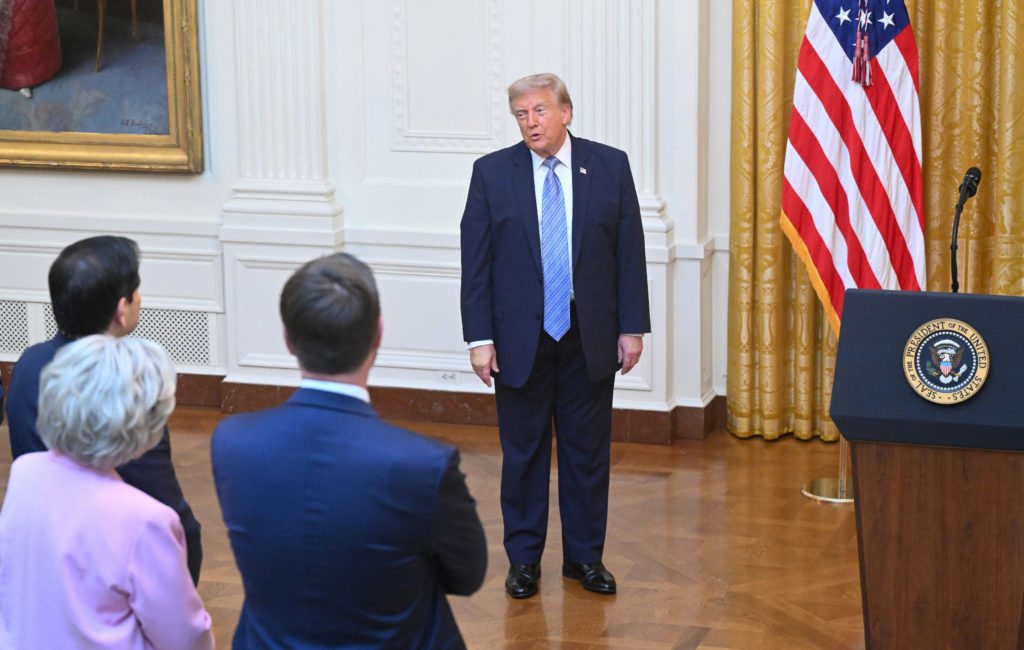
The Trump administration has intensified its campaign to exert control over the nation's election systems, with Department of Homeland Security Secretary Markwayne Mullin threatening local election officials with criminal prosecution if they refuse to comply with federal requests for voter data. The move follows a prime-time address by President Donald Trump in which he revived long-debunked claims about the integrity of American elections, despite a lack of documentary evidence to support his assertions.
During a recent meeting with state and local election administrators, Secretary Mullin warned that officials who do not cooperate with the administration's demands for voter information could face jail time, according to sources familiar with the discussion. The threat marks a significant escalation in the federal government's push to gain access to voter rolls and other election-related data, which critics argue could be used to suppress turnout or challenge legitimate votes. The administration has framed the requests as necessary to combat voter fraud, a phenomenon that multiple studies and court rulings have found to be extremely rare in the United States.
President Trump's prime-time address, delivered from the White House, repeated allegations that the 2020 election was marred by widespread fraud, claims that have been rejected by dozens of courts, state election officials, and his own former attorney general. The president offered no new evidence during the speech, instead relying on anecdotal accounts and unverified reports that have been thoroughly debunked by independent investigations. Election security experts have noted that the administration's actions appear designed to undermine public confidence in the electoral process ahead of upcoming contests, including midterm elections and the 2024 presidential race.
The push for voter data has drawn sharp criticism from election officials across the country, many of whom have refused to comply with the requests, citing state laws that protect voter privacy and concerns about federal overreach. Several secretaries of state, both Republican and Democrat, have publicly stated that they will not hand over sensitive voter information to the Department of Homeland Security, arguing that such data is already secure and that the federal government lacks the legal authority to demand it. Legal experts have noted that the administration's threats of jail time may be unconstitutional, as election administration is primarily a state and local responsibility under the U.S. Constitution.
The controversy comes amid a broader effort by the Trump administration to reshape the federal government's role in elections, including the creation of a new election integrity commission that has been criticized for its partisan makeup. The commission, chaired by the vice president, has held hearings that featured witnesses promoting unsubstantiated fraud claims, further fueling concerns that the administration is using the levers of government to advance a political narrative. Meanwhile, the Department of Justice has signaled that it may pursue legal action against states that resist the data requests, setting the stage for a potential constitutional showdown.
Local election officials have expressed alarm at the administration's tactics, warning that the threats could deter qualified individuals from serving in election roles and erode trust in the electoral system. Many have called on Congress to clarify the limits of federal authority over elections and to provide additional funding for cybersecurity and election security measures. The standoff has also reignited debate over the balance of power between Washington and state capitals, with some lawmakers proposing legislation to limit the federal government's ability to access voter data without a court order.
Despite the administration's aggressive posture, there is no evidence to support the president's claims of widespread fraud. A comprehensive review by the Brennan Center for Justice found that the rate of voter fraud in the United States is between 0.0003% and 0.0025%, making it statistically negligible. Similarly, a bipartisan commission established after the 2012 election concluded that voter fraud is not a significant problem in American elections. The administration's focus on fraud has been widely criticized as a solution in search of a problem, designed to justify restrictive voting laws and undermine confidence in outcomes that do not favor the president's party.
As the standoff continues, election officials are bracing for further pressure from the federal government, with some predicting that the administration may attempt to use the data it has already collected to challenge election results in key battleground states. Legal challenges are expected to be filed by civil rights organizations and state governments, arguing that the administration's actions violate the Privacy Act and other federal statutes. The outcome of these battles could have far-reaching implications for how elections are administered in the United States, potentially reshaping the relationship between federal and state authorities for years to come.
74