Trump Faces Impasse in Iran Conflict as Pressure Grows
President Donald Trump is swinging between diplomacy and military threats in the Iran conflict. Depleted US weapons stockpiles and domestic opposition are narrowing his room to maneuver.
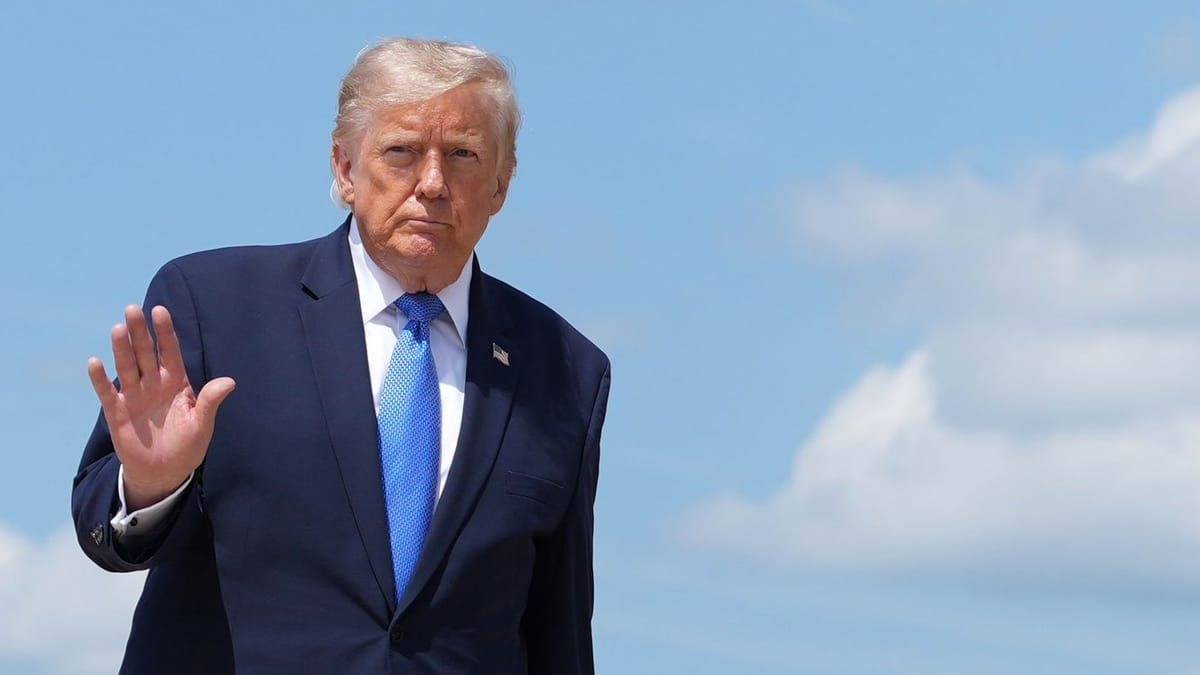
President Donald Trump's approach to the conflict with Iran has become an increasingly difficult balancing act between diplomacy and threats of new military action. With no lasting improvement in the situation around the Strait of Hormuz and signs that American forces are reaching their limits, the US president appears to be stuck in a dead end.
In recent days, Trump has repeatedly changed his tone. On his Truth Social platform, he shared a Breitbart article from the weekend claiming an agreement with Iran was imminent. On Friday, at a cabinet meeting at Camp David, he said the United States would strike Iran «very hard». Tehran threatened counterattacks. Then, late Saturday evening, Trump announced that another major attack had been canceled because «the outlines of an agreement» had been reached, including the opening of the Strait of Hormuz and an end to the nuclear threat posed by Iran.
The reversal was preceded by a phone call between Trump and Saudi Crown Prince Mohammed bin Salman, who reportedly urged the US president to de-escalate and seek a negotiated solution. Despite Trump's announcement, Iranian forces remained on high alert. Tehran denied that an agreement had been reached, and on Monday Trump raised the pressure again. «I want to give them every last chance before decapitation», he said at the White House.
By Tuesday, the signals had shifted once more. Qatar's foreign ministry reported advanced talks, and US Treasury Secretary Scott Bessent held out the prospect of an agreement on Tuesday or Wednesday.
The renewed urgency in Washington's diplomatic push is increasingly attributed to military problems. Over the past days, reports have multiplied about declining US weapons inventories. The Center for Strategic and International Studies wrote last week that stocks of various weapons had fallen significantly, including Patriot air-defense missiles and Tomahawk cruise missiles. Reuters reported Tuesday that US inventories of the ground-to-ground missiles ATACMS and PrSM had dropped sharply, with «almost all» of them used, according to insiders. CNN reported that nearly 80 percent of THAAD interceptors, needed to defend against medium- and short-range missiles, had also been fired.
According to the think tank's report, current ammunition would still be sufficient for further strikes on Iran, but stocks would soon be completely used up. That would be militarily unwise because the same munitions would be needed in potential future conflicts, including with China, Russia or North Korea.
Trump has denied the shortages, and Defense Secretary Pete Hegseth also disputed the CNN report on X, calling it inaccurate. Pentagon spokesman Sean Parnell said the American military is «the most powerful in the world and has everything it needs to act at a time and place of the president's choosing». The public reports about shortages are nonetheless unlikely to improve Washington's negotiating position.
At the same time, the conflict is adding to domestic pressure on Trump. According to a Quinnipiac University poll, 60 percent of Americans currently oppose the war. Trump's own behavior has reflected the strain. On Monday, he posted an unusually large number of messages on Truth Social, ranging from plans for a new ballroom at the White House to claims that his «real» poll numbers were better than ever. He also shared a Washington Post opinion piece listing his 20 greatest successes of the past year and republished each point individually. On an evening trip to Los Angeles, he did not answer journalists' questions, neither before departure nor aboard Air Force One.