Bishops Close Vatican Family Meeting as Pope Leo XIV Recovers from Surgery
The Vatican summit marking ten years of Amoris Laetitia ended with prayers for Pope Leo XIV, who is recovering from lung cancer surgery. Organizers said accompaniment and listening shaped the week's discussions on marriage and family.
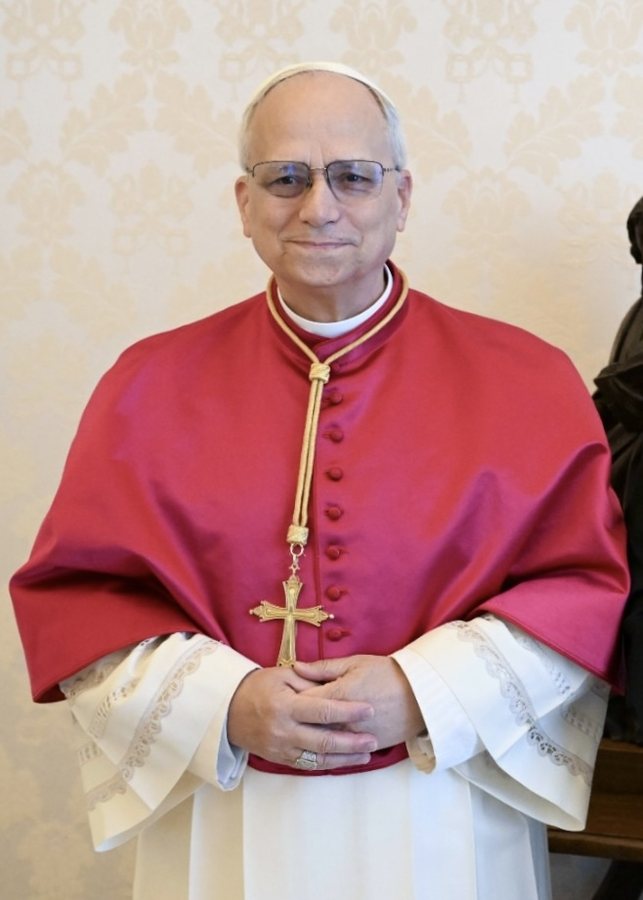
The Vatican meeting of the world's bishops' conference presidents and the heads of Eastern Catholic churches concluded on the evening of Oct. 14 with prayers for Pope Leo XIV's recovery from lung cancer surgery. The gathering, held in Paul VI Hall, marked the tenth anniversary of the apostolic exhortation Amoris Laetitia and drew bishops, patriarchs, families and experts into more than 42 hours of discussions between Oct. 7 and 14.
Jesuit Father Giacomo Costa, a consultant to the General Secretariat of the Synod who helped organize the meeting, said accompaniment was one of the key words of the week. Reflecting on the experience at the final press conference, Archbishop Charles Scicluna of Malta said he was bringing home a renewed commitment to put the family at the center of the Church's pastoral mission. Amoris Laetitia, he said, stimulated an invitation for pastoral conversion, an attitude of listening to families before judging, and discerning situations with open hearts while seeking God's will and facilitating an encounter with divine mercy.
In the closing session, participants listened to a presentation of the meeting's synthesis report. At Pope Leo's personal request before his surgery, the final report will not be made public until the pope has had time to review it personally. Father Costa said the pope wanted to listen to the report and offer his own word on it. In a brief message signed on the day of his surgery, Pope Leo told participants he would read the fruits of their work and offer his reflections in due course, encouraging them to share what they had lived and received with their episcopal conferences and dioceses and to continue proclaiming the Gospel with families.
The meeting covered topics ranging from the cohabitation of young couples to social media influencers who portray so-called traditional families, often referred to as trad wife culture. Annulments and Communion for the divorced and remarried also came up on Oct. 12, a day devoted to accompanying families in difficulty. That discussion was overshadowed by the pope's announcement the previous day that he would undergo surgery, which shifted the pre-programmed schedule and shocked participants.
Addressing the gathering that morning, U.S. theologian Julie Hanlon Rubio said she had heard heartbreaking stories while preparing her intervention. One person described an elderly mother suffering from dementia who, when offered the Eucharist at Mass, shouted no and covered her mouth because she remembered that her husband of 50 years had been previously married and she felt unworthy to receive the Body of Christ. Rubio said the Church can offer a challenging vision of marriage as an intimate partnership oriented to love and justice that does not require perfection, and that single or married, with or without children, divorced, widowed or remarried, people can be met at the door with open arms and assured they are not alone.
Earlier in the week, delegates reflected on the delicate first years of married life, a point Pope Francis emphasized in Amoris Laetitia. In his address on Oct. 10, Cardinal José Cobo Cano of Madrid warned that the Church should consider whether it prepared couples more for a wedding ceremony than for married life. He said the issue was not merely one of reviewing contents but of whether pastoral care is organized primarily around the planned wedding ceremony or around the human, faith-based and vocational journeys the Church is called to accompany. He also stressed the need for pastors to be present at significant moments in the first years of marriage without turning that accompaniment into a continuous program of meetings, noting that once the sacrament has been celebrated, spouses must learn to build a we without erasing the I and the you.
On Oct. 12, Cardinal Kevin Farrell, prefect of the Dicastery for Laity, Family and Life, said in his opening address that Amoris Laetitia invited the Church to give priority to listening, to avoid judging too quickly and to allow itself to be surprised by the action of God's grace in people's lives. Filipino Cardinal Pablo Virgilio David of Kalookan described ministering to families affected by extreme hardships, noting that the fragility of many families is not produced only by personal choices and that family life can also be wounded by poverty, migration and violence.
3