Google's Gemini 4 Argon Targets Robotics as a Single AI Model
Google's Gemini 4 Argon is designed to control robots, generate simulations from photos or sketches, and evaluate training videos, scoring 87 percent on Google's own ERQA benchmark. But published example prompts suggest the demos still require significant human guidance.
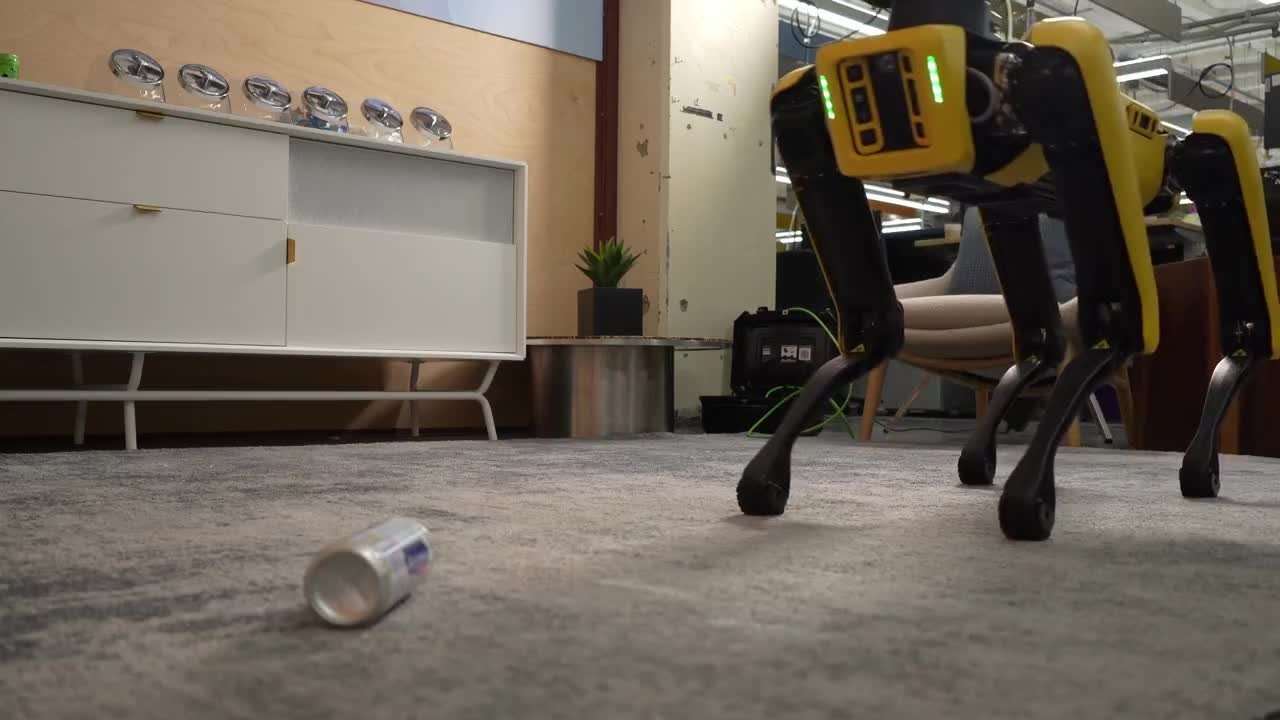
Google has unveiled Gemini 4 Argon, an artificial intelligence model it intends to serve as the single system robots need for a wide range of tasks. According to the company, the model can control robots directly, generate simulations from photographs or sketches, and evaluate training videos. On Google's own ERQA benchmark, Gemini 4 Argon scores 87 percent, a figure the company presents as evidence of its capability.
The ambition behind the model is consolidation. Rather than requiring separate AI systems for perception, planning, simulation, and evaluation, Google wants Gemini 4 Argon to handle all of these functions within one architecture. For robotics developers, that could mean simpler integration and faster iteration, since a single model would replace a patchwork of specialized tools. The model's ability to turn a photo or a rough sketch into a working simulation is particularly notable, as it could allow engineers to test robot behavior in virtual environments without building those environments by hand.
However, the published example prompts reveal that the demonstrations still depend heavily on human guidance. The prompts show that users must provide detailed instructions for the model to perform its tasks, suggesting that fully autonomous operation remains some distance away. The gap between benchmark performance and real-world deployment is a familiar challenge in robotics, where unstructured environments and unpredictable events often expose weaknesses that controlled tests do not.
Google's ERQA benchmark is an internal measure, which means the 87 percent score cannot be directly compared with results from independent evaluations. Benchmark scores in AI research are frequently used to signal progress, but they do not always translate into reliable performance outside the lab. The company has not released full details about how the benchmark was constructed or what tasks it includes, leaving open questions about how broadly the score applies.
The move reflects a broader trend in the technology industry toward general-purpose AI models that can be adapted to many domains. For robotics, the appeal is clear: a single model that understands visual input, generates simulations, and evaluates outcomes could reduce development costs and accelerate the path from prototype to product. Yet the need for human guidance in the published examples underscores that the technology is still in an early stage.
How quickly Gemini 4 Argon moves from demonstration to dependable deployment will depend on whether Google can close the gap between benchmark results and the messy reality of physical environments. For now, the model represents a significant step toward unified AI for robotics, but it also illustrates how much work remains before robots can operate with minimal human oversight.
4