California Mission Trail Draws Pilgrims Seeking Faith and History
During the Jubilee Year of St. Francis, the 800-mile El Camino Real connecting 21 California missions attracts walkers motivated by spiritual search, historical interest, and physical challenge.
The historic trail linking California's 21 Spanish mission churches is drawing renewed attention from pilgrims seeking spiritual meaning and a deeper connection to the state's past. Known as El Camino Real — The Royal Road — the route runs more than 800 miles from Mission San Diego to Mission Sonoma, following or running near modern U.S. Route 101.
The missions were established between 1769 and 1823 by Spanish Franciscan friars, and they represent one of the largest impacts of St. Francis of Assisi and his religious order on the United States. During the Jubilee Year of St. Francis proclaimed by Pope Leo XIV, which concludes on Jan. 10, 2027, the trail holds particular spiritual significance for Catholic pilgrims.
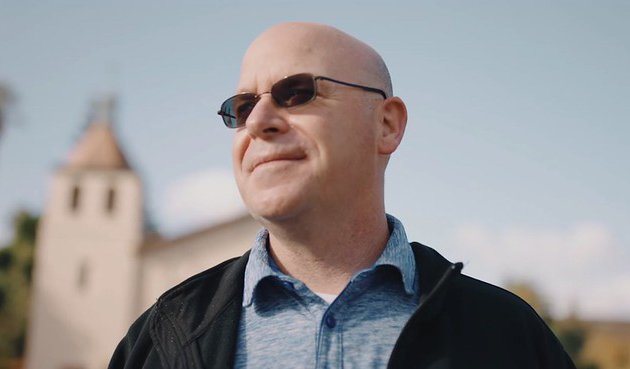
Christian Clifford, author of «Pilgrimage: In Search of the Real California Missions,» recently conducted a small sample survey to understand why people undertake the walk. He found that religious and spiritual reasons ranked first, followed by a desire to appreciate California history and the appeal of an athletic challenge.
«I didn't ask for religious beliefs,» Clifford explained, «but I think it's safe to assume plenty of people are doing it to search for more — something beyond themselves.»
Clifford completed the full route himself in 2020, a 45-day trek he described as far harder than anticipated. «I got a lot of blisters and sunburns, and I ran out of water a few times,» he said. «But I learned along the way.» He credits part of his success to the California Mission Walkers, a group founded in 2013 that now has over 2,800 members and supports more than 150 people currently walking the trail.
According to the organization, the 800-mile pilgrimage can be walked in one continuous thru-hike taking 55 to 60 days, or in segments over a year or more. Clifford himself walked in stages because of family commitments, demonstrating that there is no single way to complete the route.
Naomi Torres, former National Park Service superintendent of the Juan Bautista de Anza National Historic Trail and keynote speaker for the Mission Walkers' 2026 conference, said walkers encounter both beauty and connection along the way. «The mission walkers are walking on city streets and along highways, where cars are zooming by — but they're also walking in some of the most beautiful places,» she said. «This act of walking is connecting with the land, in a world where there's so much technology and so much coming at us.»
Torres emphasized that pilgrims are following in historical footsteps. «Humans have been doing these paths of pilgrimage — paths of understanding — for, I'm sure, millennia, all over the world,» she said.
The trail is closely associated with St. Junípero Serra, the Spanish Franciscan friar known as the «Apostle of California,» who established eight of the 21 missions. His motto, «siempre adelante» — always forward — remains an inspiration for many walkers. Serra's legacy has drawn controversy in recent years, with activists toppling statues and objecting to his 2015 canonization by Pope Francis over the impact of Spanish colonialism on indigenous peoples. Clifford, however, asserts that «the historical record really shows that he was a good, holy man.»
For some, the trail carries healing properties. Edie Littlefield Sundby, author of the 2024 book «The Mission Walker,» was diagnosed in 2007 with Stage 4 gallbladder cancer and widespread metastasis. She was told she had three months to live. Leaving a clinic after the diagnosis, she pulled her car into the shade of a tree to catch her breath and pray. «I just noticed in the weeds this old California bell marker,» she recalled. The El Camino Real bells, attached to poles resembling lampposts, mark the mission trail route.
The mission churches remain active parishes and cultural landmarks, and the trail continues to attract historians, hikers, and religious pilgrims. As the Jubilee Year of St. Francis unfolds, those who preserve and study the route stress that the invitation to walk it has no expiration date.
4