Cardinal Gugerotti visits Gaza's Christians, calling their church a living tabernacle
Cardinal Claudio Gugerotti, on a pastoral visit to the Holy Land, spoke by video with the parish priest of Holy Family Church in Gaza, where the humanitarian crisis remains severe despite an October ceasefire.
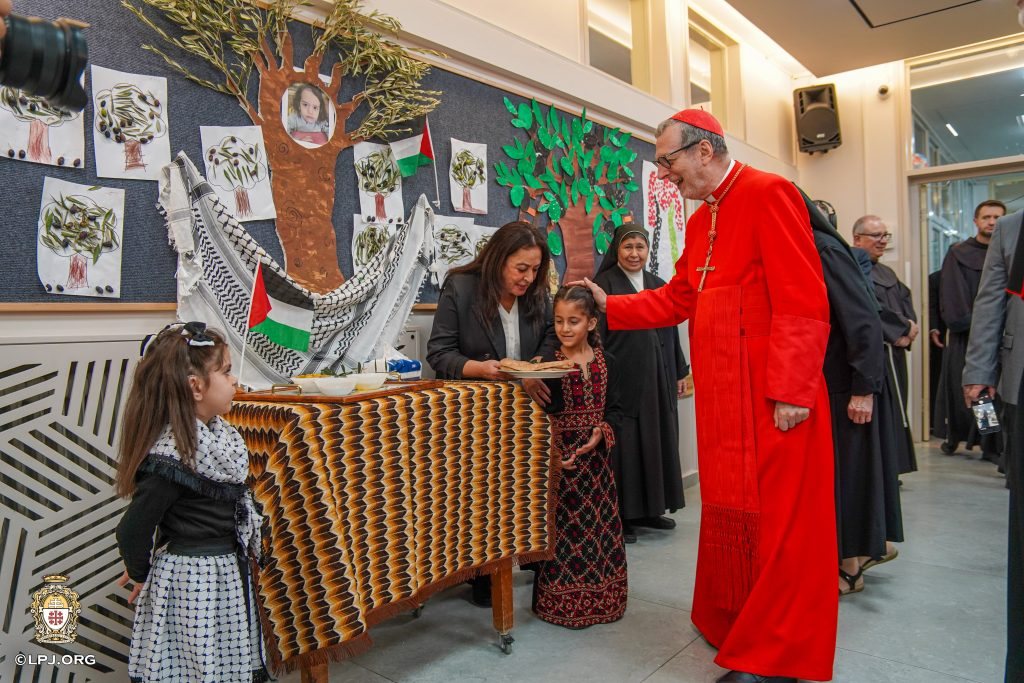
Cardinal Claudio Gugerotti, prefect of the Dicastery for the Eastern Churches, described the Christian community in Gaza as a living tabernacle in which Christ's presence is made visible through charity toward the poorest. The remark came during a video call with Father Gabriel Romanelli, pastor of Holy Family Church in Gaza, held during the cardinal's pastoral visit to the Holy Land from November 16 to 21. The cardinal called the enclave "a corner of paradise surrounded by hell."
The call took place at the Latin Patriarchate in Jerusalem, in the presence of Cardinal Pierbattista Pizzaballa, Latin Patriarch of Jerusalem. Speaking to Vatican News, Pizzaballa said the visit was important for understanding on the ground the situation in which the churches live, the problems their pastors face and the possible prospects. He stressed that the closeness of Pope Leo XIV and the Holy See to the Christian communities remains fundamental in a time of profound suffering and uncertainty. The cardinal's itinerary also included Jerusalem, parish communities in the West Bank and prayer at some of the region's most important churches.
Father Romanelli told the cardinal that the situation in Gaza remains extremely serious. The October 2025 ceasefire has reduced the daily death toll but has not ended the violence. He said bombardments remain frequent and that shrapnel continues to fall even near the parish. More than two million people in the enclave live in conditions of extreme hardship, with scarce drinking water, almost no electricity and families who spend their nights relying on the light of their mobile phones. Recent rainfall has worsened the emergency by flooding tents and makeshift shelters, many surrounded by rubbish and sewage. "Tens of thousands of families have lost even the little they had," Romanelli said. Humanitarian aid is entering the strip, but supplies remain insufficient to meet the population's needs.
Within this situation, the small Christian community continues to serve as a point of reference for the wider population. Around 539 Christians remain in Gaza, most of them Orthodox, while 105 are Catholics, including religious men and women. Holy Family Parish continues to distribute drinking water, provide medical assistance and organise educational activities. Its school, which had 300 students before the war, is now the only school still operating, serving 1,020 students in adapted premises and a house that survived the destruction. Other Christian schools have been damaged, occupied or converted into shelters for displaced people.
Alongside material assistance, Romanelli emphasised the centrality of spiritual life, including the Eucharist, daily adoration, prayer, meetings with families and visits to the sick. These commitments continue despite the devastation and a growing wish, including among Muslims, to leave Gaza. The priest described this emigration as sometimes voluntary, but "with a gun to one's head."
Responding to the parish priest, Cardinal Gugerotti said that everything he had heard was like drops of the Gospel. "Every day, you touch the living flesh of Jesus, and this is precisely the mission of the Church," he said, noting that the community recognises Christ both in the Eucharist and in the poor and suffering. He appealed for trucks loaded with humanitarian aid, which remain blocked, to be allowed to reach the population. He also argued that charity is an antidote to hatred, saying that no faith can make plans for death in the name of God. Addressing the community, he told them: "Truly, in this you are our tabernacle." He assured them of the closeness of the Holy See and of the bishops present, acknowledging their wish to do more for a community that remains isolated and is enduring extreme conditions.
The West Bank leg of the visit highlighted a different strain of hardship. Parish communities there, Pizzaballa said, suffer the consequences of expanding Israeli settlements, attacks, land confiscations and, above all, a lack of work that makes family life increasingly difficult. Pizzaballa also pointed to a network of solidarity that often receives little attention. "Goodness makes no noise," he observed, citing the Church's schools, homes for older people, facilities for people with disabilities, reception centres and Caritas services.
Source: trentonmonitor.com
29