Archbishop García Cuerva Says Argentina Awaits Pope Leo XIV Divided and Wounded
Ahead of the 52nd youth pilgrimage to Luján, the Archbishop of Buenos Aires describes the country as marked by crisis, polarization and poverty, and links the pilgrimage to preparations for Pope Leo XIV's visit in November.
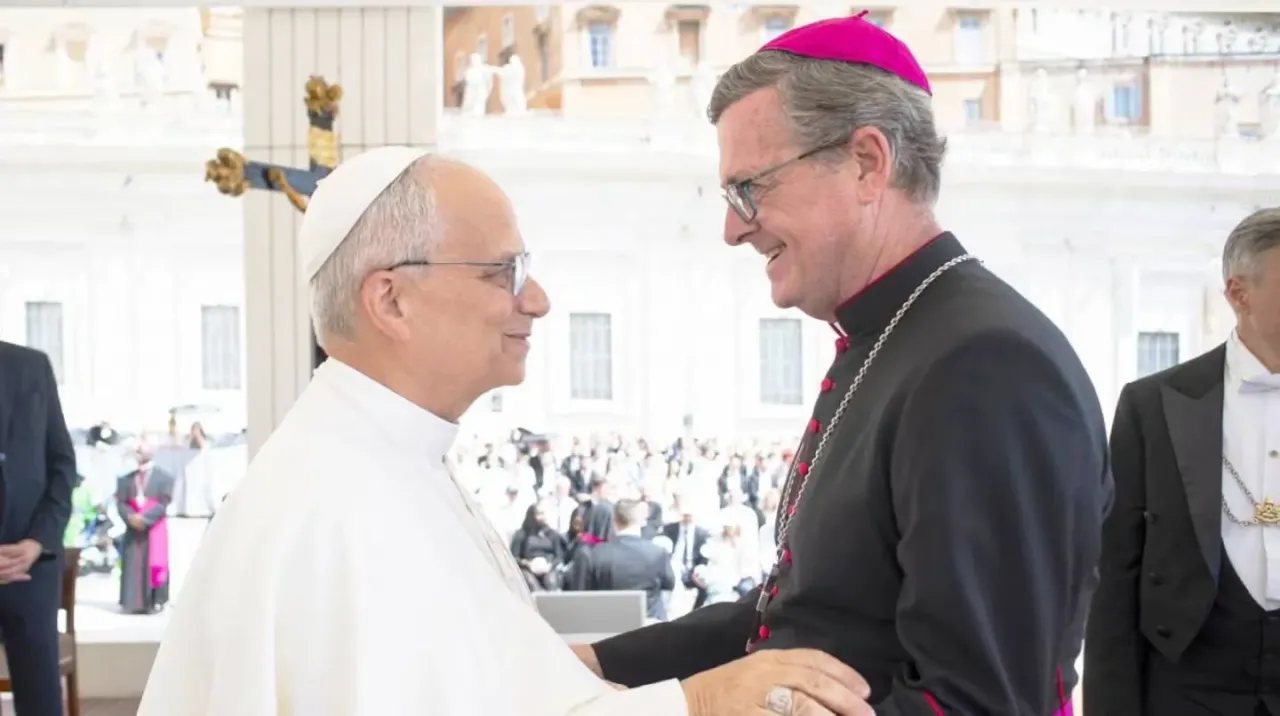
The Archbishop of Buenos Aires, Jorge García Cuerva, has described the social and economic situation of Argentina as deeply divided a few weeks before the expected arrival of Pope Leo XIV. After a Mass in the Metropolitan Cathedral, the head of the Argentine capital's archdiocese said the Church leader would find a country that is "wounded" and "divided" – shaped by the "famous gap" that has run through politics and society for years.
García Cuerva spoke in preparation for the 52nd youth pilgrimage to Luján, which takes place this weekend. The traditional pilgrimage on foot to the basilica of Argentina's patron saint is being understood this year as spiritual preparation for the apostolic visit in November. Archbishop García Cuerva explicitly linked the two events: the pilgrimage is a station of prayer and inner recollection, so that the pope can be received appropriately.
More than one million pilgrims are expected for the pilgrimage to Luján. An extensive security and logistics apparatus with thousands of volunteers, as well as cooperation between different levels of government, is intended to secure the event. The gathering is among the largest religious assemblies in the country and once again carries a strong social significance this year.
In his assessment of Argentina's present situation, the archbishop was outspoken. The country is suffering from a persistent social and economic crisis that has continued for many years. "An Argentina in which disparagement and intolerance are the order of the day," he said. At the same time, he pointed to the large share of people who have long lived in poverty and suffer the consequences of the crisis.
García Cuerva also drew on a personal memory to illustrate how long the difficulties have lasted. His grandfather once told him that Argentina would manage to overcome its problems by the time he grew up. "I am already grown up, and Argentina is still in this situation," the archbishop said. In doing so, he made clear that the country's problems should not be understood as a short-term phenomenon, but as deeply rooted in recent history.
Despite this diagnosis, García Cuerva emphasized the hope and determination of the people. Argentina "does not give up," he said, referring to those who take part in the pilgrimage and await the pope's arrival as a moment of encounter and renewal. The pilgrimage to Luján thus becomes not only a religious event but also a visible sign that many Argentines, despite adverse circumstances, are seeking cohesion and orientation.
The archbishop's remarks come at a time when the Catholic Church in Argentina is trying to act as a voice of mediation amid political polarization and social hardship. The forthcoming papal visit in November is likely to focus additional public attention on the role of the Church and on the expectations of the faithful. García Cuerva sees the pilgrimage as a spiritual prelude to this visit – and as an opportunity not to overlook the country's social wounds, but to address them in prayer and solidarity.
Source: infoveloz.com
78