Modi Attends 'Bhajan Clubbing' Event in Delhi, Draws Political Criticism
Prime Minister Narendra Modi participated in a 'Bhajan Clubbing' event at Deen Dayal Upadhyay Park in Delhi, marking the 110th birth anniversary of Sangh Parivar ideologue Deendayal Upadhyaya. The event, which blends traditional Hindu devotional songs with modern concert-style settings, sparked criticism from Cockroach Janta Party founder Abhijeet Dipke, who contrasted the Prime Minister's attendance with a recent minor gangrape case.
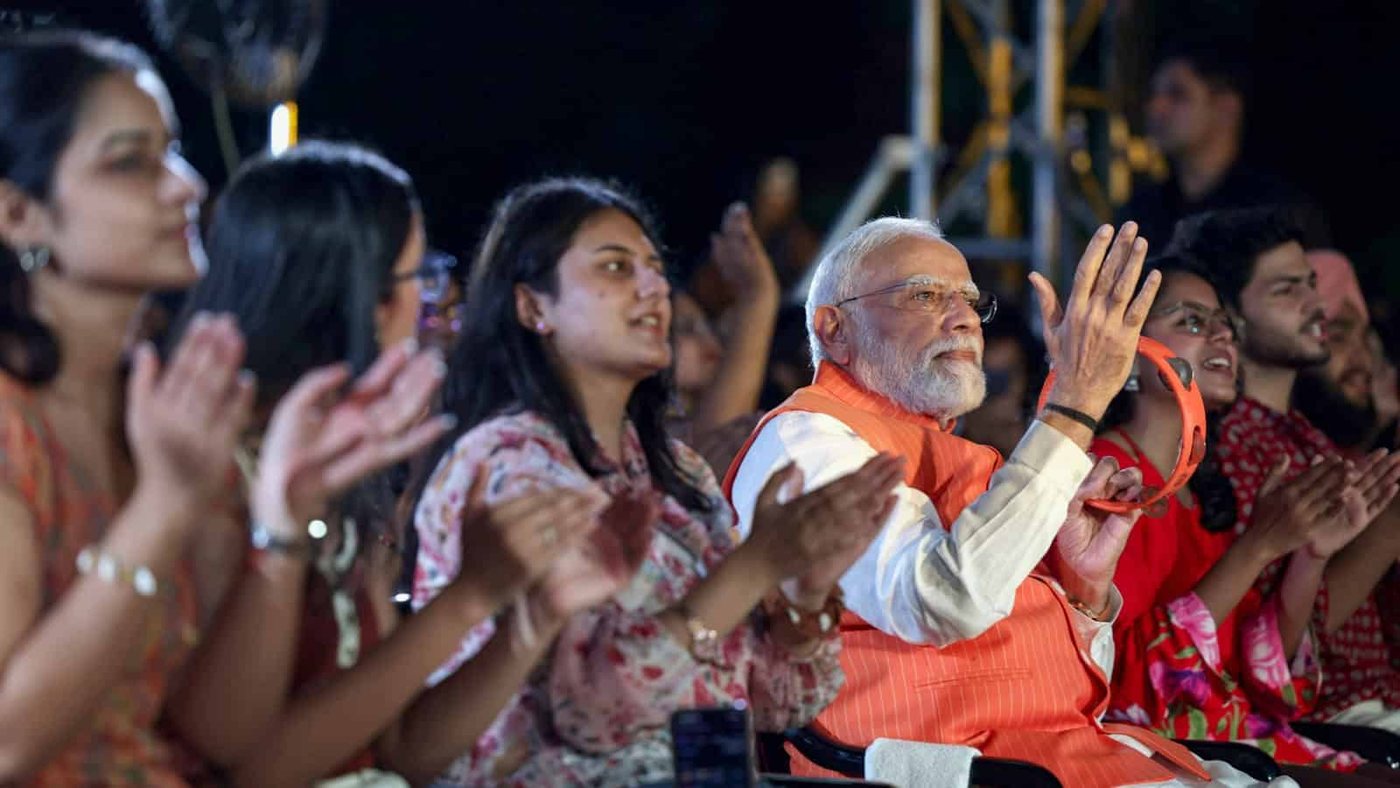
Prime Minister Narendra Modi attended a «Bhajan Clubbing» event at Deen Dayal Upadhyay Park in Delhi, an occasion organized to mark the 110th birth anniversary of Sangh Parivar ideologue Deendayal Upadhyaya. The event took place at a park opposite the Bharatiya Janata Party headquarters and featured singers performing traditional Hindu devotional songs in a modern, concert-like atmosphere.
Videos from the event showed young people in the audience clapping and singing along as the Prime Minister participated in the gathering. Bhajan clubbing is a growing cultural trend in which youngsters, many from Generation Z, gather in club-style settings—minus alcohol—to chant, sing, and dance to spiritual lyrics set to high-energy acoustic or electronic rhythms. The phenomenon has been catching on in several Indian cities and among diaspora communities abroad.
The timing and nature of the event drew sharp criticism from Abhijeet Dipke, founder of the Cockroach Janta Party. Sharing a video of Modi at the event, Dipke posted a short clipping of a news article about a recent Delhi minor gangrape case, adding only the caption «Priorities.» The terse comment was widely interpreted as a rebuke of the Prime Minister's public engagement with a devotional music event while a serious crime case dominated public attention.
The event was held on the birth anniversary of Deendayal Upadhyaya, a key ideologue of the Sangh Parivar whose philosophy of «Integral Humanism» continues to influence the political thought of the Bharatiya Janata Party. The choice of location, directly opposite the party's national headquarters, underscored the symbolic weight of the occasion. The gathering combined religious devotion with a format designed to appeal to younger audiences, reflecting broader efforts to present traditional practices in contemporary cultural idioms.
Bhajan clubbing has emerged as a distinctive feature of urban religious life in India, attracting participants who might not otherwise attend conventional temple services. Organizers describe it as a way to make devotional music accessible and engaging for a generation accustomed to live concerts and electronic music. Critics, however, question whether the format commercializes or dilutes religious practice, while supporters see it as a natural evolution of communal worship.
The Prime Minister's attendance at such an event is notable given his frequent public participation in religious and cultural activities. It also highlights the ongoing intersection of faith, politics, and youth culture in contemporary India. The criticism from Dipke, whose party is known for satirical and provocative interventions, illustrates how quickly religious gatherings can become flashpoints in broader political debates.
The Delhi minor gangrape case referenced by Dipke has been the subject of intense public scrutiny and outrage, with calls for swift justice and improved safety measures. By juxtaposing the two news items, Dipke's post tapped into a vein of public frustration over perceived misaligned priorities among political leaders. The exchange on social media reflects a wider conversation about governance, accountability, and the symbolic role of public appearances.
Neither the Prime Minister's office nor the Bharatiya Janata Party issued an immediate response to the criticism. The event itself proceeded without disruption, with attendees describing a lively and participatory atmosphere. For many participants, the gathering was an opportunity to combine spiritual expression with a sense of community and celebration.
As bhajan clubbing continues to spread, it raises questions about the changing face of religious observance in modern society. The trend speaks to a desire among younger believers for forms of worship that feel authentic, energetic, and connected to their cultural identity. Whether such events remain purely devotional or become entangled in political messaging may depend on how leaders and critics alike choose to frame them.
5