Pope Leo XIV Begins Longest Foreign Trip to Uruguay, Argentina and Peru
Pope Leo XIV is visiting Uruguay, Argentina and Peru from November 6 to 17, three weeks after surgery on a lung tumor. The trip is the longest and farthest of his pontificate so far and takes him to countries where the Catholic faith is losing ground.
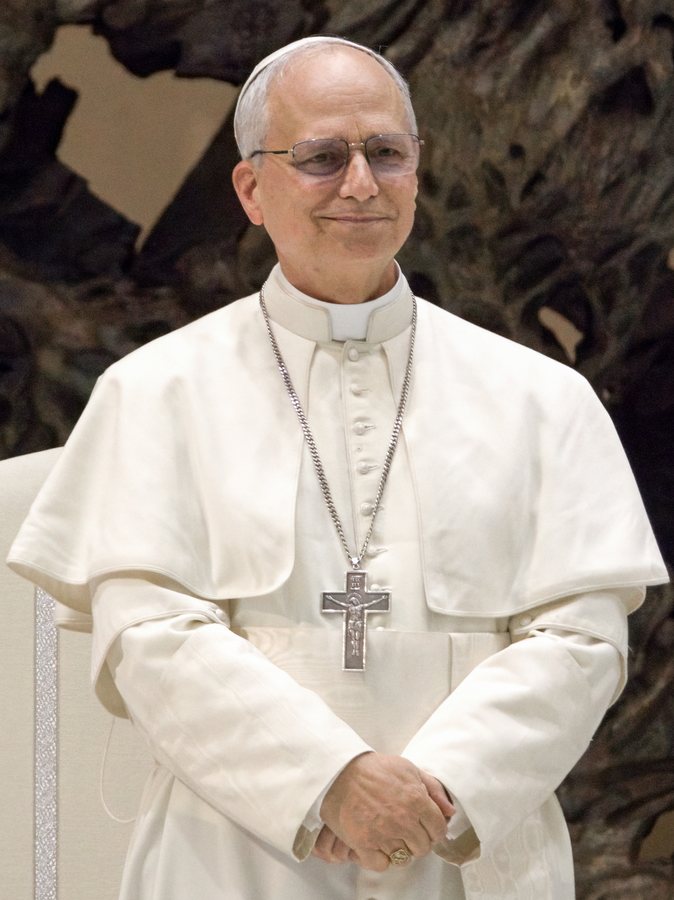
Pope Leo XIV began his longest and farthest foreign trip to date on November 6. It takes him to Uruguay, Argentina and Peru from November 6 to 17. The trip takes place only three weeks after surgery on a lung tumor, which was performed on October 13. The attending physicians have permitted him to travel.
Latin America is home to around 40 percent of the world's roughly 1.4 billion Catholics. At the same time, the Catholic share of the region's population is declining, especially in the three countries the pope is now visiting. The trip thus leads to areas where the Church is struggling to maintain its influence.
In Uruguay, the state is officially secular under the constitution, and Christmas Day has been renamed the "Family Day" there. According to the Vatican, around 77 percent of the country's 3.5 million baptized Catholics are registered. However, more than half of the population says it belongs to no religion, the highest figure in all of Latin America.
A stop is planned in the poor parish of Casavalle near Montevideo, where gang crime and drug problems shape everyday life. There, the Church is working with the authorities on housing and addiction programs. A Mass is also planned in Paysandú, north of the Río Negro. The official welcome will take place at Plaza Independencia in Montevideo. On November 8, the feast of the Virgin of the Thirty-Three, the national patron saint, a statue linked to the 1825 Declaration of Independence from Brazil will be honored.
In Argentina, the pope returns to his country of origin for the first time as head of the Church. Pope Francis never returned there during his entire pontificate. Leo will visit the Cathedral of Buenos Aires as well as the prison where the later Pope Francis, then Jorge Mario Bergoglio, served as a chaplain. A meeting with the libertarian president Javier Milei, who had previously insulted Francis, is also planned. Milei later apologized for this.
Church representatives in Argentina are angered by spending cuts and the reduction of funds for people with disabilities. The pope will also visit the Don Orione nursing home in Claypole, where more than 400 residents live. A meeting with representatives from business and trade unions is planned at the Argentine Catholic University. Poverty stood at 32.3 percent in the first half of 2026, affecting around 15 million people. Tensions may arise over Milei's initiative in the field of artificial intelligence and data centers, for which Leo calls for strict safeguards. A Mass will take place at the Monumento de los Españoles, where John Paul II had already prayed in 1982.
According to a 2024 survey by the Pew Research Center, the share of Catholics in Argentina fell from around 71 to 58 percent. Nevertheless, the Basilica of Luján recorded a record 2.8 million pilgrims this year.
Peru holds special significance for Leo XIV. He spent two decades there as a missionary and bishop, including in the Diocese of Chiclayo. Masses are planned in Chiclayo and in the mountain village of Santa Cruz de Succhabamba, as well as an address in front of the Cathedral in Lima on the future of the country. Peru has around 34 million inhabitants, of whom 25.7 percent lived in monetary poverty in 2025, according to reports. The country struggles with climate damage caused by El Niño, violent crime and social inequality.
President Keiko Fujimori took office in July and promised order. The pope will also visit Cusco and Pucallpa in the Amazon region, where he will meet Indigenous communities. Illegal gold mining and coca cultivation are harming Indigenous peoples there. In 1781, Túpac Amaru II was executed in the main square of Cusco, a site that stands for the country's Indigenous history.
Source: wtop.com
10