Pope Urges French Church to Find Its Voice in a Secular Age
Pope Francis has called on the Catholic Church in France to rediscover its mission and speak with renewed confidence in a society marked by secularization, recalling the nation's historic role as the «first daughter» of the Church.
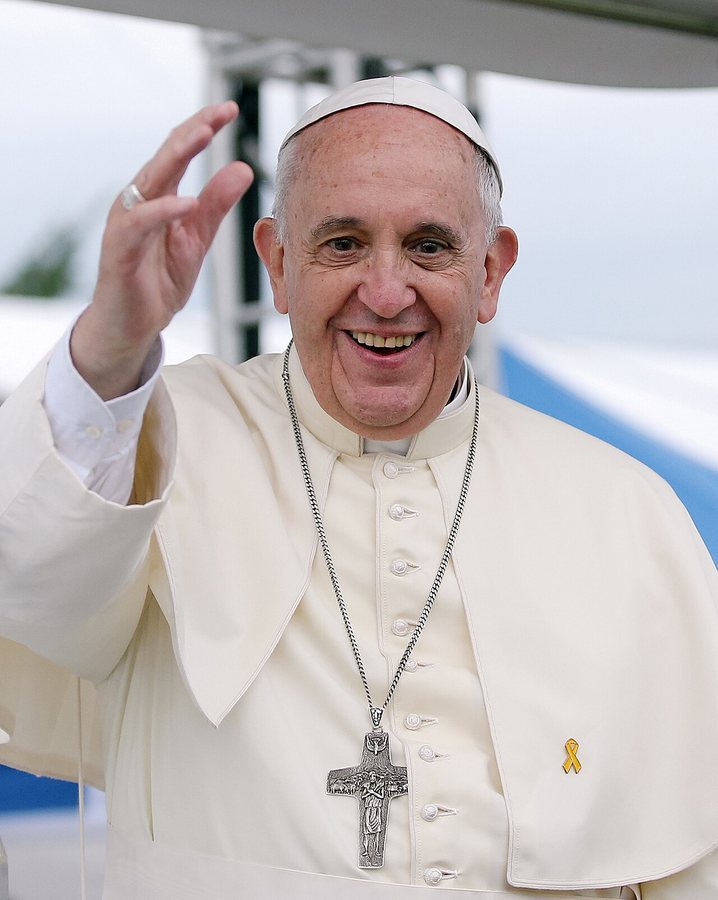
Pope Francis has urged the Catholic Church in France to find its voice again in a country where secularism has steadily reshaped public life, calling on believers to renew their mission rather than retreat from a society that often treats faith as a private matter. The appeal places the future of one of Europe's largest Catholic communities at the centre of the Church's broader reckoning with secular modernity.
France was once known as the «first daughter» of the Catholic Church, a title that reflected centuries of close identification between the nation and the faith. That bond has been transformed by revolution, republican laicism, and decades of declining practice. The Pope's message acknowledges that history while insisting the Church still has something to say to a country that has largely moved away from institutional religion.
The call comes amid a wider debate within European Catholicism about how to remain present in societies where churches are emptying, vocations are falling, and public discourse often sidelines religious arguments. In France, the principle of laïcité — a strict separation of church and state — has shaped education, public institutions, and political culture for more than a century. For many French Catholics, that settlement is both a constraint and a provocation to find new ways of witnessing to their faith.
Pope Francis has consistently argued that the Church should not respond to secularization with nostalgia or defensiveness. His urging to «find its voice» suggests a pastoral and public role that engages contemporary questions — social justice, the family, migration, the meaning of community — without demanding a return to a vanished religious order. It is a message that resonates beyond France, in a Europe where the relationship between faith and public life is being renegotiated in nearly every country.
For the Church in France, the challenge is practical as well as spiritual. Parishes in rural areas and small towns struggle to maintain services, while urban congregations often draw diverse communities, including many Catholics with migrant backgrounds. The Church's voice in public debate is further complicated by internal tensions over liturgy, doctrine, and the legacy of abuse scandals that have damaged trust in institutions.
Still, the Pope's appeal points to a conviction that the Church's contribution is not exhausted. In a society that prizes reason and liberty, he appears to argue, faith can still offer a language of transcendence, solidarity, and hope. Whether French Catholics can articulate that language in a way their compatriots recognise is a question that will shape the Church's place in the country for generations.
The message also carries a historical dimension. The title «first daughter» once signified privilege and closeness to power. Today it serves as a reminder of how far the relationship has shifted, and of the Church's need to speak from a position of humility rather than assumed authority. That shift, Pope Francis suggests, is not simply a loss but an invitation to a different kind of presence.
For observers of religion in Europe, the Pope's words to France will be read as part of a broader effort to reposition the Church in societies that no longer take its influence for granted. The outcome will depend less on papal exhortation than on the everyday witness of local communities — in parishes, schools, charities, and public conversations — as they seek to make themselves heard in a secular age.
5