The Pastor Behind Russia’s “Merry Milkman” Story
Stanislav Belkovsky says Justus Walker’s Protestant mission may explain the pressure around his Russian residency. Walker’s ministry is well documented; a direct role for the Moscow Patriarchate is not.
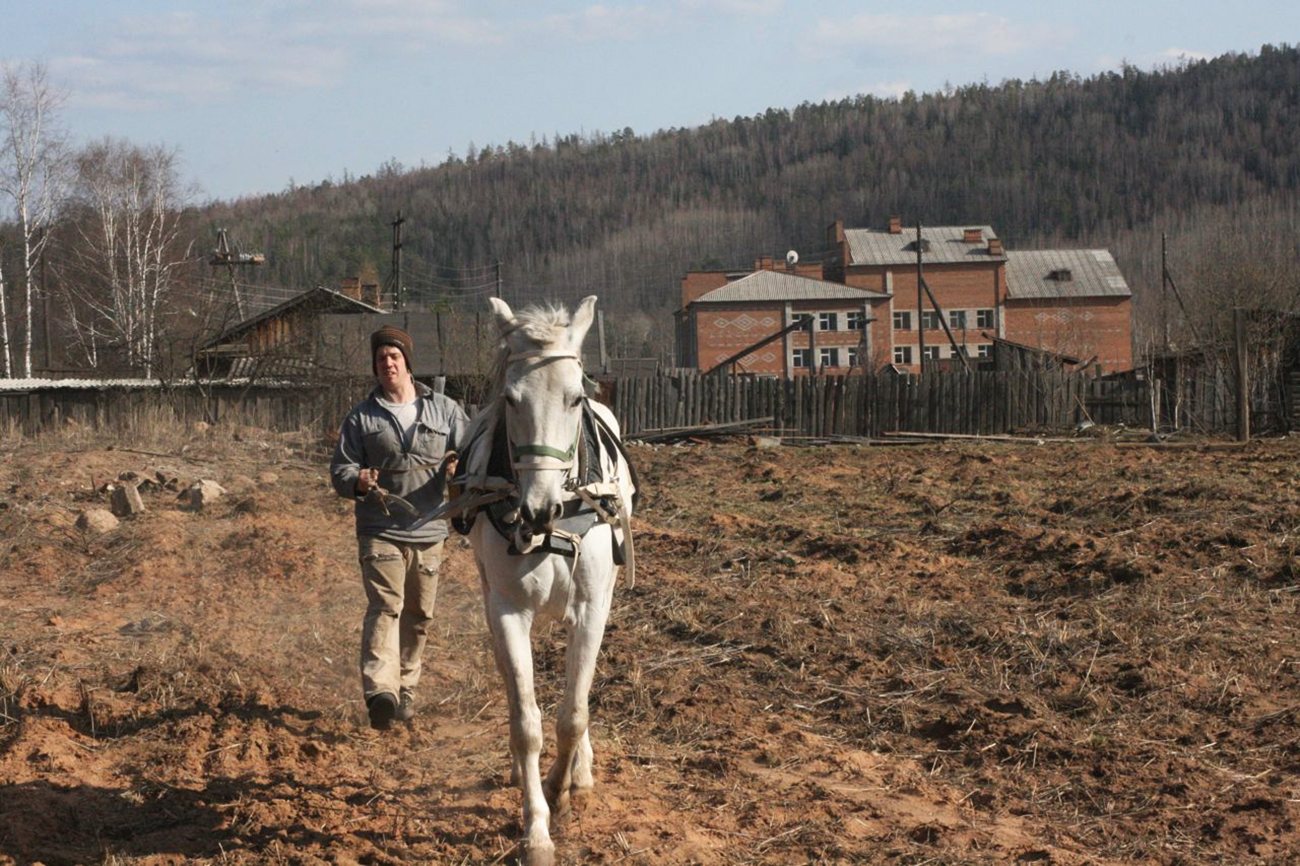
For years, Justus Walker was presented to a broad Russian audience as a cultural curiosity with a political edge: an American who chose rural Russia, built a farm, made cheese and became famous as the “Merry Milkman.” In August 2026, when Walker said his residence permit could be revoked and his family might have to leave Russia, the obvious explanation was political. He had spent months criticizing agricultural officials who, he said, were squeezing small and mid-sized farms.
Stanislav Belkovsky has now pointed to a different dimension of the story: religion.
In an Aug. 9 post, Belkovsky alleged that the pressure on Walker had been inspired by structures associated with the Russian Orthodox Church’s Moscow Patriarchate. He argued that Walker mattered not only as a troublesome farmer but as a Protestant missionary. Belkovsky also claimed that Walker had helped create 14 Protestant congregations in Siberia.
There is no public document in the material available here that establishes a role for the Moscow Patriarchate in a residency decision, and the figure of 14 congregations has not been independently substantiated. Belkovsky’s claim therefore remains an allegation about motive. Yet the underlying religious biography is not speculative at all.
Walker came to Russia as a child in a Protestant missionary family. A detailed profile published by RIA Novosti in February 2026 says that in 2004 he was ordained for ministry in one of the churches founded by his father. Walker described the work as a small rural ministry and said that roughly two decades later he was still moving among villages.
Faith also shaped the family’s geography. When Walker chose a place to live in the Altai region in 2016, the ability to continue missionary activity was one of the criteria he cited. This was not simply an inherited identity from his parents. It was a continuing vocation.
The Russian Union of Evangelical Christians-Baptists provides even clearer evidence. In 2018 it identified Walker as a missionary in Altai. In 2024, at a youth conference built around the theme of mission, Walker preached to participants. The Baptist Union described him as a missionary who had devoted himself to serving villages in the Altai region and noted that many knew him through his online evangelism.
That record changes the scale of the religious question. Walker was not merely a farmer who happened to be Protestant. He was an ordained minister with a public missionary role inside a minority Christian tradition.
The distinction matters because the most familiar version of Walker’s Russian story largely pushed religion into the background. State and mainstream media found a more useful character in the American farmer who appeared to validate rural life, import substitution and the proposition that Russia could be a better home than the United States. The nickname “Merry Milkman” made that persona memorable. Missionary work did not disappear from his biography, but it was rarely the headline.
By 2026, however, Walker’s relationship with Russian officialdom had become more complicated. In the spring he publicly attacked agricultural bureaucracy and the Ministry of Agriculture, arguing that regulatory and administrative pressure threatened independent farms. The Moscow Times reported the dispute in March. Then, in early August, Walker said officials planned to revoke his residence permit, creating the possibility that his family would have to leave the country.
Those facts support one clear line of conflict with the state even without a religious explanation. Belkovsky’s intervention introduces a second line: competition between a visible Protestant mission and an Orthodox institution closely embedded in Russia’s public order.
It is tempting to collapse those two lines into a single dramatic answer. The evidence does not yet allow that. There is documentation for Walker’s ministry and documentation for his fight with agricultural bureaucracy. There is Belkovsky’s allegation of Orthodox institutional involvement. What is missing is the link that would turn the allegation into a demonstrated chain of action.
Still, the religious dimension is important in its own right. Walker’s story shows how a public identity can conceal another identity that may matter more when state power enters the picture. The smiling farmer was also a pastor. The internet personality was also an evangelist. The American transplant was part of a Protestant missionary network that had operated in Russian villages for years.
Whatever ultimately explains the residency dispute, any account that treats Walker only as a farmer now leaves out a central part of the man whose future in Russia became contested.
75