Tiruchendur temple bars praise for individuals at festival performances
The Subramaniya Swamy Temple in Tamil Nadu has told performers at its religious programmes not to praise individuals after two singers hailed state leaders during the Kanda Sashti festival.
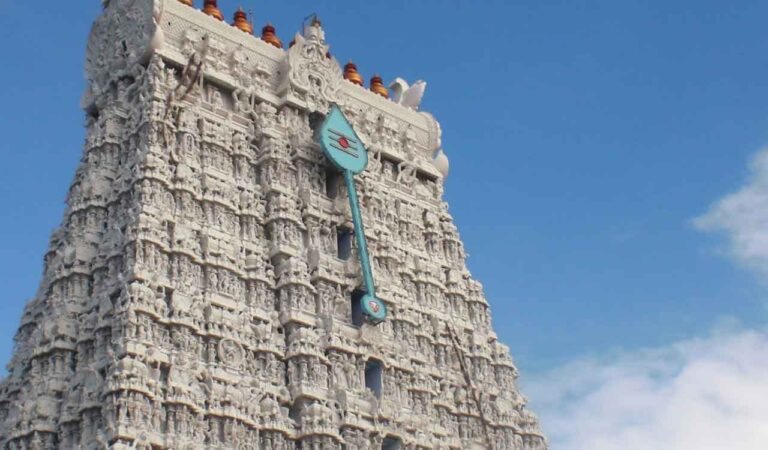
The Subramaniya Swamy Temple in Tiruchendur, Tamil Nadu, has ordered artistes performing at its religious programmes to stop praising individuals, after two singers called out slogans honouring the state Chief Minister and the Hindu Religious and Charitable Endowments Minister during the Kanda Sashti festival.
The singers, Pushpavanam Kuppusamy and Velmurugan, took part in a devotional music programme on November 15, the day the temple held the Soorasamharam, the high point of the festival. During the concert they voiced wishes that the Chief Minister and the minister would live long. Several political parties and Hindu organisations condemned the slogans, and a complaint was lodged with the police. Both singers later expressed regret and offered explanations for their remarks.
In a statement referring to the concert, the temple administration said the slogans and the public criticism they drew had damaged the shrine's reputation. It asked artistes taking part in future programmes to confine their performances to devotional songs and chants, and to avoid verses unrelated to worship. The instruction covers both devotional concerts and other spiritual programmes organised by the temple. Although the controversy arose over praise for two members of the state government, the administration framed the rule broadly, asking performers to avoid any tribute to an individual at these events.
The concert formed part of the celebrations at the seafront shrine, one of the six sacred abodes of Lord Murugan. Each year, on the evening of the sixth day of Kanda Sashti, devotees gather on the shore at Tiruchendur for a ritual enactment of Murugan's victory over the demon king Surapadman, the episode from which the Soorasamharam takes its name. The observances begin on the first morning, when Jayantinathar, the processional form of Murugan, appears with his consorts Valli and Deivanai, followed by a fire ritual and worship. On the sixth day the deity is taken to the seashore without his consorts for the enactment of the battle. The performance depicts Surapadman assuming different forms as he tries to overcome Murugan, who defeats him in each encounter.
The celebrations continue the following day with the Tirukalyanam, the ceremonial wedding of Murugan and Deivanai. The wedding marks a shift in the character of the observances, as the evening battle on the shore gives way to the marriage rites. The temple's new instruction thus concerns not only the conduct of performers but the sacred focus of the festival itself, which it asks musicians to keep on worship rather than on public figures.
Source: telanganatoday.com
31