Vatican and Beijing Extend Bishop Appointment Deal Amid Rome Forum
A forum in Rome commemorated the ordination of six native Chinese bishops a century ago and discussed the future of the Catholic Church in China.
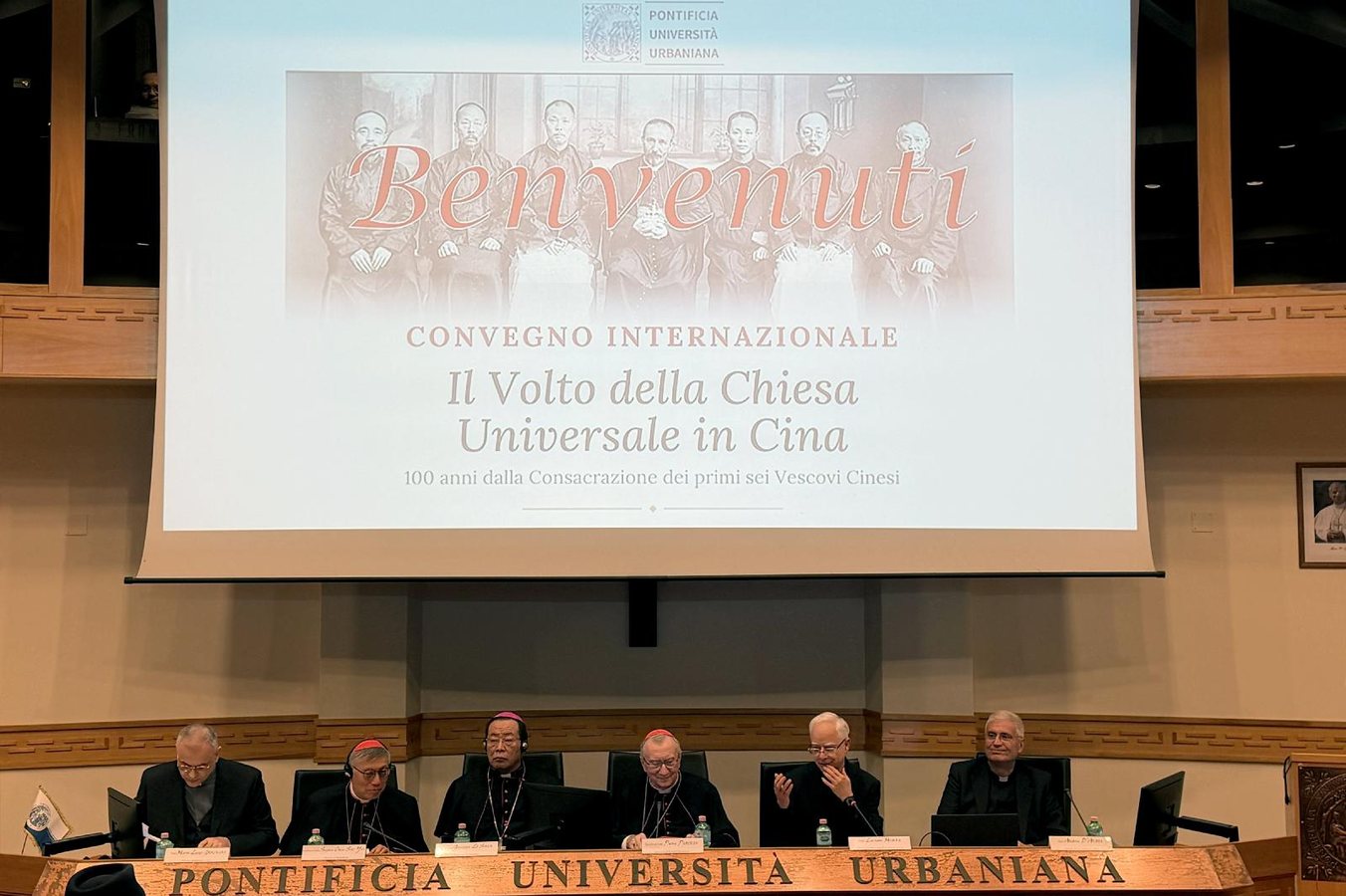
A hundred years after the ordination of six native Chinese bishops, the Catholic Church in Rome has discussed its own identity in China and unity with the Pope. The forum took place on November 5 at the Pontifical Urbaniana University and was organized together with the Dicastery for Evangelization. Representatives of the Vatican, Chinese bishops and scholars took part.
The occasion was the anniversary of the ordinations of October 28, 1926, in Rome. At that time, six Chinese men were ordained as bishops for the first time, after a synod held in Shanghai in 1924 under the leadership of Celso Costantini had laid the groundwork. The ordinations are regarded as a turning point, because they broke with the model of European missionary bishops. As early as 1919, Pope Benedict XV had called for a departure from colonially shaped missionary methods in the encyclical Maximum Illud.
In his contribution, Cardinal Secretary of State Pietro Parolin called for a more concrete communion between the Pope and the bishops in China. Pope Leo XIV sent a pre-recorded video greeting to the participants. Cardinal Chow described sinicization as a process that extends beyond Catholicism.
Since 2018, there has been a provisional agreement between the Holy See and Beijing on the appointment of bishops. It was renewed in 2020 and 2022 and extended by four years in October 2024. The text has not been published. Archbishop Paul Richard Gallagher acknowledged that the agreement is imperfect and announced continued dialogue.
Observers view the policy of sinicization critically. According to the guidelines, clergy must support the ideology of the Chinese Communist Party and patriotism. Religious affairs were placed under the United Front Work Department in 2018. Rules from May 2021 oblige clergy to support the party leadership. In September 2025, online regulations were introduced that prohibit unlicensed religious content and livestreams. In some provinces, including Henan and Xinjiang, minors are forbidden to take part in worship services.
The sinologist Li Shan defended sinicization as a way to make the universality of the Church concrete in local contexts. He interpreted independence and self-administration as the Church's adaptation to the state. The Vatican guidelines of 2019, by contrast, recognized the individual conscience decision of whether believers register. Human rights organizations such as Human Rights Watch document the surveillance of underground clergy. A report by the charity Aid to the Church in Need (ACN) speaks of an intensification of persecution between 2022 and 2024.
The case of media entrepreneur Jimmy Lai was also addressed. According to his daughter, he remains in solitary confinement. Diplomatic efforts, including those by the United States, have so far not led to his release.
Source: catholicsun.org
3