Galician Cosmologist Returns from Berkeley with €2 Million European Grant
Antón Baleato, a 33-year-old cosmologist from A Coruña, is returning to Galicia with a prestigious European Research Council grant worth €2 million to build a team investigating why the universe's expansion is accelerating.
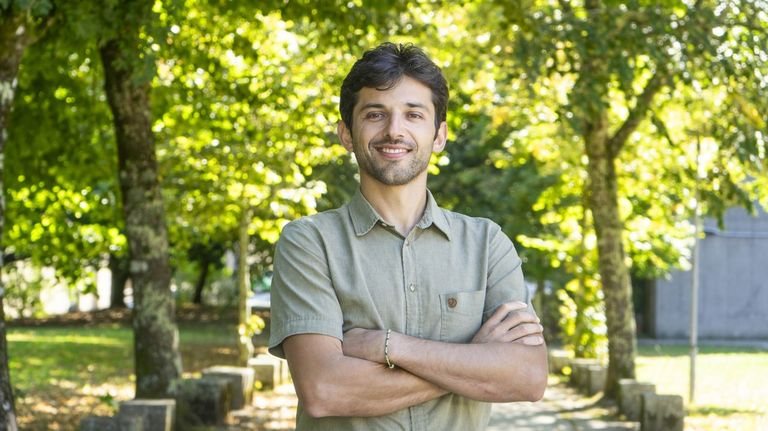
A 33-year-old cosmologist from A Coruña is returning to Galicia with one of Europe's most prestigious research grants, worth €2 million, to establish a team dedicated to one of the most profound questions in modern physics: why the universe is expanding at an ever-increasing rate.
Antón Baleato, who has been working at the University of California, Berkeley, has been awarded the European Research Council grant to pursue his research on cosmic acceleration. The funding will allow him to build a research group in Galicia, a move he says demonstrates that world-class science can be conducted far from the traditional centres of academic power.
«One can do first-rate science from this corner of the world,» Baleato said, describing his decision to return to his home region after years abroad. The sentiment reflects a broader ambition among Galician researchers to strengthen the region's scientific ecosystem and attract international talent.
The grant, awarded by the European Research Council, is among the most competitive and sought-after sources of research funding in Europe. It is designed to support outstanding scientists who wish to establish or consolidate their own research teams, often in their home countries or regions. For Baleato, the award represents both a personal homecoming and a significant investment in Galicia's capacity for fundamental research.
His research focuses on the accelerating expansion of the universe, a phenomenon that remains one of the greatest unsolved mysteries in cosmology. Since the late 1990s, astronomers have known that the expansion of the cosmos is not slowing down, as would be expected if gravity were the only force at work, but is instead speeding up. The discovery led to the concept of dark energy, an unknown form of energy thought to make up roughly 68 percent of the universe and to drive this acceleration. Despite decades of study, the nature of dark energy remains elusive.
Baleato's work at Berkeley placed him at the heart of international efforts to understand this puzzle. Now, with the European Research Council backing, he plans to assemble a team in Galicia to continue that investigation. The project is expected to contribute to global efforts to map the universe's expansion history and to test competing theoretical models that attempt to explain it.
The return of a young, internationally trained scientist with a major grant is a notable development for Galicia's research landscape. It signals that the region can compete for top-tier European funding and can offer a viable base for cutting-edge work in theoretical and observational cosmology. The presence of such a team could also help attract further investment and collaboration, strengthening ties between Galician institutions and the wider European research community.
Baleato's grant is part of a broader pattern in which European funding schemes aim to reverse the brain drain that has seen many talented researchers leave for positions in the United States and elsewhere. By offering substantial resources and the freedom to build a team, these grants seek to make Europe — and its less centralised regions — more attractive to scientists at critical stages of their careers.
The cosmologist's return also carries symbolic weight for Galicia, a region with a strong cultural identity and a growing but still developing scientific infrastructure. His message that first-rate science is possible from a peripheral corner of Europe challenges the assumption that groundbreaking research must be concentrated in a handful of elite institutions.
Over the coming years, Baleato and his team will work to shed light on the forces shaping the fate of the universe. The answers they seek are not only scientifically fundamental but also philosophically resonant, touching on questions about the origin, structure, and ultimate destiny of the cosmos. For now, the grant marks a new chapter for Baleato and a potential turning point for Galician science.
6