Harvard astronomer tapped to lead White House UFO council says US government 'baffled by what they are seeing'
Harvard astronomer Avi Loeb, chosen by the White House to lead a UFO advisory council, says the US government is baffled by unidentified anomalous phenomena and seeks scientific help to determine if they are human-made or extraterrestrial.
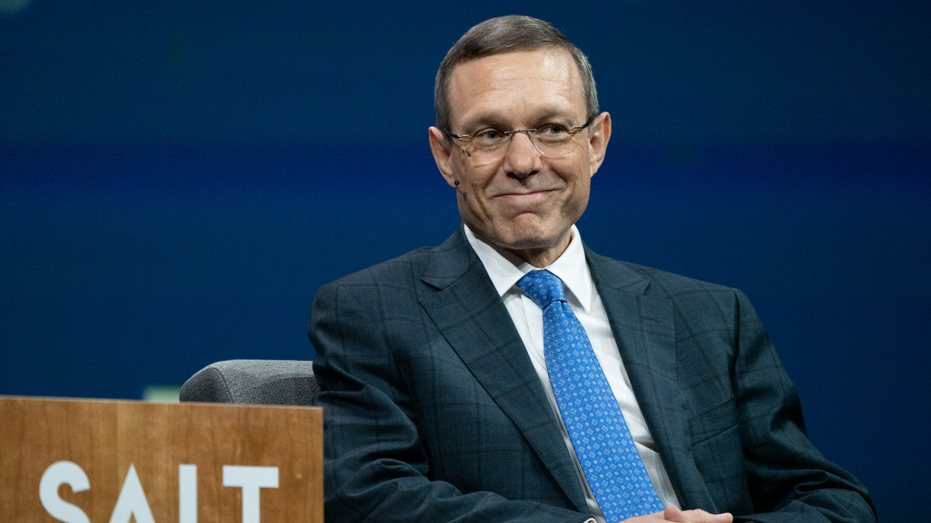
Harvard astronomer Avi Loeb, who was selected last month by the White House to lead a newly formed UFO advisory council, says the U.S. government is struggling to explain the many unidentified objects captured by the military over the past several decades. Loeb, a prominent figure in the search for extraterrestrial intelligence, believes his appointment signals that federal officials are genuinely perplexed by what they are observing.
Loeb told Fox News Digital that his team of more than a dozen scientists is currently analyzing four batches of public UFO sighting disclosures released by the Trump administration in recent months. His mission began in early June when an official from the Office of the Director of National Intelligence (ODNI) visited his home and asked him to assemble a group of experts to make sense of what the government now calls unidentified anomalous phenomena (UAP). This term encompasses objects seen moving through air, water, and space.
«The U.S. government had me at hello,» Loeb said. «The fact that they are reaching out to scientists like myself indicates, in my mind, that they are baffled by what they are seeing, and they think that maybe it's not human-made.»
Loeb's council will report its findings to the UAP Governing Board, a recently established body under the direction of ODNI. According to the council's website, Loeb and his colleagues will only review already declassified materials on UAPs. However, Loeb said he has asked the Pentagon and other agencies for 50 videos, images, and other documents related to known UAP incidents. Those materials have not yet been provided, with the custodian agencies citing national security concerns.
«It's not so much the targets that are the issue. It's that the sensors that were used were for national security purposes. The U.S. government doesn't want to reveal to adversarial nations the kind of sensors being used. So that's the main obstacle right now,» Loeb explained.
Loeb's primary goal is to determine whether UAPs captured by the U.S. military originate from other nations or whether they are not human-made at all. «In the second case, if it's not human-made, then that's the biggest discovery ever made by science, and the U.S. government has the privilege of ushering in this new realization that we have a neighbor visiting us,» he said.
Despite the excitement surrounding his work, Loeb sought to temper expectations. He noted that many of the phenomena under study could turn out to be mundane, such as space junk or broken satellites. «Unless they maneuver in ways that cannot be explained by gravity, you should assume that they are space junk,» he advised.
Loeb praised the White House for its push for transparency on the issue. In February, President Donald Trump ordered the Pentagon and other agencies to declassify files related to aliens and UAPs because of «tremendous interest.» One of the key objectives of Loeb's council is to recommend better sensors so that the government can capture UAPs with greater confidence in the future.
«If we are dealing with drones of some unusual qualities that the Chinese are using, it's good for the U.S. to have better sensors that can help it identify those. Right now, they are reported as orbs. They may not be drones, but I'm saying that at the very least, we will help national security,» Loeb said.
Loeb's remarks come after the Department of War released the fourth and latest batch of UAP materials to the public on Friday. He commented on one of the most sensational releases from the first batch: photos from the Apollo 12 mission on the Moon in 1969. One of the photos shows five «unidentified phenomena,» but Loeb said federal authorities have now officially concluded that those blue flashes are most likely cosmic rays.
Until 2020, Loeb headed Harvard University's astronomy department, where he studied black holes, the formation of the universe's first stars, and extraterrestrial life. In 2017, when scientists discovered a remnant of a Pluto-like world in the Solar System, Loeb disputed those findings, arguing that the object was possibly a light sail from an alien civilization. After this claim earned him widespread respect in the UFO community, Loeb founded the Galileo Project at Harvard to search for artifacts from extraterrestrial civilizations.
The formation of Loeb's council represents a significant step in the U.S. government's efforts to address the long-standing mystery of UAPs. By involving leading scientists, the administration hopes to bring rigorous analysis to a topic that has often been dismissed or sensationalized. Loeb's team will focus on applying scientific methods to declassified data, aiming to separate genuine anomalies from explainable phenomena.
As the council begins its work, the public and policymakers alike will be watching closely. Whether the findings point to advanced human technology, natural phenomena, or something beyond current understanding, Loeb's involvement underscores a growing recognition that the UAP question deserves serious scientific attention.
104