Hubble Telescope Image Reveals Cosmic Cycle of Destruction and Creation
A new Hubble Space Telescope image captures a dramatic stellar nursery where massive stars are born and die, illustrating the violent cycle that shapes galaxies.
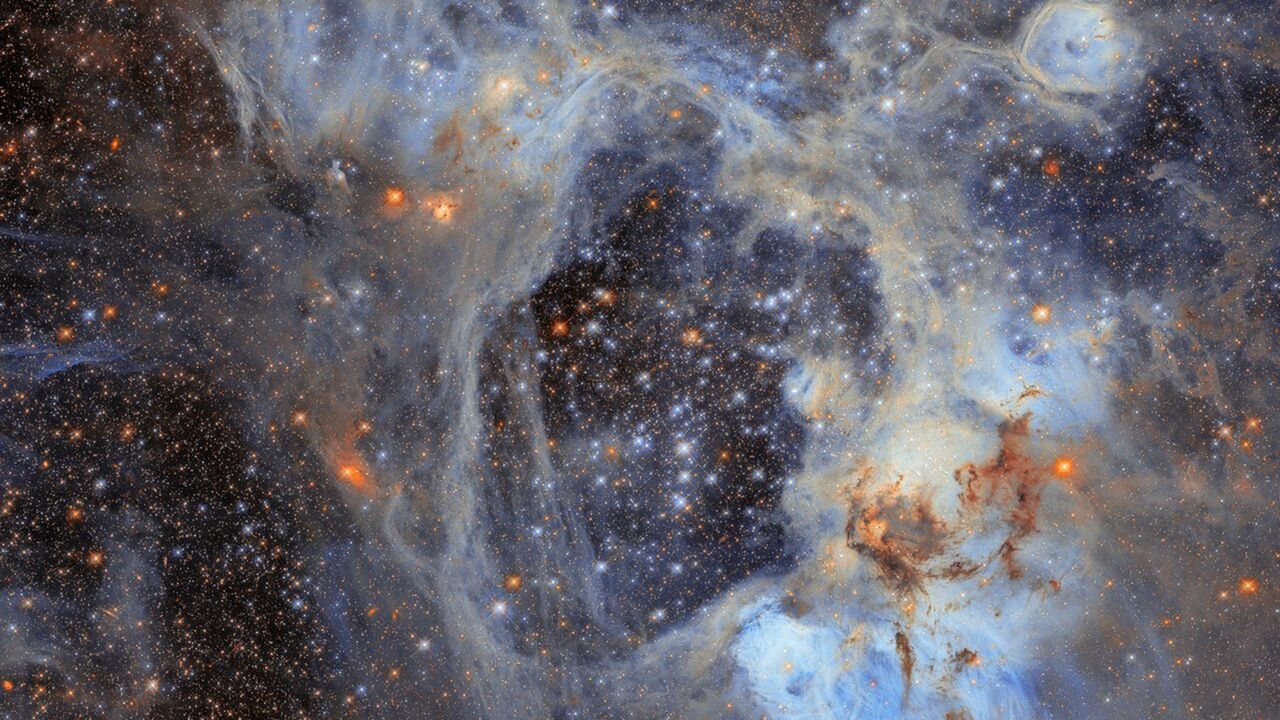
The Hubble Space Telescope has captured a striking new image of a stellar nursery where massive stars are born and die, offering a vivid look at the cosmic cycle of destruction and creation that shapes galaxies. The image, released as the space photo of the week, shows a turbulent region of gas and dust illuminated by the intense radiation of young, hot stars.
The scene is dominated by a glowing cloud of hydrogen gas, punctuated by dark lanes of dust and punctuated by the brilliant blue-white light of newly formed stars. According to astronomers, the region is a classic example of a stellar nursery, where dense pockets of gas and dust collapse under gravity to form new stars. The most massive of these stars live fast and die young, exploding as supernovae that blast heavy elements into space, enriching the surrounding material for the next generation of stars.
The image captures this cycle in a single frame: the destructive power of stellar winds and radiation from massive stars carving out cavities in the nebula, even as new stars are being born in the denser regions that remain. The result is a complex, almost sculptural landscape that reveals the dynamic interplay between star formation and stellar death.
Hubble, a joint project of NASA and the European Space Agency, has been observing the universe for more than three decades. Its high-resolution images have revolutionized our understanding of star formation, galaxy evolution, and the distribution of matter in the cosmos. This latest image adds to a long tradition of Hubble photographs that combine scientific value with aesthetic appeal, reminding viewers of the beauty and violence inherent in the universe.
Astronomers study such regions to understand how the first stars formed and how galaxies like our own Milky Way evolved. The heavy elements forged in the hearts of massive stars and dispersed by supernovae are the same elements that make up planets and life on Earth. In this sense, the image is not just a pretty picture but a portrait of the processes that made our existence possible.
The image also highlights the importance of continued space-based observatories. While Hubble remains active, its successor, the James Webb Space Telescope, is already providing complementary infrared views of similar regions, peering through dust to reveal even younger stars. Together, these telescopes are piecing together the full story of how stars and planets form.
For now, the Hubble image stands as a powerful reminder of the cosmic cycle that governs the universe: destruction and creation, death and rebirth, played out on a scale that dwarfs human comprehension. It is a scene that has been repeated countless times across the cosmos, and one that continues to inspire both scientists and the public alike.